Many English learners feel confused about “afterward” and “afterwards.”
They ask:
- Which one is correct?
- Why does one have an “s” at the end?
- Will I lose marks if I choose the wrong one?
The confusion happens because English spelling is slightly different in different countries.
The good news is simple:
Both words are correct.
Let’s understand everything step by step in very easy English.
Quick Answer
Here is the clear answer:
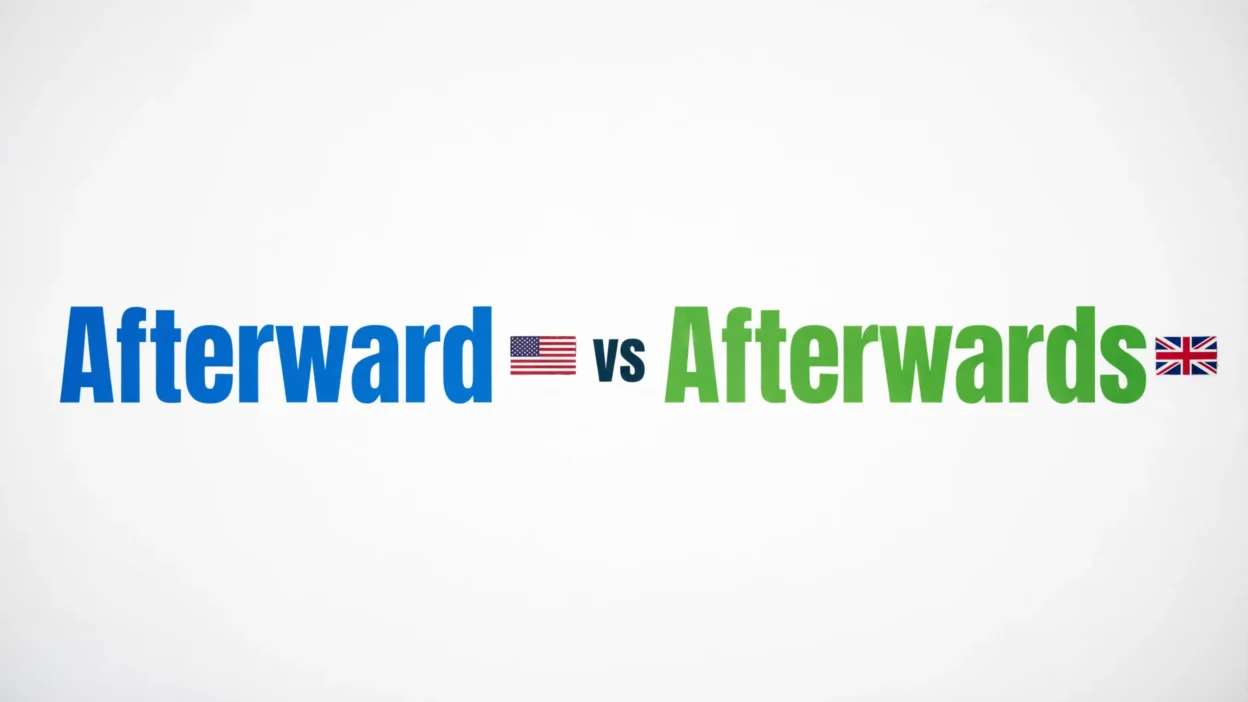
- Afterward → American English
- Afterwards → British English
- Meaning → Exactly the same
- Both correct? → Yes
Example:
We went home afterward.
We went home afterwards.
Both sentences are correct.
Simple Background Explanation
English is spoken in many parts of the world.
Two main spelling styles developed over time:
- American English (used in the United States)
- British English (used in the United Kingdom and many other countries)
One common difference is that British English sometimes adds an extra “s” at the end of certain words.
That is why we have:
- toward / towards
- forward / forwards
- afterward / afterwards
The meaning stays the same. Only the spelling changes.
Clear Explanation of the Difference
The only difference between afterward and afterwards is the letter “s” at the end.
- American English → no “s”
- British English → adds “s”
Both words mean:
- Later
- At a later time
- After something happens
Example:
We had dinner and went for a walk afterward.
We had dinner and went for a walk afterwards.
Same meaning. Same grammar. Different spelling style.
Comparison Table
| Feature | Afterward | Afterwards |
|---|---|---|
| Meaning | Later | Later |
| Spelling Style | American English | British English |
| Used In | United States | United Kingdom and others |
| Correct? | Yes | Yes |
| Part of Speech | Adverb | Adverb |
This table shows clearly that the only difference is spelling.
Which One Should You Use and When?
Choose based on your writing style.
Use “Afterward” If:
- You are writing in American English
- Your school uses American spelling
- You are preparing for exams like TOEFL
- You are writing for an American audience
Example:
She felt tired afterward.
Use “Afterwards” If:
- You are writing in British English
- You are preparing for IELTS
- Your school follows British spelling
- You are writing for a British audience
Example:
She felt tired afterwards.
Important Rule
Do not mix both spellings in the same piece of writing.
Wrong:
We went shopping afterward and had coffee afterwards.
Correct:
Choose one spelling style and use it consistently.
Common Mistakes People Make
1. Thinking One Is Wrong
Some learners believe “afterwards” is incorrect.
Others believe “afterward” is incorrect.
Both are correct. The difference depends on the English style.
2. Mixing Styles
Switching between the two spellings in one essay looks careless.
Stay consistent.
3. Adding “s” Randomly
Not all words follow this pattern.
For example:
- Backward / backwards (both exist, but style matters)
- Inside (not “insides” in this meaning)
Be careful and check the word.
Everyday Real-Life Examples
Here are simple daily examples.
In Conversation
I will call you afterward.
I will call you afterwards.
At School
We had a test and discussed the answers afterward.
We had a test and discussed the answers afterwards.
In Emails
American style:
Let’s meet afterward to talk.
British style:
Let’s meet afterwards to talk.
In Stories
They went to the park and had ice cream afterward.
They went to the park and had ice cream afterwards.
The meaning does not change.
Learning Section for Students and Beginners
Here are easy tips to remember.
Tip 1: Remember the “S” Rule
- No “s” → United States
- With “s” → United Kingdom
Tip 2: Match Other Words
If you write:
- Color, Favorite, Center → Use afterward
- Colour, Favourite, Centre → Use afterwards
Keep your spelling style consistent.
Tip 3: Follow Your Exam System
Different exams may follow different spelling systems.
The key rule is consistency.
Practice Exercise
Fill in the blank:
- We went home ______ the movie.
- She felt better ______ resting.
- I will talk to you ______ class.
Answer:
You can use “afterward” or “afterwards” depending on your English style.
Frequently Asked Questions (FAQ)
1. Are afterward and afterwards the same?
Yes. They have the same meaning.
2. Is one more formal?
No. Both are equally correct.
3. Which spelling is used in the United States?
Afterward.
4. Which spelling is used in the United Kingdom?
Afterwards.
5. Can I use both in one essay?
No. Choose one style and stay consistent.
6. Do they sound different?
No. They are pronounced the same.
7. Are there similar word pairs?
Yes. For example:
- toward / towards
- forward / forwards
Simple and Clear Conclusion
“Afterward” and “afterwards” look slightly different, but they mean the same thing.
- Afterward = American spelling
- Afterwards = British spelling
Both are correct.
The only rule you must remember is: choose one spelling style and use it consistently.
Now the confusion is completely gone.

Brandon Samuel is a dedicated writer and language enthusiast, serving as the lead author at WordHuts.com. He specializes in explaining word differences, grammar rules, and common language mistakes in simple terms. Brandon’s clear, practical writing style helps readers improve vocabulary, writing confidence, and everyday communication skills.