Many English learners feel confused about “anyway” and “anyways.” These two words look almost the same, and they sound the same in conversation. Because of this, people often wonder:
- Are they both correct?
- Is one more formal than the other?
- Which word should I use in writing?
The confusion usually happens because both words appear in spoken English. Some people say “anyways” naturally when they talk. However, when we look at standard English rules, the answer becomes much clearer.
This guide explains everything in very simple English, so students, beginners, and everyday readers can understand the difference immediately.
Quick Answer
Here is the short and simple answer:
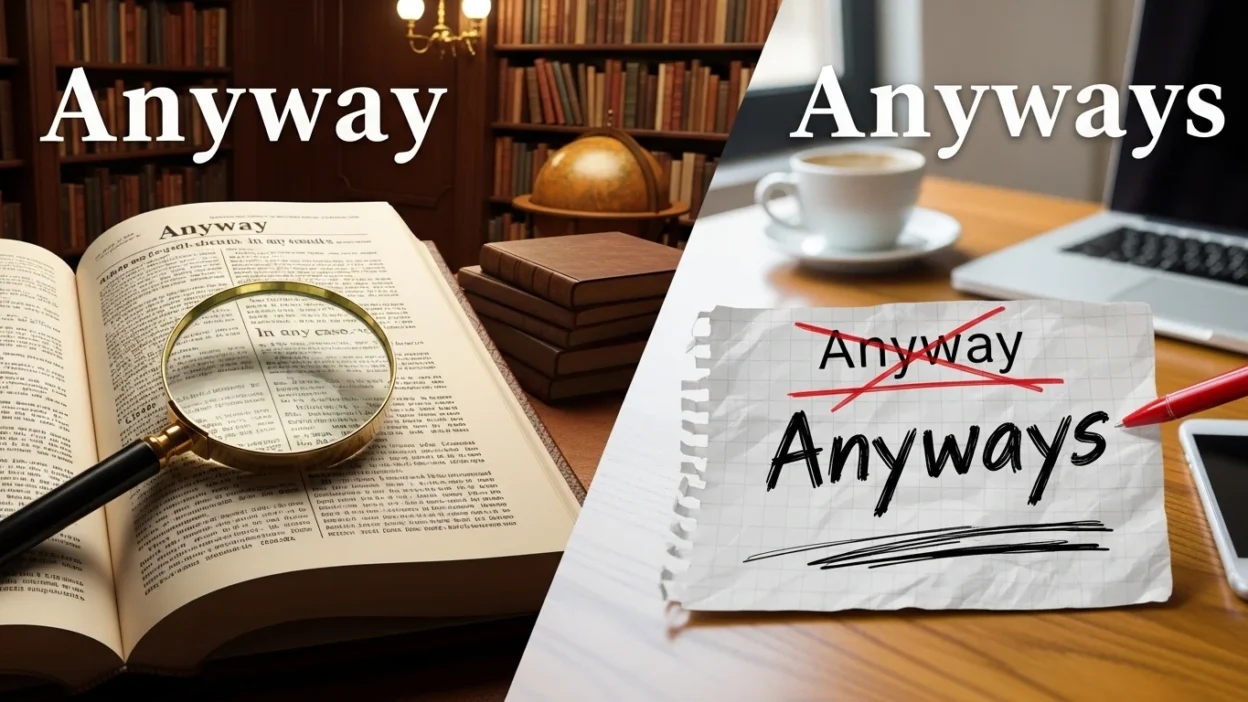
- Anyway is the correct and standard word.
- Anyways is informal and mostly used in casual speech.
- In formal writing, school assignments, emails, and exams, you should always use anyway.
- Anyways may appear in relaxed conversation or storytelling.
Simple rule to remember:
If you are unsure, always choose anyway.
Simple Background of the Word
The word anyway has been used in English for hundreds of years. It comes from two simple parts:
- any
- way
Originally, it meant “in any way” or “no matter how.”
Over time, the meaning changed slightly. Today, anyway is often used to:
- change the topic
- return to the main point
- show that something is not very important
Example:
“Anyway, let’s continue the meeting.”
The word anyways appeared later. People added “s” at the end, similar to words like:
- besides
- towards
- afterwards
However, most grammar guides still consider anyways informal or non-standard.
Clear Explanation of the Difference
The real difference between anyway and anyways is formality and correctness.
Anyway
Anyway is the standard word in English. It is accepted everywhere.
You can use it in:
- school writing
- essays
- emails
- books
- news articles
- professional communication
Example:
“I was tired, but I finished the work anyway.”
Anyways
Anyways is mostly used in casual speech.
People sometimes say it when they are speaking informally with friends. However, many teachers and editors prefer not to use it in formal writing.
Example:
“Anyways, what were we talking about?”
This sentence sounds natural in conversation but may look incorrect in formal writing.
Comparison Table
| Feature | Anyway | Anyways |
| Correct in standard English | Yes | Usually no |
| Used in formal writing | Yes | No |
| Used in casual speech | Yes | Sometimes |
| Accepted in school essays | Yes | Usually avoided |
| Recommended for learners | Yes | No |
| Safer choice | Yes | No |
Conclusion from the table:
If you want to avoid mistakes, always use anyway.
Which One Should You Use?
For students and learners, the answer is simple:
Use “Anyway”
Use anyway in:
- essays
- homework
- exams
- emails
- job applications
- reports
- presentations
Example:
“The weather was bad, but we traveled anyway.”
When You May Hear “Anyways”
You might hear anyways in:
- casual conversation
- friendly chats
- storytelling
- some social media posts
Example:
“Anyways, let’s get some food.”
Even though people say it, many teachers suggest not using it in writing.
Common Mistakes People Make
Here are mistakes learners often make.
1. Using “anyways” in formal writing
Incorrect:
“Anyways, the results show that the experiment worked.”
Better:
“Anyway, the results show that the experiment worked.”
2. Thinking both words are equally correct
Many people believe anyway and anyways are the same.
But in standard English:
- anyway = correct
- anyways = informal
3. Adding “s” because other words have it
Some learners add s because they know words like:
- besides
- towards
- afterwards
But anyway normally does not need “s.”
4. Using it too often
Even the correct word anyway should not be used too many times.
Example of overuse:
“Anyway, we went to the park. Anyway, we saw a dog. Anyway, we came home.”
Better writing uses it only when necessary.
Everyday Real-Life Examples
Let’s look at how people use anyway in real life.
1. Daily Conversation
“I know it’s late, but let’s go anyway.”
“Anyway, how was your trip?”
2. Email Example
Subject: Meeting Update
Hello team,
The meeting started late, but we finished the discussion anyway.
Anyway, I will send the final report tomorrow.
3. Social Media
“I didn’t feel like going out, but I went anyway and had fun.”
4. Storytelling
“I tried to fix my phone, but it didn’t work. Anyway, I bought a new one.”
5. News Style
“The storm caused problems, but flights continued anyway.”
Learning Tips for Students and Beginners
If you are learning English, these tips will help you remember the difference.
Tip 1: Learn one safe rule
Always use anyway in writing.
This simple rule will prevent mistakes.
Tip 2: Understand the meaning
Anyway can mean:
- despite that
- no matter what
- returning to the main topic
Example:
“I was busy, but I helped anyway.”
Tip 3: Listen carefully
When watching movies or listening to conversations, you may hear anyways.
Remember:
- It is spoken casually
- It is not preferred in formal writing
Tip 4: Practice simple sentences
Try making your own sentences:
- “I will try anyway.”
- “Anyway, let’s start.”
- “He went anyway.”
Practice helps you remember naturally.
Frequently Asked Questions (FAQ)
1. Is “anyways” a real word?
Yes, anyways exists, but it is considered informal or non-standard in many situations.
2. Which one is grammatically correct?
Anyway is the grammatically preferred form.
3. Can I use “anyways” in conversation?
Yes, many people use anyways in casual speech. However, it is better to avoid it in formal writing.
4. Do native speakers say “anyways”?
Some native speakers say it in relaxed conversations. But many still prefer anyway.
5. Is “anyways” wrong?
It is not completely wrong, but it is informal and not recommended for formal writing.
6. Which word should students use in exams?
Students should always use “anyway.”
7. Does “anyway” have different meanings?
Yes. It can mean:
- despite something
- returning to a topic
- continuing a story
8. Is “anyways” becoming more common?
It appears in casual speech and online messages, but standard writing still prefers “anyway.”
Conclusion
The difference between anyway and anyways is simple once you understand it.
- Anyway is the correct and standard word.
- Anyways is informal and mostly used in casual speech.
For students, writers, and learners, the best rule is easy:
When writing, always choose anyway.
This choice works in every situation, including school assignments, emails, and professional communication.

Gregory Alexander is a skilled writer and language researcher at WordHuts.com. He focuses on clarifying confusing word pairs, grammar rules, and common usage mistakes. With a passion for precise communication, Gregory creates simple, easy-to-understand content that helps readers strengthen vocabulary, writing accuracy, and everyday English skills.