Many English learners get confused between breeched and breached because the words look very similar and sound almost the same. When speaking quickly, it can be difficult to notice the small difference in spelling.
However, these two words have completely different meanings. One word is related to clothing, while the other is connected to breaking rules, agreements, or security.
Understanding the difference will help you avoid mistakes in writing and communication.
Quick Answer
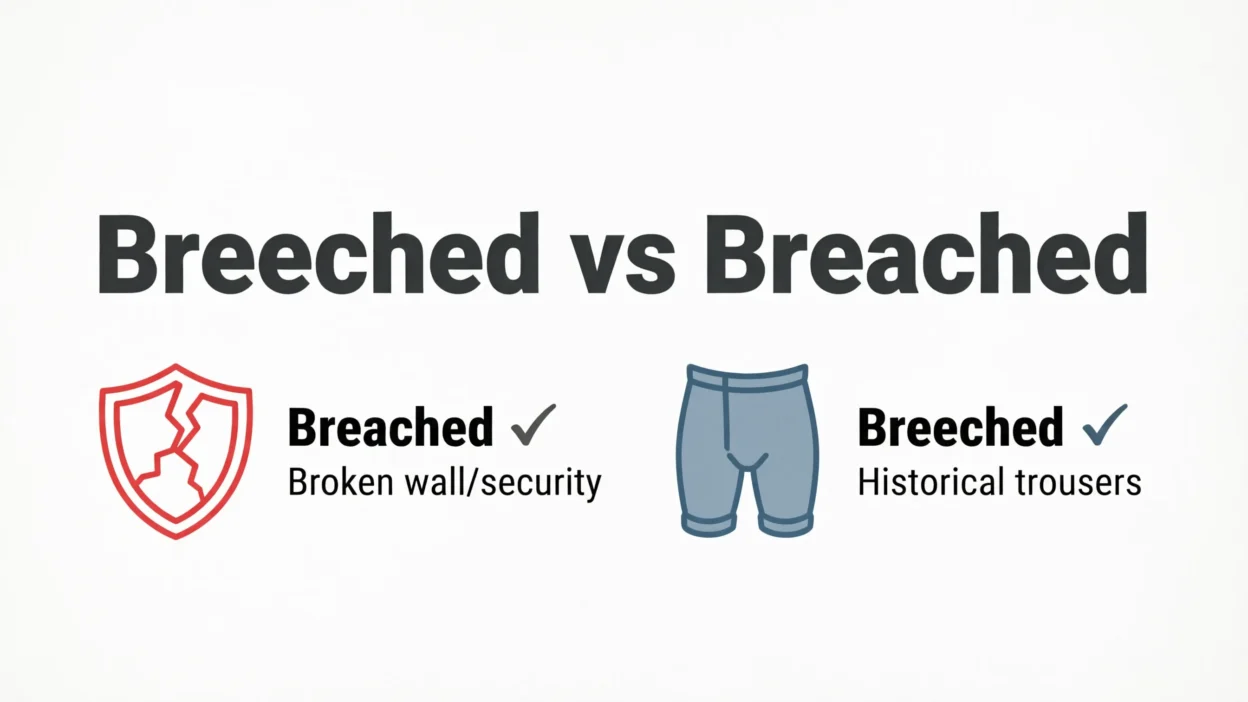
- Breached → Means to break a rule, agreement, wall, or security system.
- Breeched → Means to put someone (usually a child) into breeches or trousers.
Examples:
- The company breached the contract.
- In earlier times, young boys were breeched at a certain age.
Simple Origin or Background Explanation
The two words come from different root words.
Breached comes from the word breach, which means a break, gap, or violation. It has been used in English for many centuries to describe breaking agreements or creating openings in walls or defenses.
Breeched comes from the word breeches, which were short trousers worn in earlier centuries, especially by men and boys.
Because both words sound similar, many writers accidentally use the wrong one.
Clear Explanation of the Difference
The difference between breeched and breached is mainly about meaning and context.
Breached
Breached is the past tense of breach. It means to break something such as a rule, agreement, or barrier.
Examples:
- The hacker breached the computer system.
- The company breached the contract agreement.
- Soldiers breached the city wall.
This word is commonly used in law, security, technology, and news.
Breeched
Breeched refers to putting someone into breeches (a type of trousers). Historically, this term was used when young boys stopped wearing dresses and started wearing pants.
Examples:
- The child was breeched at the age of five.
- In the past, boys were breeched during childhood ceremonies.
This word is rare today and mostly appears in historical writing.
Comparison Table
Feature | Breeched | Breached
Meaning | Put into breeches or trousers | Broke a rule, agreement, or barrier
Root word | Breeches | Breach
Common usage | Historical context | Law, security, news
Frequency | Rarely used | Very common
Example | The boy was breeched at age six. | The hacker breached the system.
Which One to Use and When
Use breached in most modern situations because it is very common.
Examples:
1. In technology
- Hackers breached the database.
2. In law
- The company breached the contract.
3. In news
- The dam was breached during the storm.
Use breeched only when talking about historical clothing traditions.
Example:
- In the past, boys were breeched when they started wearing trousers.
Common Mistakes People Make
1. Using “breeched” when they mean “breached”
Incorrect:
The security system was breeched.
Correct:
The security system was breached.
2. Confusing spelling because of pronunciation
Both words sound similar when spoken, which leads to spelling mistakes.
3. Not knowing the rare meaning of “breeched”
Many people do not know that breeched relates to old clothing traditions, so they use it incorrectly.
Everyday Real-Life Examples
Here are examples showing how these words appear in real life.
News example
The hackers breached the company’s security system.
Legal example
The organization breached the agreement.
Technology example
The firewall was breached during the cyber attack.
Historical writing example
In the 18th century, boys were breeched around age six.
Social media example
The company admitted their data was breached.
Learning Section for Students and Beginners
Here is an easy way to remember the difference.
Memory Trick
Look at the letters:
Breach → break
Both words start with bre.
So remember:
Breached = broken rule or barrier
For breeched, notice the word breeches, which are old trousers.
Practice Sentences
Fill in the blank with the correct word.
- Hackers ______ the website security.
- The boy was ______ in traditional clothing.
- The company ______ the contract.
Answers:
- breached
- breeched
- breached
Frequently Asked Questions (FAQ)
1. What does “breached” mean?
It means to break a rule, agreement, barrier, or security system.
2. What does “breeched” mean?
It means to put a child into breeches or trousers, usually in historical contexts.
3. Which word is more common?
Breached is much more common in modern English.
4. Is “breeched” still used today?
It is rarely used and mostly appears in historical discussions.
5. Can “breached” be used in technology?
Yes. It is commonly used to describe security breaches or hacked systems.
6. Are the words interchangeable?
No. They have completely different meanings.
7. Why do people confuse them?
They look and sound very similar, which leads to spelling mistakes.
8. Which word appears in news reports?
Breached is often used in news about security, contracts, or laws.
Conclusion
The difference between breeched and breached is easy once you understand their meanings.
- Breached means to break a rule, agreement, or security system.
- Breeched refers to putting a child into breeches or trousers in historical times.
Remember this simple idea:
Breached → break
Breeched → breeches (clothing)
Knowing this difference will help you use the correct word in writing and avoid confusion.

Gregory Alexander is a skilled writer and language researcher at WordHuts.com. He focuses on clarifying confusing word pairs, grammar rules, and common usage mistakes. With a passion for precise communication, Gregory creates simple, easy-to-understand content that helps readers strengthen vocabulary, writing accuracy, and everyday English skills.