Many English learners feel confused about “farther” and “further.” The two words look very similar, and sometimes people even use them in the same way. Because of this, students often wonder:
- Are farther and further the same?
- When should I use each one?
- Is one more correct than the other?
The good news is that the difference is actually simple once you understand the basic idea.
In very easy terms:
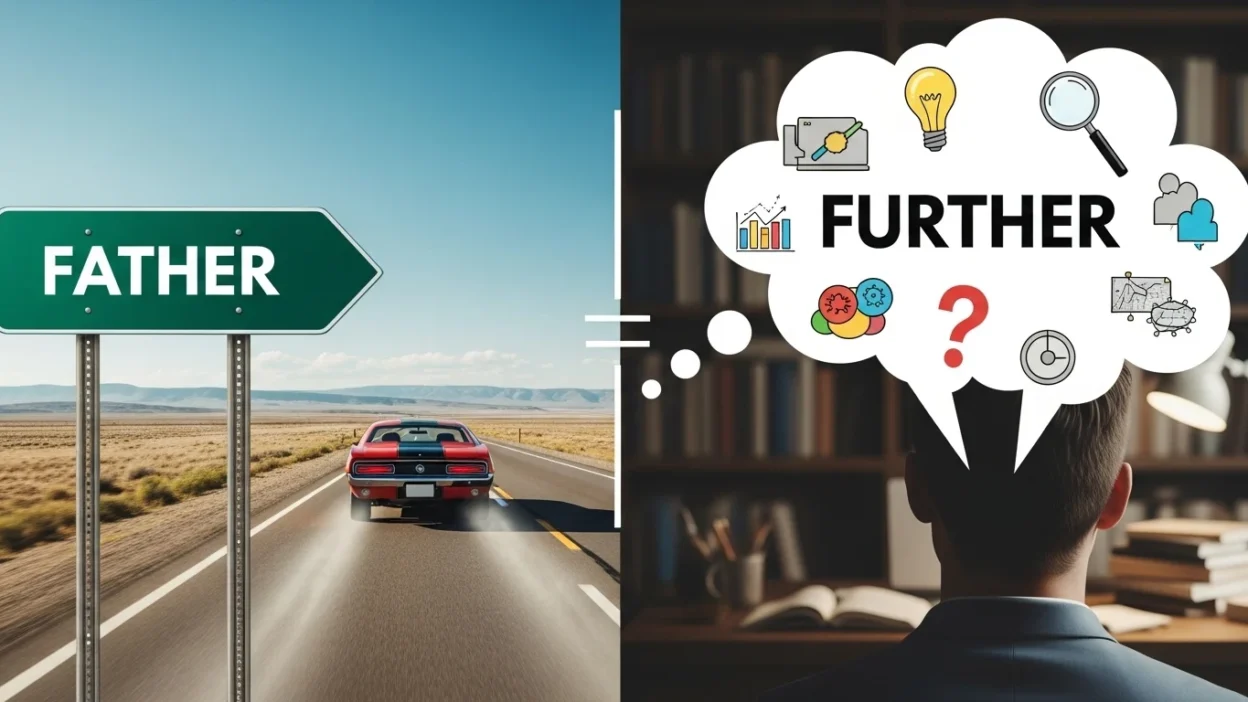
- Farther is usually about physical distance.
- Further is usually about ideas, time, or extra information.
In this guide, you will learn the difference step by step with simple explanations, tables, and real-life examples so you can understand it clearly the first time you read it.
Quick Answer
If you remember only a few points, remember these:
- Farther → used for physical distance you can measure
- Further → used for ideas, time, discussion, or extra amount
- Farther = physical space
- Further = abstract ideas or additional information
- In modern English, “further” is sometimes used in both cases, but “farther” is usually only for distance
Simple example:
- The park is farther than the school.
- We need to discuss this further.
Simple Background of the Words
Both farther and further come from the word “far.”
Long ago in English, these words developed from similar forms, so people started using them in almost the same way.
Over time, a simple pattern became popular:
- Farther → connected to far (distance)
- Further → connected to additional or more
This pattern helps learners remember the difference more easily.
Even today, some native speakers mix them sometimes, but most teachers follow the simple rule explained above.
Clear Explanation of the Difference
Let’s look at each word separately.
What Does “Farther” Mean?
Farther refers to physical distance. It means a greater distance in space.
You can often measure the distance with numbers such as meters, miles, or kilometers.
Examples:
- The grocery store is farther than the library.
- We walked farther down the road.
- My house is farther from the station.
Think of farther as something you can see or travel.
Helpful idea:
Farther = Far in physical space
What Does “Further” Mean?
Further usually means more, additional, or extra. It often talks about ideas, discussions, time, or progress.
Examples:
- We need to talk about this further.
- For further information, ask the teacher.
- The meeting was moved further into the week.
Here, we are not talking about distance. We are talking about ideas or time.
Helpful idea:
Further = More or additional
Comparison Table
| Feature | Farther | Further |
| Main meaning | Greater physical distance | More, additional, or deeper |
| Used for | Space and travel | Ideas, time, discussion |
| Easy memory tip | Think of far | Think of more information |
| Example | The beach is farther away | Let’s discuss this further |
| Measurement possible | Yes | Usually no |
This table shows the difference quickly and clearly.
Which One Should You Use?
Use this simple rule:
Use Farther When Talking About Distance
Examples:
- The new office is farther from my house.
- The dog ran farther into the field.
- The hotel is farther down the street.
If you can walk, drive, or travel the distance, farther is usually correct.
Use Further for Ideas, Time, or Extra Information
Examples:
- Please explain your idea further.
- We will continue the discussion further tomorrow.
- For further help, contact the support team.
Here we talk about thinking, learning, or adding more.
Common Mistakes People Make
Many learners make the same mistakes. Here are some common ones.
Mistake 1: Using Further for Physical Distance
Incorrect:
- The mountain is further than the hill.
Better:
- The mountain is farther than the hill.
Mistake 2: Using Farther for Ideas
Incorrect:
- We need to discuss this farther.
Correct:
- We need to discuss this further.
Mistake 3: Thinking They Are Always Different
In everyday English, many people use further in both cases.
Example:
- The shop is further down the street.
This is common in casual speech, but many teachers still recommend:
- Farther for distance
- Further for ideas
This rule keeps your English clear and correct.
Everyday Real-Life Examples
Understanding grammar is easier when we see real situations.
In Emails
- Please read the document for further details.
- Let me know if you need further help.
In School
- The science lab is farther than the library.
- The teacher asked students to research the topic further.
In News
- The storm moved farther north during the night.
- The government will study the issue further.
On Social Media
- I ran farther today than yesterday.
- I will explain this idea further in my next post.
In Daily Conversations
- The bus stop is farther from here.
- Can you explain that further?
These simple examples show how the words appear in normal English.
Learning Tips for Students and Beginners
If you are learning English, these tips can help you remember the difference.
Tip 1: Think About Distance
Ask yourself:
Can I measure the distance?
If yes → farther
Example:
- The park is farther away.
Tip 2: Think About Ideas
If the sentence talks about thinking, explaining, or adding information, use further.
Example:
- Please explain this further.
Tip 3: Remember the Letter “A”
A helpful trick:
FARther → FAR distance
Both words have “far.”
Tip 4: Practice With Your Own Sentences
Try writing your own examples:
- The supermarket is farther from my house.
- We will discuss this topic further tomorrow.
Practice helps you remember faster.
Frequently Asked Questions (FAQ)
1. Are farther and further the same?
They are similar but not exactly the same.
Farther usually refers to physical distance, while further usually refers to ideas or additional information.
2. Can further be used for distance?
Yes, some people use further for distance in casual English. However, many teachers prefer using farther for physical distance.
3. Which word is more common?
Further is used more often because it can describe many situations such as ideas, time, and additional information.
4. Is “farther away” correct?
Yes. Example:
- The beach is farther away than the park.
This describes physical distance.
5. What does “for further information” mean?
It means for more details or extra explanation.
Example:
- For further information, contact the office.
6. Can I say “discuss farther”?
This is usually not correct.
The better sentence is:
- Let’s discuss this further.
7. Which word should students remember first?
Students should remember the simple rule:
- Farther = distance
- Further = more or additional
This rule works well in most situations.
8. Do native speakers mix them sometimes?
Yes. Even native speakers sometimes use further instead of farther. But knowing the difference helps your English sound clear and correct.
Conclusion
The difference between farther and further becomes very simple when you remember one basic idea.
- Farther talks about physical distance that you can measure.
- Further talks about ideas, extra information, time, or deeper discussion.
Quick reminder:
- The mountain is farther away.
- We need to discuss this further.
Even though modern English sometimes mixes the two words, following this simple rule will help your writing and speaking stay clear and easy to understand.
With a little practice, choosing between farther and further will quickly become natural.

Gregory Alexander is a skilled writer and language researcher at WordHuts.com. He focuses on clarifying confusing word pairs, grammar rules, and common usage mistakes. With a passion for precise communication, Gregory creates simple, easy-to-understand content that helps readers strengthen vocabulary, writing accuracy, and everyday English skills.