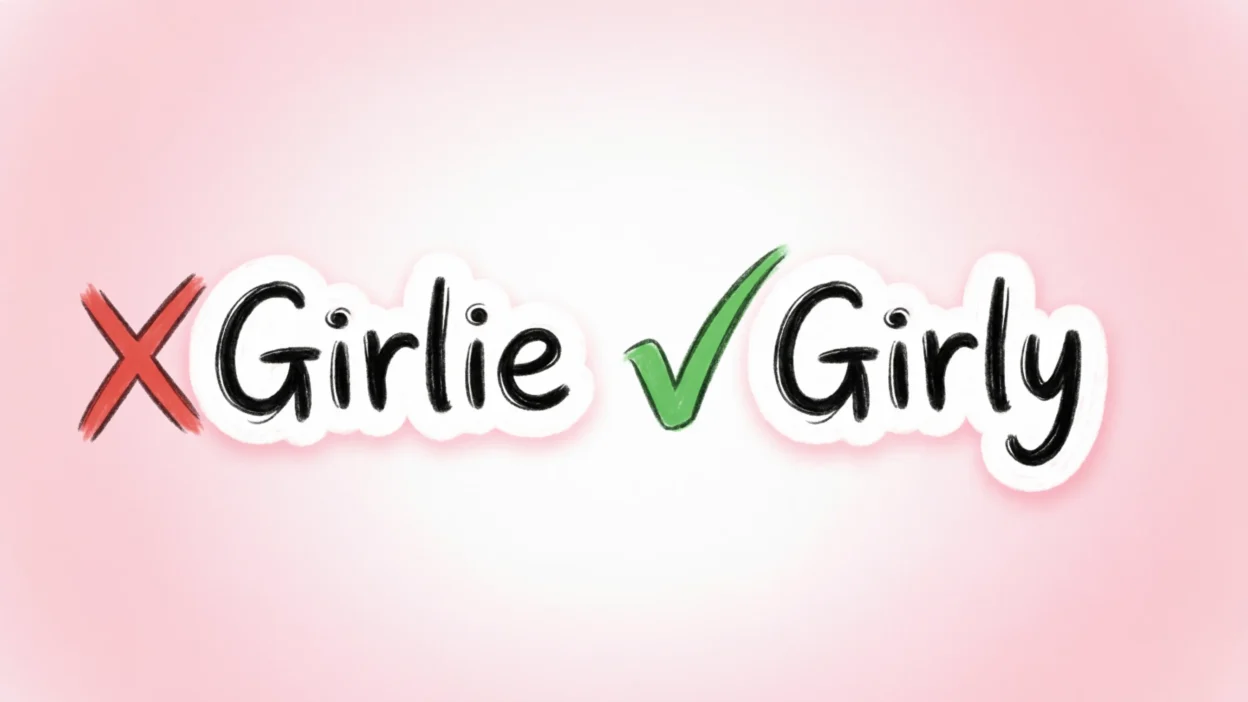
Many English learners feel confused when they see the words girlie and girly. Both words look very similar and both are connected to the idea of girls or feminine style.
Because of this, people often wonder if the words mean the same thing or if they are used differently.
In everyday English, both words exist, but they are not used in exactly the same way. One is more common and natural in modern English, while the other sounds more casual or playful.
In this article, we will explain the difference between girlie and girly in very simple English so students, beginners, and general readers can understand it easily.
Quick Answer
- Girly is the more common and standard word.
- Girlie is a more playful or informal spelling.
- Both words describe things that are very feminine or associated with girls.
- Girly is used more often in daily English and writing.
- Girlie is sometimes used for fun, style, or social media.
Examples:
- She loves girly clothes.
- The room has a girly design with pink flowers.
Simple Background of the Words
Both girlie and girly come from the word girl.
English often adds small endings like –y or –ie to create words that sound cute, informal, or friendly.
Examples:
- dog → doggy
- bird → birdie
- girl → girly / girlie
Because of this pattern, both spellings developed naturally. However, over time girly became the more standard and widely used word.
Understanding the Main Difference
The difference between girlie and girly is mostly about usage and tone.
Girly is the normal and common word used in English to describe something feminine.
Girlie is less common and usually used in a playful or casual way.
For example:
- A fashion magazine might say girly style.
- A friend on social media might write girlie vibes.
So the meanings are very similar, but the feeling of the word is slightly different.
Comparison Table
| Feature | Girly | Girlie |
|—|—|
| Spelling style | Standard | Informal |
| Common usage | Very common | Less common |
| Tone | Neutral and natural | Playful or cute |
| Used in writing | Yes | Mostly casual writing |
| Meaning | Feminine or typical for girls | Same idea but more playful |
Which One Should You Use?
For most situations, girly is the better and safer choice.
You can use girly in:
- school writing
- conversations
- blogs or articles
- everyday speech
Examples:
- She likes girly makeup.
- The party had a girly theme.
- Her style is very girly.
You might see girlie in casual settings like:
- social media posts
- friendly messages
- playful captions
Example:
- Having a fun day with my girlie friends!
But in general, girly is more natural and common.
Common Mistakes People Make
1. Thinking both words are equally common
Many learners believe both words are used the same way.
However, girly is much more common in everyday English.
2. Using “girlie” in formal writing
Because girlie sounds playful, it may look unusual in formal writing.
Example:
Less natural:
- The brand sells girlie fashion.
Better:
- The brand sells girly fashion.
3. Using the words in a negative way
Sometimes the word girly is used to suggest something is too feminine.
However, many people today use the word positively to describe fashion, style, or personality.
Everyday Real-Life Examples
Let’s see how these words appear in daily situations.
In emails
Example:
The decorations should have a soft and girly look.
In fashion discussions
Example:
She prefers a girly style with dresses and pastel colors.
On social media
Example:
Loving these girlie vibes today!
In conversations
Example:
Her room is very girly with pink walls and flowers.
In advertisements
Example:
New collection with cute and girly designs.
Learning Tips for Students and Beginners
If you are learning English, remembering the difference can be easy.
Simple Rule
Use girly most of the time.
It is the standard and safe choice.
Practice Sentences
Read these sentences aloud:
- She enjoys girly movies.
- The dress looks very girly.
- They planned a girly birthday party.
This practice helps you remember how the word naturally fits into sentences.
Frequently Asked Questions (FAQ)
1. Are “girly” and “girlie” the same?
They have similar meanings, but girly is more common and standard.
2. Which spelling is correct?
Both exist, but girly is the preferred spelling in most situations.
3. Is “girlie” wrong?
No, but it is less common and more informal.
4. What does “girly” mean?
It describes something that is very feminine or associated with girls.
5. Can adults use the word “girly”?
Yes. Adults often use it when talking about fashion, hobbies, or style.
6. Is “girly” a negative word?
Not necessarily. Many people use it in a positive or neutral way.
7. Where is “girlie” mostly used?
It is mostly seen in casual writing, social media, or playful language.
8. Should students use “girly” or “girlie”?
Students should usually use girly, especially in school or formal writing.
Conclusion
The difference between girlie and girly is simple once you understand their usage.
- Girly is the standard, common, and natural word used in everyday English.
- Girlie is more playful and informal, and it is used less often.
If you want to write clearly and correctly, choosing girly is usually the best option.
Learning small differences like this helps you become more confident and comfortable with English.

Justin Larry is a talented language writer and content creator at WordHuts.com. She specializes in explaining word differences, grammar tips, and common English mistakes in a clear, practical style. Her engaging content helps readers improve vocabulary, writing skills, and everyday communication, making language learning simple and effective.