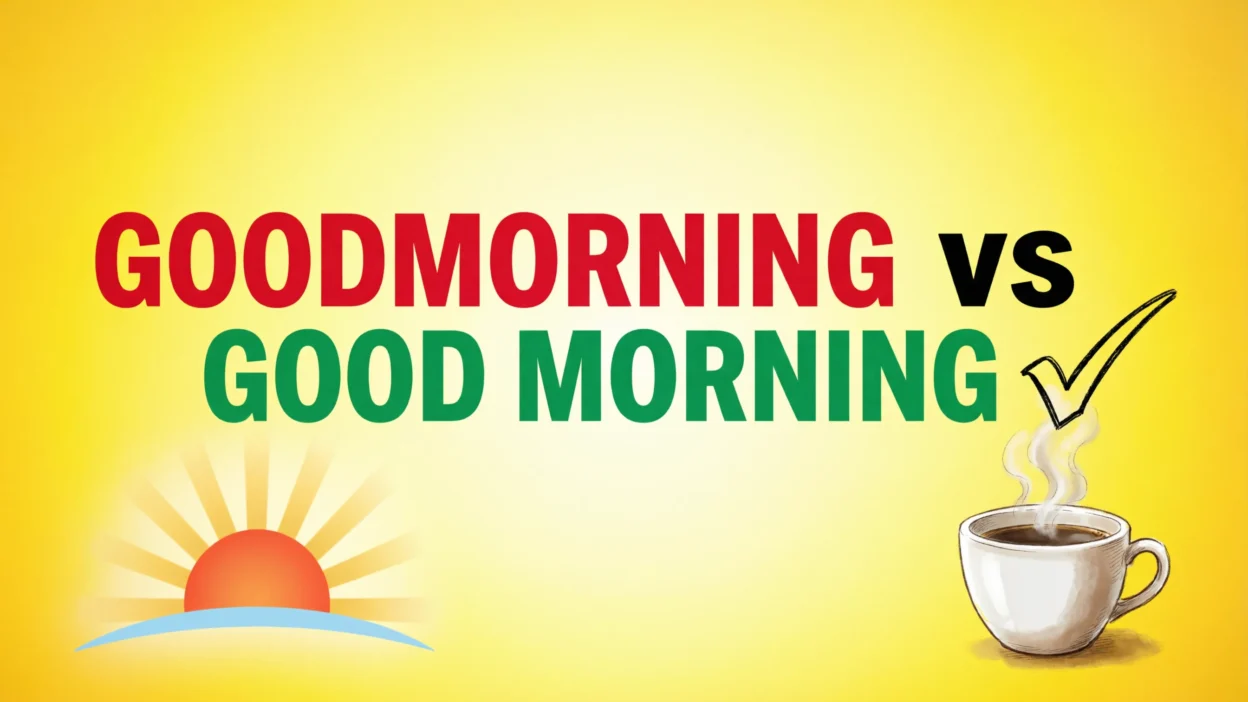
Many English learners are unsure whether they should write “goodmorning” or “good morning.” Both look similar, and when we speak, they sound the same. Because of this, people sometimes combine the words and write them as one word.
However, English has a clear rule for this greeting. Understanding it will help you avoid a very common writing mistake.
In this article, we will explain the difference in very simple English so students, beginners, and general readers can understand it easily.
Quick Answer
- Good morning → Correct spelling
- Goodmorning → Incorrect spelling
- Meaning → A greeting used in the morning
- Used when → Saying hello before noon
Example:
Good morning, how are you today?
This is correct.
Simple Background of the Greeting
The phrase good morning is made of two separate words:
- Good – a positive word
- Morning – the early part of the day
When these two words are combined, they create a polite greeting used to say hello during the morning.
English greetings usually remain two separate words, such as:
- good morning
- good afternoon
- good evening
Because of this pattern, writing goodmorning as one word is not correct.
Clear Explanation of the Difference
The difference is very simple.
Good morning is the correct greeting used in spoken and written English.
Goodmorning is not accepted in standard English writing.
Even though people may type “goodmorning” quickly in messages, it is still considered a spelling mistake.
Example:
Correct:
Good morning, everyone.
Incorrect:
Goodmorning, everyone.
Comparison Table
| Feature | Good morning | Goodmorning |
|---|---|---|
| Correct spelling | Yes | No |
| Number of words | Two words | One word |
| Used in formal writing | Yes | No |
| Used as greeting | Yes | Not recommended |
| Example | Good morning, teacher. | Goodmorning, teacher. (wrong) |
Which One Should You Use and When?
You should always write good morning as two separate words.
You can use this greeting in many situations:
- talking to friends
- speaking to teachers
- sending emails
- writing messages
- greeting coworkers
Examples:
Good morning, class.
Good morning, sir.
Good morning, everyone.
It is used from early morning until about noon.
Common Mistakes People Make
1. Writing the greeting as one word
Many learners write:
Goodmorning!
This is incorrect.
Correct form:
Good morning!
2. Forgetting the comma in messages
When addressing someone, a comma is often used.
Example:
Good morning, Sarah.
3. Using it at the wrong time of day
“Good morning” is usually used before noon.
After noon, people say:
- good afternoon
- good evening
Everyday Real-Life Examples
Here are simple examples of how people use this greeting.
In emails
Example:
Good morning,
I hope you are doing well.
At school
Example:
The students said, “Good morning, teacher.”
At work
Example:
Good morning, team. Let’s start the meeting.
On social media
Example:
Good morning everyone! Have a great day.
In daily conversations
Example:
Good morning! Did you sleep well?
Learning Tips for Students and Beginners
Remembering the correct form is easy if you follow a simple rule.
Simple Rule
All daily greetings are written as two words.
Examples:
- good morning
- good afternoon
- good evening
Practice Sentence
Write this sentence three times:
Good morning, everyone.
This helps your brain remember the correct spelling.
Quick Exercise
Choose the correct option:
- ______ everyone!
- ______ teacher.
- ______, how are you today?
Answer:
All answers: Good morning
Frequently Asked Questions (FAQ)
1. Is “goodmorning” a correct word?
No. It is considered a spelling mistake.
2. What is the correct spelling?
The correct spelling is good morning (two words).
3. When do we say “good morning”?
We say it from early morning until around noon.
4. Is “good morning” formal or informal?
It can be both. It works in formal and casual situations.
5. Do we always use a comma after it?
When addressing someone, a comma is usually used.
Example:
Good morning, John.
6. Can I write “good morning” in messages?
Yes. It is commonly used in texts, emails, and chats.
7. Is “good morning” used worldwide?
Yes. It is one of the most common English greetings around the world.
Conclusion
The difference between goodmorning and good morning is very simple.
- Good morning is the correct and standard greeting.
- Goodmorning is a spelling mistake and should not be used.
Always remember that the greeting has two words, not one. Using the correct form will make your English writing clear and professional.

Brandon Samuel is a dedicated writer and language enthusiast, serving as the lead author at WordHuts.com. He specializes in explaining word differences, grammar rules, and common language mistakes in simple terms. Brandon’s clear, practical writing style helps readers improve vocabulary, writing confidence, and everyday communication skills.