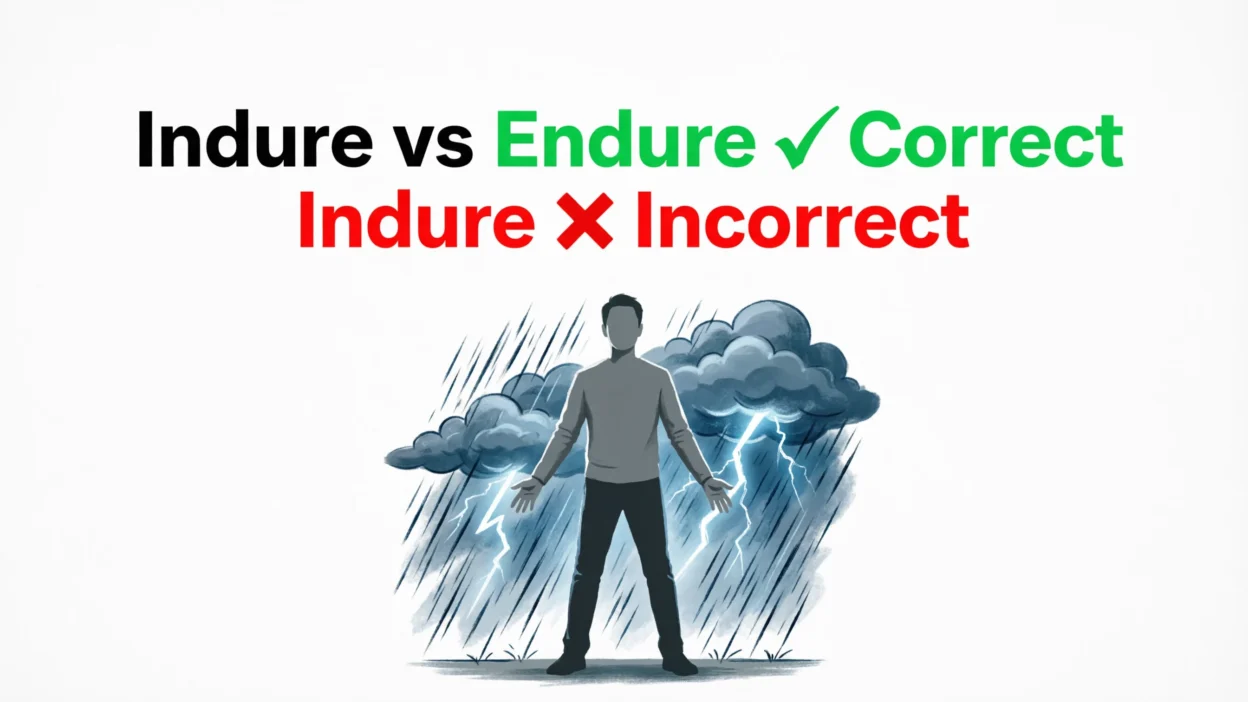
Many English learners get confused between indure and endure because the words look and sound very similar. When writing quickly, people sometimes replace the letter e with i, which creates the spelling indure.
However, in standard English, only one of these words is correct. The correct word is endure, while indure is simply a spelling mistake.
Understanding this difference is important because endure is a common word used in daily conversations, books, and news.
Quick Answer
- Endure → Correct spelling
- Indure → Incorrect spelling
- Endure means to suffer, tolerate, or continue through something difficult.
Examples:
- She had to endure a lot of pain.
- The team endured many challenges during the project.
Simple Origin or Background Explanation
The word endure comes from an old Latin word meaning to last, continue, or remain strong during hardship.
Over time, the word became part of English and kept the same general meaning: to go through something difficult without giving up.
The spelling indure does not come from any recognized English word. It usually appears when someone mistakenly changes the first letter while typing or spelling.
Clear Explanation of the Difference
The difference between indure and endure is simple.
Endure is a real English verb that means to experience something difficult but continue despite it.
Examples:
- The soldiers endured harsh weather.
- She endured years of hard work to reach her goal.
- The building endured the strong storm.
Indure is not a correct English word. It has no accepted meaning and is considered a spelling error.
Incorrect example:
- She had to indure the pain. ✗
Correct example:
- She had to endure the pain. ✓
Comparison Table
Feature | Endure | Indure
Meaning | To tolerate or survive something difficult | No accepted meaning
Correct spelling | Yes | No
Part of speech | Verb | Not a standard word
Used in writing | Yes | No
Example | They endured many hardships. | ✗ They indured many hardships.
Which One to Use and When
You should always use “endure.”
Use it when describing someone or something that continues through difficulty or pain.
Examples:
In daily conversations
- I cannot endure this heat.
In stories
- The hero endured many challenges.
In news
- The community endured a long period of drought.
In motivational contexts
- Success often requires the ability to endure hardships.
Because indure is incorrect, it should not be used in any type of writing.
Common Mistakes People Make
1. Replacing “e” with “i”
Some people mistakenly write:
✗ indure
Correct form:
✓ endure
2. Typing errors
Fast typing can easily produce the incorrect spelling indure, especially if someone is not familiar with the word.
3. Pronunciation confusion
When spoken quickly, the beginning sound of endure can sometimes be unclear, leading people to guess the wrong spelling.
Everyday Real-Life Examples
Here are examples showing how endure is used in real-life situations.
In conversations
I cannot endure this noise anymore.
In news
Residents endured months of heavy rain.
In motivational speech
Great achievements often require people to endure difficulties.
In literature
The character endured many hardships before finding happiness.
On social media
Sometimes you must endure tough times to reach better days.
Learning Section for Students and Beginners
Here is a simple trick to remember the correct spelling.
Memory Trick
Think of the word:
End + ure
Imagine reaching the end after going through something difficult.
This helps you remember the correct spelling endure.
Practice Sentences
Fill in the blank with the correct word.
- She had to ______ many challenges.
- The village ______ a difficult winter.
- Strong people can ______ hardships.
Answers:
- endure
- endured
- endure
Frequently Asked Questions (FAQ)
1. Is “indure” a real English word?
No. Indure is considered a spelling mistake.
2. What does “endure” mean?
It means to tolerate, survive, or continue through something difficult.
3. Is “endure” commonly used?
Yes. It is used in everyday speech, literature, and news.
4. Can “endure” describe emotional pain?
Yes. It can describe both physical and emotional hardship.
Example:
She endured years of stress.
5. Is “endure” used in motivational writing?
Yes. It is often used when discussing strength and perseverance.
6. What is the past form of “endure”?
The past form is endured.
7. Why do people write “indure”?
This usually happens because of spelling confusion or typing errors.
8. Can “endure” describe objects?
Yes. It can describe things that last through difficult conditions.
Example:
The bridge endured the storm.
Conclusion
The difference between indure and endure is very simple.
- Endure is the correct spelling and means to survive or tolerate something difficult.
- Indure is a spelling mistake and should not be used.
Remember this easy rule:
Endure → correct word
Indure → incorrect spelling
Learning this difference will help you write more accurate and confident English.

Brandon Samuel is a dedicated writer and language enthusiast, serving as the lead author at WordHuts.com. He specializes in explaining word differences, grammar rules, and common language mistakes in simple terms. Brandon’s clear, practical writing style helps readers improve vocabulary, writing confidence, and everyday communication skills.