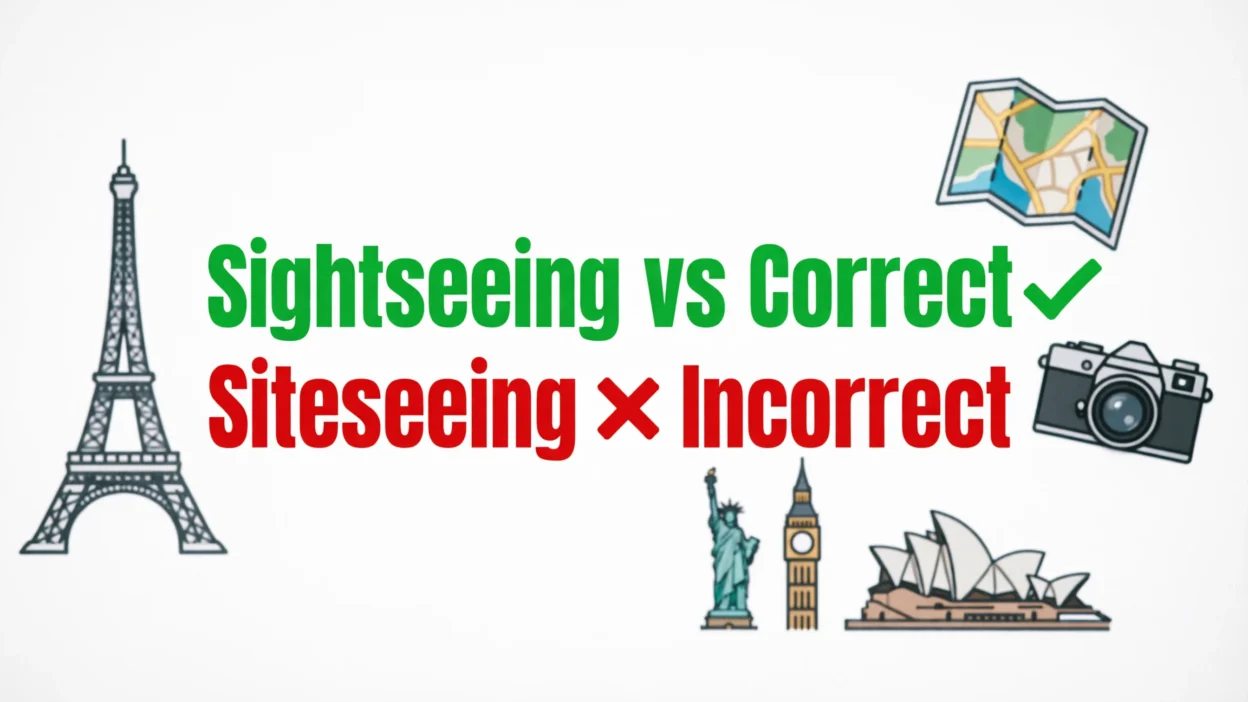
Many English learners feel confused between sightseeing and siteseeing. The two words look almost the same, and they sound very similar when spoken. Because of this, people sometimes write siteseeing when they actually mean sightseeing.
However, in standard English, only one of these spellings is correct. Understanding the correct word will help you avoid mistakes in writing, especially when talking about travel and tourism.
The good news is that the difference between sightseeing and siteseeing is very easy to understand.
Quick Answer
- Sightseeing → Correct spelling
- Siteseeing → Incorrect spelling
- Sightseeing means visiting interesting places while traveling.
Examples:
- We went sightseeing in the city.
- Tourists enjoy sightseeing during their vacations.
Simple Origin or Background Explanation
The word sightseeing comes from two words:
- Sight → something you see
- Seeing → the action of looking or observing
When combined, sightseeing means going to see famous or interesting places.
For example, travelers often go sightseeing to visit:
- monuments
- museums
- landmarks
- historic buildings
The spelling siteseeing is not recognized in standard English. It usually appears because people confuse sight with site, which are different words.
Clear Explanation of the Difference
The difference between sightseeing and siteseeing is simple.
Sightseeing is a correct word used to describe the activity of visiting interesting places while traveling.
Examples:
- We spent the whole day sightseeing.
- They went sightseeing around the old town.
- Many tourists enjoy sightseeing in famous cities.
Siteseeing is not a correct word. It is a spelling mistake that happens when people incorrectly replace sight with site.
Incorrect example:
- We went siteseeing in Paris. ✗
Correct example:
- We went sightseeing in Paris. ✓
Comparison Table
Feature | Sightseeing | Siteseeing
Meaning | Visiting interesting places while traveling | No accepted meaning
Correct spelling | Yes | No
Word origin | Sight + seeing | Incorrect combination
Used in writing | Yes | No
Example | We went sightseeing in London. | ✗ We went siteseeing in London.
Which One to Use and When
You should always use “sightseeing.”
Use it when talking about traveling and visiting famous or interesting places.
Examples:
In travel conversations
- We went sightseeing after breakfast.
In travel blogs
- The city is perfect for sightseeing.
In tour descriptions
- This tour includes sightseeing at major landmarks.
In vacation stories
- We spent two days sightseeing around the city.
Since siteseeing is incorrect, it should never be used in proper writing.
Common Mistakes People Make
1. Confusing “sight” and “site”
Many learners think site (a location) should be used in the word.
However, the correct word uses sight, which means something seen.
Correct word:
✓ sightseeing
Incorrect spelling:
✗ siteseeing
2. Typing errors
Because the word is long, people sometimes misspell it when typing quickly.
Always check the spelling before publishing or sending text.
3. Misunderstanding the meaning
Some people believe siteseeing refers to visiting locations or sites, but this spelling is not accepted in standard English.
Everyday Real-Life Examples
Here are examples showing how sightseeing is used in daily life.
In conversations
We went sightseeing around the city yesterday.
In travel plans
Tomorrow we plan to go sightseeing near the beach.
On social media
Had an amazing day sightseeing in Rome!
In travel advertisements
Our tour package includes sightseeing at famous landmarks.
In vacation stories
We spent the morning sightseeing and the afternoon relaxing at a café.
Learning Section for Students and Beginners
Here is an easy trick to remember the correct spelling.
Memory Trick
Think of the phrase:
See the sights
When you travel, you go to see the sights.
So the word becomes:
sightseeing
Practice Sentences
Fill in the blank with the correct word.
- We went ______ in the capital city.
- Tourists love ______ in historic towns.
- The tour includes ______ at famous monuments.
Answers:
- sightseeing
- sightseeing
- sightseeing
Frequently Asked Questions (FAQ)
1. Is “siteseeing” a real word?
No. Siteseeing is considered a spelling mistake.
2. What is the correct spelling?
The correct spelling is sightseeing.
3. What does “sightseeing” mean?
It means visiting interesting places while traveling.
4. Why do people write “siteseeing”?
People often confuse the words sight and site, which sound similar.
5. Is “sightseeing” used in travel writing?
Yes. It is commonly used in travel guides, blogs, and tour descriptions.
6. Can “sightseeing” be used as a noun?
Yes. It describes the activity of visiting places.
Example:
Sightseeing is the best part of traveling.
7. Can it also be used as a verb phrase?
Yes.
Example:
We are going sightseeing tomorrow.
8. Is “sightseeing” common in everyday English?
Yes. It is widely used when talking about travel and tourism.
Conclusion
The difference between sightseeing and siteseeing is simple.
- Sightseeing is the correct word that means visiting interesting places while traveling.
- Siteseeing is a spelling mistake and should not be used.
Remember this easy idea:
Sightseeing → seeing famous sights
Learning the correct spelling will help your writing look clear, accurate, and professional.

Gregory Alexander is a skilled writer and language researcher at WordHuts.com. He focuses on clarifying confusing word pairs, grammar rules, and common usage mistakes. With a passion for precise communication, Gregory creates simple, easy-to-understand content that helps readers strengthen vocabulary, writing accuracy, and everyday English skills.