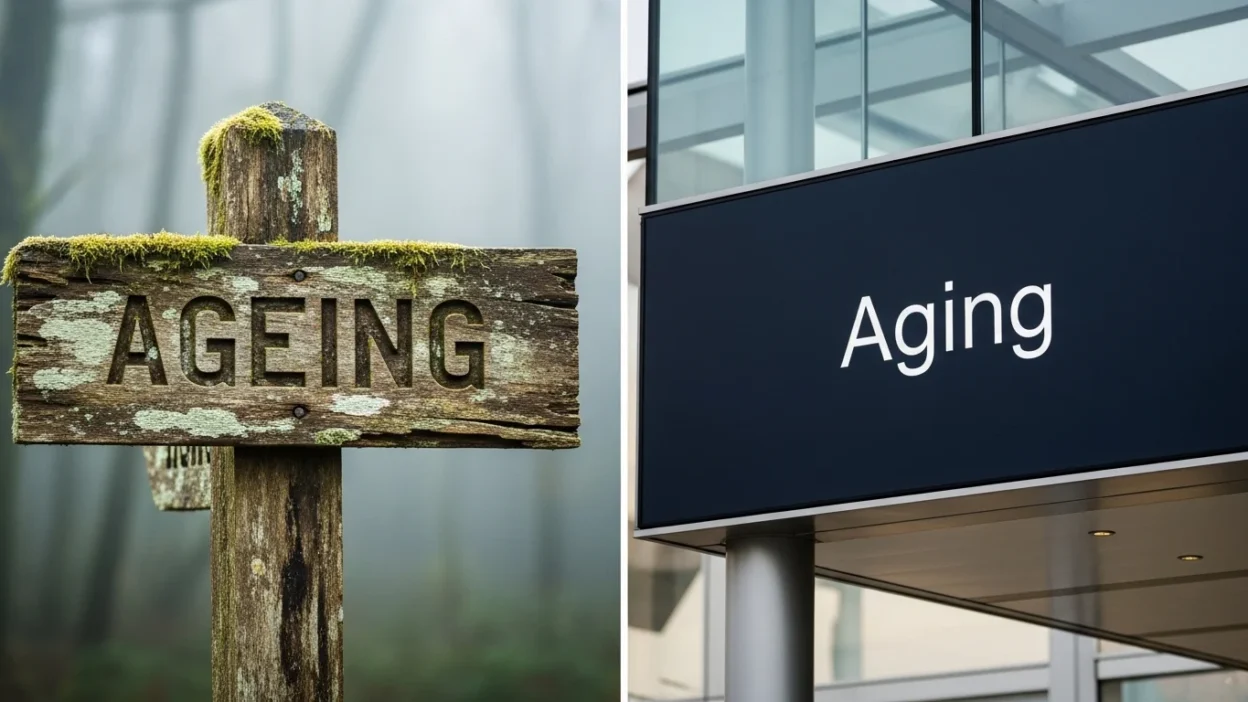
Many learners feel confused when they see “ageing” and “aging.”
Both words look almost the same. Both are used in books, news, and daily writing. So people often ask:
- Which one is correct?
- Are they different in meaning?
- Which one should I use in my writing?
The good news is simple: both are correct. The difference is mainly about where the English is used, not what the word means.
Quick Answer
- Aging → Used in American English
- Ageing → Used in British English
- Meaning → Both mean the same thing: getting older
- No difference in meaning → Only spelling is different
- Choose based on your style → American or British English
Simple Background (Origin)
The word comes from the verb “age”, which means:
to grow older over time
When we add -ing, we make it a continuous action:
- age + ing = aging / ageing
But why two spellings?
This happens because English has two main spelling styles:
- American English (used in the USA)
- British English (used in the UK and many other countries)
In British English, people often keep the extra “e” before adding -ing.
In American English, they usually drop the “e.”
That is why we get:
- ageing (British)
- aging (American)
Clear Explanation of the Difference
Let’s make it very simple:
1. Meaning
There is no difference in meaning.
Both words mean:
- growing older
- becoming old
- the process of getting older
2. Spelling Style
| Style | Spelling |
| American English | aging |
| British English | ageing |
3. Usage
- If you write for an American audience, use aging
- If you write for a British or international audience, use ageing
Comparison Table (Easy to Scan)
| Feature | Aging | Ageing |
| Meaning | Getting older | Getting older |
| English style | American English | British English |
| Correct? | Yes | Yes |
| Used in USA | Very common | Rare |
| Used in UK | Less common | Very common |
| Example | aging population | ageing population |
Which One to Use and When
Choosing the right word is easy if you follow these tips:
Use “aging” when:
- You are writing in American English
- Your audience is in the United States
- You follow American spelling rules
Example:
- The country has an aging population.
- Skin aging is natural.
Use “ageing” when:
- You are writing in British English
- Your audience is in the UK, Pakistan, India, or other Commonwealth countries
- You follow British spelling rules
Example:
- The ageing population is growing fast.
- Ageing is a natural process.
Important Tip
👉 Do not mix both spellings in one piece of writing.
Choose one style and stay consistent.
Common Mistakes People Make
Here are mistakes that learners often make:
1. Thinking they have different meanings
❌ Wrong idea: Aging and ageing are different in meaning
✅ Truth: They mean the same thing
2. Mixing both spellings in one text
❌ Example:
- Aging is natural, but ageing can be slowed.
✅ Better:
- Aging is natural, but it can be slowed. (American)
OR - Ageing is natural, but it can be slowed. (British)
3. Using the wrong style for the audience
❌ Writing “ageing” in a US-based report
❌ Writing “aging” in a UK school exam
👉 Always match your audience.
4. Overthinking the spelling
Some learners worry too much.
👉 Remember:
Both are correct. You are not wrong if you choose one.
Everyday Real-Life Examples
Let’s see how these words are used in daily life.
1. Emails
American style:
- Our company is studying the aging workforce.
British style:
- Our company is studying the ageing workforce.
2. News Sentences
- The aging population is increasing healthcare needs. (US style)
- The ageing population is increasing healthcare needs. (UK style)
3. Social Media
- Aging is part of life. Accept it and stay happy.
- Ageing is a natural journey. Enjoy every moment.
4. Daily Conversations (Written)
- My grandparents are aging, but they are still active.
- My grandparents are ageing, but they are still active.
5. Health and Beauty Topics
- Anti-aging products are popular. (American)
- Anti-ageing creams are popular. (British)
Short Learning Section for Students and Beginners
Here is a quick way to remember:
Easy Rule
👉 Drop the “e” in American English → aging
👉 Keep the “e” in British English → ageing
Memory Trick
Think like this:
- America = shorter spelling → aging
- Britain = longer spelling → ageing
Practice Sentences
Fill in the blank:
- The ______ population needs more care.
- ______ is a natural process.
Try both styles:
- aging
- ageing
FAQ (Frequently Asked Questions)
1. Are “aging” and “ageing” both correct?
Yes, both are correct. The difference is only in spelling style.
2. Which one is more common?
- “Aging” is common in the USA
- “Ageing” is common in the UK and many other countries
3. Do they have different meanings?
No, they have exactly the same meaning.
4. Which one should students use?
Use the one your school or exam system follows:
- American system → aging
- British system → ageing
5. Can I use both in one article?
No, it is better to choose one style and stay consistent.
6. Is “aging” wrong in British English?
It is not wrong, but it looks unusual. British English prefers “ageing.”
7. Is “ageing” wrong in American English?
It is not incorrect, but Americans usually do not use it.
8. Which one should I use online?
Use the style your audience expects. If unsure, choose one and stay consistent.
Conclusion
The difference between “ageing” and “aging” is very simple:
- Both mean the same thing: getting older
- The only difference is spelling style
- Aging → American English
- Ageing → British English
There is no need to worry or feel confused. Just remember:
👉 Choose one style based on your audience
👉 Stay consistent in your writing
With this simple rule, you can use both words correctly and confidently in any situation.

Gregory Alexander is a skilled writer and language researcher at WordHuts.com. He focuses on clarifying confusing word pairs, grammar rules, and common usage mistakes. With a passion for precise communication, Gregory creates simple, easy-to-understand content that helps readers strengthen vocabulary, writing accuracy, and everyday English skills.