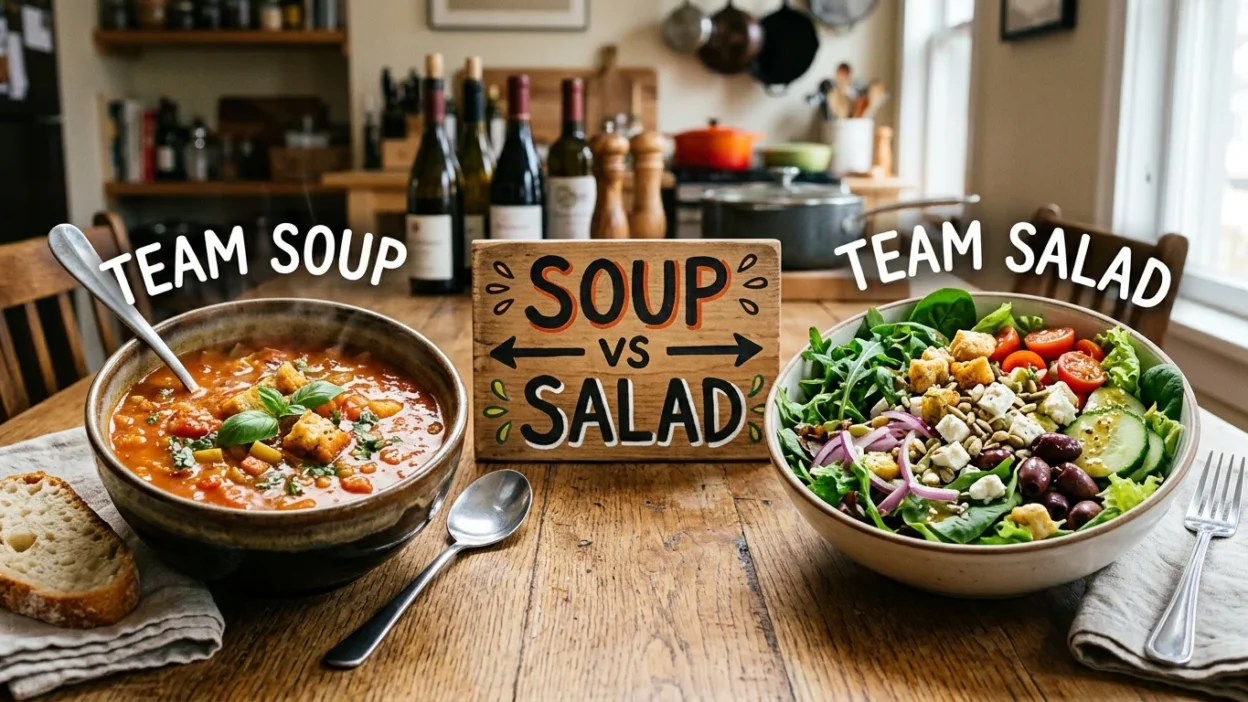
Many people confuse soup and salad because both are common foods that can be healthy, light, or served before the main meal. Sometimes a meal includes both, and some dishes even look similar. For example, a cold soup may seem like a salad dressing, while a warm salad can feel almost like soup.
Students, English learners, and general readers also get confused because these words are used in many different ways in restaurants, recipes, social media posts, and everyday conversations.
This guide explains the difference between soup and salad in very simple English so you can understand when and how to use each word correctly.
Quick Answer
Soup
- Usually contains liquid like water, broth, or cream
- Often served warm, but can also be cold
- Ingredients cook together in the liquid
- Eaten with a spoon
Salad
- Usually made from mixed solid ingredients
- Often served cold or at room temperature
- Ingredients stay separate or lightly mixed
- Commonly eaten with a fork
Simple Background Explanation
What Is Soup?
Soup is a food made by cooking ingredients in liquid. The liquid can be:
- Water
- Broth
- Stock
- Milk
- Cream
Soup often includes:
- Vegetables
- Meat
- Chicken
- Beans
- Noodles
- Rice
People have eaten soup for thousands of years because it is easy to cook and simple to digest.
Examples:
- Chicken soup
- Tomato soup
- Lentil soup
- Vegetable soup
What Is Salad?
Salad is a dish made by mixing ingredients together, usually without much liquid. Most salads contain:
- Vegetables
- Fruits
- Cheese
- Nuts
- Meat
- Eggs
A salad usually has dressing added on top instead of ingredients cooking in liquid.
Examples:
- Green salad
- Fruit salad
- Pasta salad
- Potato salad
Main Difference Between Soup and Salad
The biggest difference is the amount of liquid.
Soup Has More Liquid
Soup is mainly liquid with ingredients inside it.
Example:
- In chicken soup, the broth is an important part of the dish.
Without the liquid, it would not really be soup anymore.
Salad Has Little or No Liquid
Salad mostly contains solid ingredients mixed together.
Example:
- In a garden salad, lettuce, tomatoes, and cucumbers stay separate even after mixing.
The dressing adds flavor but does not turn the dish into liquid food.
Another Easy Way to Remember
Soup
“Ingredients inside liquid”
Salad
“Ingredients mixed together”
Soup vs Salad Comparison Table
| Feature | Soup | Salad |
| Main texture | Liquid | Solid |
| Usually served | Warm or hot | Cold or cool |
| Cooking style | Ingredients cooked in liquid | Ingredients mixed together |
| Eating tool | Spoon | Fork |
| Main base | Broth, water, cream | Vegetables, fruits, or other solids |
| Heavy or light | Can be heavy or light | Usually light |
| Common use | Starter or full meal | Side dish or healthy meal |
| Example | Tomato soup | Caesar salad |
Which One Should You Use and When?
Use “Soup” When:
- The dish contains a lot of liquid
- Ingredients are boiled or cooked in broth
- People drink or spoon the liquid
Examples
- “I made vegetable soup for dinner.”
- “The soup is very hot.”
- “Chicken soup helps when you are sick.”
Use “Salad” When:
- The dish is mostly solid ingredients
- Ingredients are chopped and mixed
- Dressing is added lightly
Examples
- “I ordered a salad for lunch.”
- “Fruit salad is sweet and fresh.”
- “She added cheese to the salad.”
Types of Soup
There are many kinds of soup.
Clear Soup
Thin liquid with vegetables or meat.
Examples:
- Chicken broth
- Noodle soup
Thick Soup
Creamy or heavy texture.
Examples:
- Mushroom soup
- Potato soup
Cold Soup
Served cold instead of hot.
Examples:
- Gazpacho
- Cold cucumber soup
Types of Salad
Green Salad
Made with lettuce and fresh vegetables.
Fruit Salad
Mixed fruits together.
Pasta Salad
Pasta mixed with vegetables, sauce, or cheese.
Protein Salad
Contains chicken, tuna, eggs, or beans.
Common Mistakes People Make
1. Thinking Every Healthy Food Is Salad
Not all healthy foods are salads.
Example:
- Vegetable soup is healthy, but it is still soup because it has liquid.
2. Calling Thick Soup a Salad
Some thick soups look heavy, but they are still soups if liquid is the main base.
Example:
- Creamy potato soup is not a potato salad.
3. Confusing Cold Soup With Salad
Cold soup can confuse many people.
Example:
- Gazpacho is cold, but it is still soup because it is mostly liquid.
4. Thinking Salad Must Contain Lettuce
Not true.
Some salads contain:
- Pasta
- Potatoes
- Beans
- Fruits
A salad does not always need green vegetables.
5. Mixing Up Food Names in English
English learners sometimes use “soup” for any mixed food.
Remember:
- Liquid = soup
- Mostly solid mixture = salad
Everyday Real-Life Examples
In Restaurants
Soup
- “Today’s soup is tomato basil.”
Salad
- “The salad comes with grilled chicken.”
In Social Media Posts
Soup
- “Rainy weather makes me want hot soup.”
Salad
- “Trying a fresh salad for lunch today.”
In Daily Conversations
Soup
- “My grandmother cooks the best soup.”
Salad
- “Can you make a salad for dinner?”
In News or Health Articles
Soup
- “Warm soup is popular during winter.”
Salad
- “Many people eat salad for healthy meals.”
In School or Office Lunches
Soup
- Easy to carry in containers
- Often eaten warm
Salad
- Popular cold lunch option
- Quick and fresh meal
Learning Section for Students and Beginners
Easy Memory Trick
Soup = Spoon + Liquid
Salad = Fork + Mixed Solids
This simple trick helps many learners remember the difference quickly.
Simple Practice Sentences
Fill in the correct word:
- I ate chicken ___ for dinner.
- She made a fruit ___ for the party.
- The tomato ___ was very hot.
- He ordered a green ___ with cheese.
Answers
- soup
- salad
- soup
- salad
Beginner Tip
Ask yourself this question:
“Is liquid the main part?”
- Yes → soup
- No → salad
This works most of the time.
Soup and Salad Together
Many meals include both soup and salad.
Example:
- Soup as a starter
- Salad as a side dish
In some restaurants, people choose:
- Soup or salad before the main meal
Both foods can be:
- Healthy
- Light
- Fresh
- Filling
But they are prepared and served differently.
FAQs
1. Is soup always hot?
No. Some soups are cold, like gazpacho.
2. Is salad always cold?
Usually yes, but some salads can be warm.
3. Can soup be a full meal?
Yes. Many soups contain meat, noodles, rice, or beans and can be very filling.
4. Does salad always contain vegetables?
No. Fruit salad and pasta salad are also salads.
5. Which is healthier: soup or salad?
Both can be healthy depending on the ingredients.
6. Can a dish be both soup and salad?
Usually no, but some foods may seem similar because of texture or ingredients.
7. Why do people eat soup when sick?
Warm soup can feel comforting and easy to digest.
8. Which is easier to make?
Both can be easy. Salads are usually quicker because many do not need cooking.
Conclusion
Soup and salad are both popular foods, but they are very different.
The easiest way to understand the difference is this:
- Soup is mainly liquid with ingredients inside it.
- Salad is mainly mixed solid ingredients with little liquid.
Soup is often warm and eaten with a spoon. Salad is usually cool and eaten with a fork.
Once you remember:
- “Liquid = soup”
- “Mixed solids = salad”
the confusion becomes much easier to avoid.
Both foods can be delicious, healthy, and part of everyday meals.

Justin Larry is a talented language writer and content creator at WordHuts.com. She specializes in explaining word differences, grammar tips, and common English mistakes in a clear, practical style. Her engaging content helps readers improve vocabulary, writing skills, and everyday communication, making language learning simple and effective.