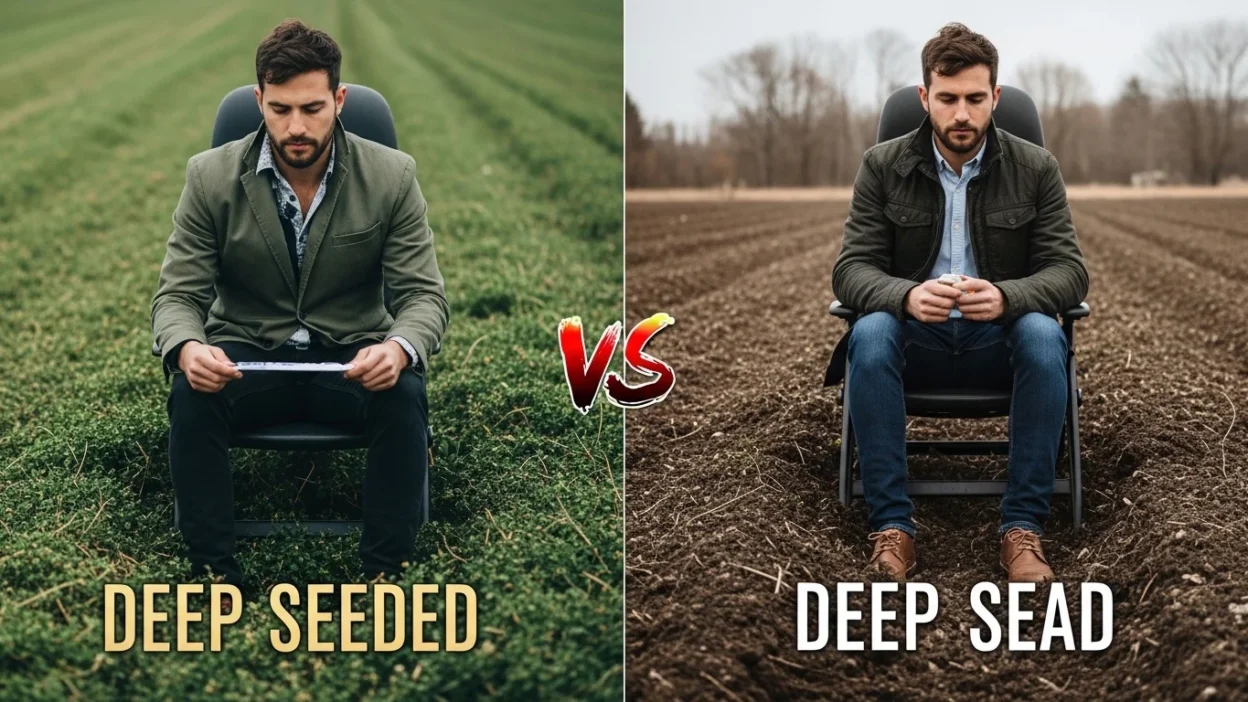
Many people feel unsure when they see or hear “deep-seeded” and “deep-seated.” The two phrases sound almost the same, so it’s easy to mix them up. Because of this, even native speakers sometimes use the wrong one without noticing.
The truth is simple: only one of these is correct in standard English. This guide will help you understand the difference clearly, so you can use the right phrase every time without confusion.
Quick Answer
- ✅ Deep-seated = correct phrase
→ means something is firmly fixed, strong, or hard to change - ❌ Deep-seeded = incorrect (common mistake)
→ people often use it by mistake instead of “deep-seated”
Simple Origin and Background
To understand the difference, it helps to know where the correct phrase comes from.
Deep-Seated
- The word “seated” comes from “seat,” which means a place where something rests.
- So, deep-seated means something is firmly placed deep inside.
Think of it like something sitting very deeply in the ground or inside a person.
Deep-Seeded (Why People Say It)
- The word “seed” makes people think of planting and growing.
- So, some people mistakenly say deep-seeded, imagining something growing deep like roots.
This sounds logical, but it is not correct in standard English usage.
Clear Explanation of the Difference
What “Deep-Seated” Means
Deep-seated describes something that is:
- Strong and firm
- Hard to change
- Deeply rooted in feelings, beliefs, or systems
It is often used with:
- Emotions
- Beliefs
- Problems
- Habits
Example:
- She has a deep-seated fear of heights.
This means the fear is strong and has existed for a long time.
What About “Deep-Seeded”?
- It is a common mistake
- It is not accepted in formal or correct English
- It appears because people confuse “seated” with “seeded”
Example (incorrect):
- He has a deep-seeded belief. ❌
Correct version:
- He has a deep-seated belief. ✅
Comparison Table
| Feature | Deep-Seated ✅ | Deep-Seeded ❌ |
| Correct usage | Yes | No |
| Meaning | Firmly fixed, hard to change | No standard meaning |
| Origin | From “seat” (firm position) | Confused with “seed” |
| Used in writing | Yes | Avoid it |
| Example | Deep-seated fear | (Incorrect usage) |
Which One to Use and When
Use “Deep-Seated” When Talking About:
- Strong emotions
→ deep-seated anger, fear, hatred - Long-held beliefs
→ deep-seated belief, opinion - Serious problems
→ deep-seated issues in society - Habits or attitudes
→ deep-seated habits
Do NOT Use “Deep-Seeded”
Even if it sounds natural, avoid it in:
- Exams
- Essays
- Emails
- Professional writing
Common Mistakes People Make
Here are some typical errors:
1. Thinking “Seeded” Sounds More Logical
People imagine something growing like a plant, so they say “deep-seeded.”
But English doesn’t use it this way.
2. Copying Others Without Checking
Many people repeat what they hear in conversations or online.
If someone says “deep-seeded,” it doesn’t mean it’s correct.
3. Mixing Up Words That Sound Similar
“Seated” and “seeded” sound almost the same, which causes confusion.
4. Using It in Formal Writing
Using “deep-seeded” in school or work writing can make your English look incorrect.
Everyday Real-Life Examples
In Emails
❌ Incorrect:
- There is a deep-seeded problem in our team.
✅ Correct:
- There is a deep-seated problem in our team.
In News or Articles
❌ Incorrect:
- The country faces deep-seeded issues.
✅ Correct:
- The country faces deep-seated issues.
In Social Media
❌ Incorrect:
- I have a deep-seeded dislike for this trend.
✅ Correct:
- I have a deep-seated dislike for this trend.
In Daily Conversation
❌ Incorrect:
- He has deep-seeded anger.
✅ Correct:
- He has deep-seated anger.
Short Learning Section for Students and Beginners
Here’s a simple way to remember:
Easy Trick
- Think of “seat” = something sitting firmly
- So, deep-seated = firmly sitting inside
👉 If it’s strong and hard to change → use deep-seated
Practice Exercise
Choose the correct option:
- She has a ______ fear of failure.
→ deep-seated ✅ - The issue is ______ in society.
→ deep-seated ✅ - He has a ______ belief in honesty.
→ deep-seated ✅
One-Line Rule
👉 Always use “deep-seated.” Never use “deep-seeded.”
FAQ Section
1. Is “deep-seeded” ever correct?
No. It is considered incorrect in standard English.
2. Why do so many people say “deep-seeded”?
Because it sounds logical and similar to “deep-seated.”
3. What does “deep-seated” mean in simple words?
It means something very strong and hard to change.
4. Can I use “deep-seeded” in casual speech?
You might hear it, but it’s better to avoid it completely.
5. Is this mistake common?
Yes, very common—even among native speakers.
6. How can I remember the correct form?
Think:
“Seated = sitting deep inside”
7. Is “deep-rooted” similar?
Yes. “Deep-rooted” has a similar meaning and is also correct.
8. Which is better: deep-seated or deep-rooted?
Both are correct.
“Deep-seated” is more formal, while “deep-rooted” is more common in everyday speech.
Conclusion
The confusion between deep-seeded and deep-seated is very common, but the solution is simple.
- Deep-seated is the correct phrase
- Deep-seeded is a mistake
Whenever you want to describe something strong, lasting, and hard to change, use deep-seated.
With this clear understanding, you can now use the right phrase confidently in speaking and writing.

Brandon Samuel is a dedicated writer and language enthusiast, serving as the lead author at WordHuts.com. He specializes in explaining word differences, grammar rules, and common language mistakes in simple terms. Brandon’s clear, practical writing style helps readers improve vocabulary, writing confidence, and everyday communication skills.