Many English learners get confused by awoken and awakened because both words come from the verb awake. They look similar, sound similar, and are both connected to waking up.
The confusion becomes even bigger because native speakers use these words in different ways. Sometimes they mean waking from sleep, and sometimes they describe emotions, ideas, or awareness.
The good news is that the difference is not difficult once you see how each word is used in real sentences.
This guide explains everything in very simple English so you can understand it clearly and use both words with confidence.
Quick Answer
Here is the simple difference between awoken and awakened:
- Awoken is usually a past participle.
- Awakened can be both a past tense verb and a past participle.
- Awakened is more common in modern English.
- Awoken often sounds a little more formal, literary, or dramatic.
- Both words can describe:
- waking from sleep
- becoming aware of something emotionally or mentally
Easy Examples
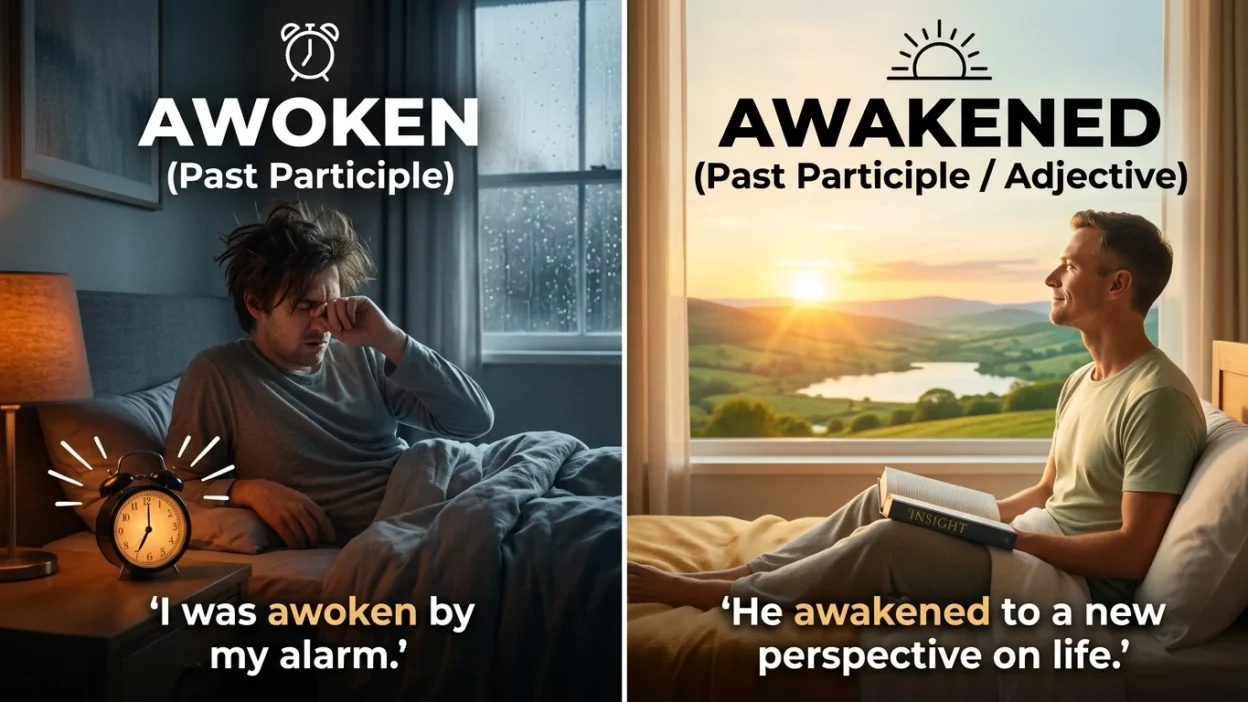
- I was awoken by loud music.
- She awakened suddenly at midnight.
- The movie awakened old memories.
- He had been awoken by the storm.
Simple Background and Origin
Both words come from the old English verb awake.
Over time, English created different forms of the verb:
| Form | Example |
| Base verb | awake |
| Past tense | awoke / awakened |
| Past participle | awoken / awakened |
English has many verbs with changing forms like this:
- break → broke → broken
- speak → spoke → spoken
- wake → woke → woken
Because of this pattern, many people expect:
- awake → awoke → awoken
And this is correct.
But English also developed another form:
- awake → awakened → awakened
That is why both versions exist today.
The Main Difference Between Awoken and Awakened
The biggest difference is how the words are normally used in sentences.
1. Awoken
Awoken is mainly used as a past participle.
It usually appears with:
- has
- have
- had
- was
- were
- been
Examples
- I had been awoken early.
- She was awoken by a phone call.
- They have been awoken several times tonight.
Notice that awoken usually does not stand alone as the main past tense verb.
People rarely say:
- “I awoken at 6.” ❌
That sounds incorrect in modern English.
2. Awakened
Awakened is much more flexible.
It can work as:
- a past tense verb
- a past participle
- sometimes even an adjective
Examples as a Past Tense Verb
- He awakened suddenly.
- She awakened to the sound of rain.
Examples as a Past Participle
- They had awakened before sunrise.
- The child was awakened by thunder.
Examples as an Adjective
- An awakened mind sees things differently.
- She felt spiritually awakened.
This flexibility is one reason why awakened is more common today.
Comparison Table
Here is a quick and easy comparison:
| Feature | Awoken | Awakened |
| Verb type | Mostly past participle | Past tense and past participle |
| Common in modern English | Less common | More common |
| Tone | Formal or literary | Natural and everyday |
| Used with helping verbs | Yes | Yes |
| Can stand alone as past tense | Rarely | Yes |
| Emotional or spiritual meaning | Sometimes | Very common |
| Easier for beginners | Not always | Yes |
Which One Should You Use?
For most learners, awakened is the safer and easier choice.
Use “Awakened” When:
- writing everyday English
- speaking casually
- describing emotions or awareness
- using the simple past tense
Examples
- The experience awakened something inside her.
- I awakened at dawn.
- The news awakened public interest.
Use “Awoken” When:
- using passive voice
- writing more formal English
- creating dramatic or literary sentences
Examples
- He was awoken by screams.
- They had been awoken in the middle of the night.
- I was suddenly awoken by thunder.
Common Mistakes People Make
Many learners mix the grammar forms incorrectly. Here are the most common mistakes.
Mistake 1: Using “awoken” as a simple past tense
❌ I awoken early.
✅ I awakened early.
✅ I awoke early.
Mistake 2: Forgetting the helping verb
❌ She awoken by noise.
✅ She was awoken by noise.
Mistake 3: Using both forms together incorrectly
❌ He had awakened by the alarm.
This sentence sounds strange because the alarm wakes him.
✅ He had been awoken by the alarm.
✅ The alarm awakened him.
Mistake 4: Thinking the words always mean sleep
These words can also mean becoming emotionally aware.
Example
- The book awakened his interest in science.
This does not mean he was sleeping.
Everyday Real-Life Examples
Seeing real-life situations helps make the difference clearer.
In Daily Conversation
- I was awoken by my neighbor’s dog.
- She awakened before everyone else.
- We were suddenly awoken at 3 a.m.
In Emails
- I was awoken by repeated phone calls last night.
- The meeting awakened new ideas for the project.
In News Writing
- Residents were awoken by an earthquake.
- The speech awakened public debate.
On Social Media
- I got awoken by my alarm again.
- Traveling has really awakened my confidence.
In Books and Stories
Writers often prefer these words because they sound emotional or dramatic.
- She was awoken by footsteps in the hallway.
- The old letter awakened painful memories.
Easy Tip to Remember
Here is a simple memory trick:
“Awoken” usually needs a helper.
Examples:
- was awoken
- had awoken
- been awoken
“Awakened” can work alone.
Examples:
- She awakened.
- The sound awakened him.
This trick helps many students avoid grammar mistakes.
Short Learning Section for Students and Beginners
If you are learning English, you do not need to use both words immediately.
Start with awakened because it is easier and more common.
Beginner-Friendly Sentence Patterns
Pattern 1: Someone awakened
- I awakened suddenly.
- She awakened late.
Pattern 2: Something awakened someone
- The noise awakened me.
- The movie awakened strong emotions.
Pattern 3: Someone was awoken
- I was awoken by shouting.
- They were awoken by thunder.
Practice these simple patterns first.
FAQ About Awoken vs Awakened
1. Is “awoken” correct English?
Yes. Awoken is correct English and is commonly used as a past participle.
Example:
- I was awoken by loud music.
2. Is “awakened” more common?
Yes. In modern English, awakened is generally more common and easier to use.
3. Can I say “I awoken early”?
No. That is usually considered incorrect.
Say:
- I awakened early.
- I awoke early.
4. Do both words mean waking from sleep?
Yes, but they can also mean becoming emotionally or mentally aware.
Example:
- The experience awakened new feelings.
5. Which word sounds more formal?
Awoken often sounds more formal or literary.
6. Can “awakened” describe emotions?
Yes. This is very common.
Examples:
- The song awakened memories.
- Travel awakened her curiosity.
7. Is “awoke” the same as “awakened”?
Not exactly.
Both can work as past tense forms, but:
- “awoke” sounds more traditional or literary
- “awakened” sounds more modern and natural
8. Which word should beginners use?
Beginners should mostly use awakened because it is simpler and more flexible.
Final Thoughts
The difference between awoken and awakened becomes much easier once you focus on how they are used in sentences.
Remember these key points:
- Awoken is mainly a past participle.
- Awakened works as both past tense and past participle.
- Awakened is more common in everyday English.
- Awoken often appears with helping verbs like “was” or “had.”
- Both words can describe sleep, emotions, awareness, or new understanding.
For most learners, using awakened is the easiest and safest choice. As your English improves, you will naturally start recognizing when awoken sounds better in certain sentences.
With enough reading and practice, both words will soon feel natural to you.

Justin Larry is a talented language writer and content creator at WordHuts.com. She specializes in explaining word differences, grammar tips, and common English mistakes in a clear, practical style. Her engaging content helps readers improve vocabulary, writing skills, and everyday communication, making language learning simple and effective.