Many learners and even native speakers feel confused when they see two spellings: “theater” and “theatre.” Both words look similar. Both are correct. But why are there two forms?
The confusion usually happens because different countries use different English styles. If you are a student or learning English as a second language, this can feel tricky at first. The good news is that the difference is actually very simple.
In this guide, you will learn the meaning, the difference, and how to use each word correctly in everyday life.
Quick Answer
Here is the short and clear answer:
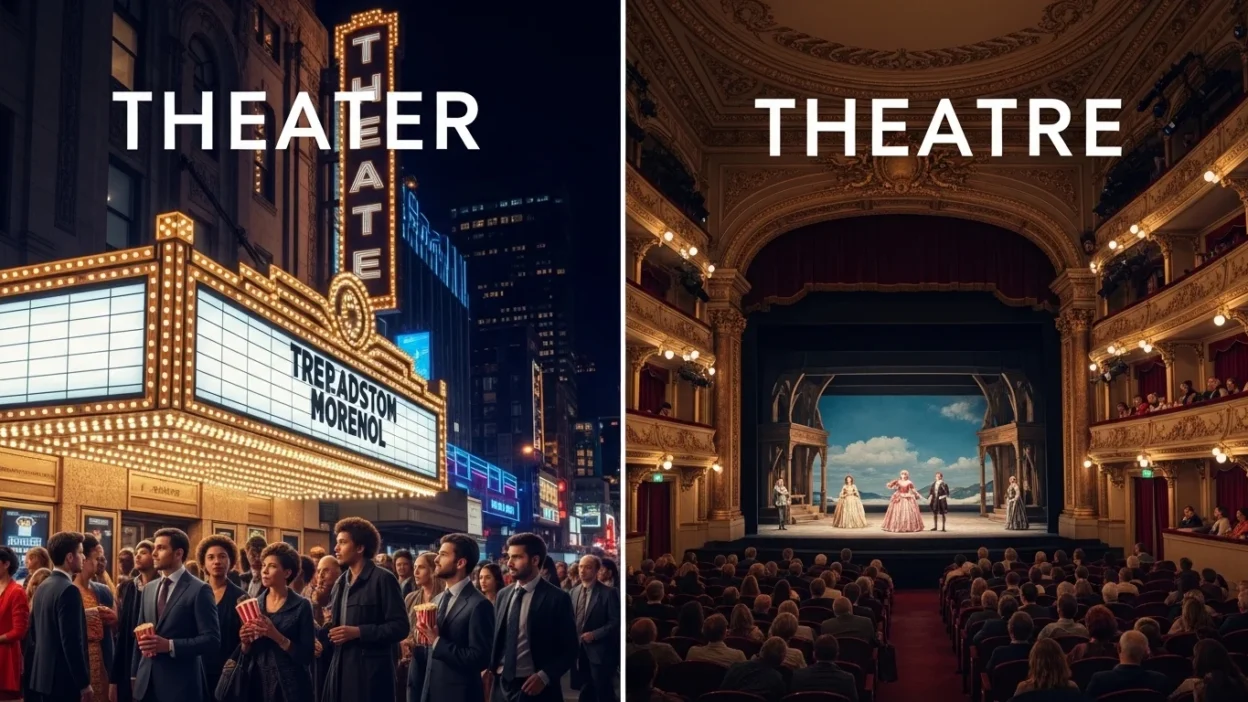
- “Theater” is used in American English
- “Theatre” is used in British English
- Both words have the same meaning
- Choose one based on the country or style you are following
Simple Origin and Background
The word comes from an old Greek word that means “a place for watching.” Over time, it moved into Latin and then into English.
In British English, the spelling became “theatre.”
Later, in American English, many words were simplified. So “theatre” became “theater.”
This is similar to other words like:
- Colour → Color
- Centre → Center
- Favourite → Favorite
So, the difference is mostly about spelling style, not meaning.
What Does “Theater/Theatre” Mean?
Both words mean the same thing. They can refer to:
- A building where people watch plays or movies
- The art of acting and performing
- A stage performance like drama or live shows
Examples:
- “We went to the theater to watch a movie.”
- “She studies theatre at college.”
Clear Explanation of the Difference
The main difference is based on location and style:
1. American English → “Theater”
If you are writing for an American audience, use theater.
Example:
- “The movie theater is full tonight.”
2. British English → “Theatre”
If you are writing for a British audience, use theatre.
Example:
- “We are going to the theatre this evening.”
3. Small Style Difference (Sometimes)
Sometimes, especially in American English, people use:
- “Theater” → for movies or general use
- “Theatre” → for live performances or art
But this is not a strict rule. It is just a style choice.
Comparison Table
| Feature | Theater | Theatre |
| English Style | American English | British English |
| Meaning | Same | Same |
| Usage | USA, modern writing | UK, formal or traditional |
| Pronunciation | Same | Same |
| Example | Movie theater | Royal theatre |
Which One Should You Use?
Here is an easy guide:
Use “Theater” if:
- You are writing in American English
- Your audience is in the USA
- You are talking about movies or cinemas
Use “Theatre” if:
- You are writing in British English
- Your audience is in the UK or similar countries
- You are writing about arts, drama, or stage shows
Simple Tip:
Pick one style and use it consistently.
Common Mistakes People Make
Here are some mistakes to avoid:
1. Mixing Both Spellings
❌ Wrong:
- “We went to the theatre, and the theater was full.”
✔️ Correct:
- Choose one style and stick to it.
2. Thinking They Have Different Meanings
❌ Wrong:
- “Theatre is only for plays.”
✔️ Correct:
- Both words mean the same thing.
3. Using the Wrong Style for the Audience
❌ Example:
- Using “theatre” in an American school essay
✔️ Better:
- Use “theater” for American writing
4. Overthinking the Difference
Some learners worry too much. Remember:
👉 Both are correct. You just need the right style.
Everyday Real-Life Examples
1. In Emails
- “Let’s meet at the movie theater at 7 PM.” (American)
- “We booked seats at the theatre tonight.” (British)
2. In News
- “A new theater opened downtown.”
- “The theatre festival starts next week.”
3. On Social Media
- “Just came back from the theater. Great movie!”
- “Loved the theatre performance today!”
4. In Daily Conversation
- “Do you want to go to the theater?”
- “She works in theatre.”
Learning Section for Students and Beginners
Here is a simple way to remember:
Memory Trick:
- Theater = America
- Theatre = Britain
Practice Sentences
Fill in the blanks:
- We are going to the ______ tonight.
- He studies ______ in London.
- The movie ______ is very crowded.
Answers:
- theater / theatre (both correct, depends on style)
- theatre
- theater
Mini Exercise
Choose the correct spelling:
- “The (theater/theatre) is closed today.”
- “She loves studying (theater/theatre) in the UK.”
Suggested answers:
- theater (American)
- theatre (British)
FAQ Section
1. Are “theater” and “theatre” different words?
No. They are the same word with different spellings.
2. Which one is correct?
Both are correct. It depends on the English style you are using.
3. Which spelling is more common?
“Theater” is more common in American English.
“Theatre” is common in British English.
4. Do they sound different?
No. They are pronounced the same.
5. Can I use both in one sentence?
It is better not to. Choose one style and stay consistent.
6. Is “theatre” more formal?
Sometimes people feel it looks more formal, but both are correct.
7. What should students use in exams?
Use the spelling your school or exam follows:
- American system → theater
- British system → theatre
8. Is one older than the other?
“Theatre” is the older spelling. “Theater” is a simplified modern form.
Conclusion
The difference between “theater” and “theatre” is simple and easy to understand.
They both mean the same thing—a place for watching performances or movies, or the art of acting. The only real difference is spelling based on English style.
- Use “theater” for American English
- Use “theatre” for British English
There is no need to feel confused anymore. Just choose the style that matches your audience or school, and use it consistently.

Justin Larry is a talented language writer and content creator at WordHuts.com. She specializes in explaining word differences, grammar tips, and common English mistakes in a clear, practical style. Her engaging content helps readers improve vocabulary, writing skills, and everyday communication, making language learning simple and effective.