
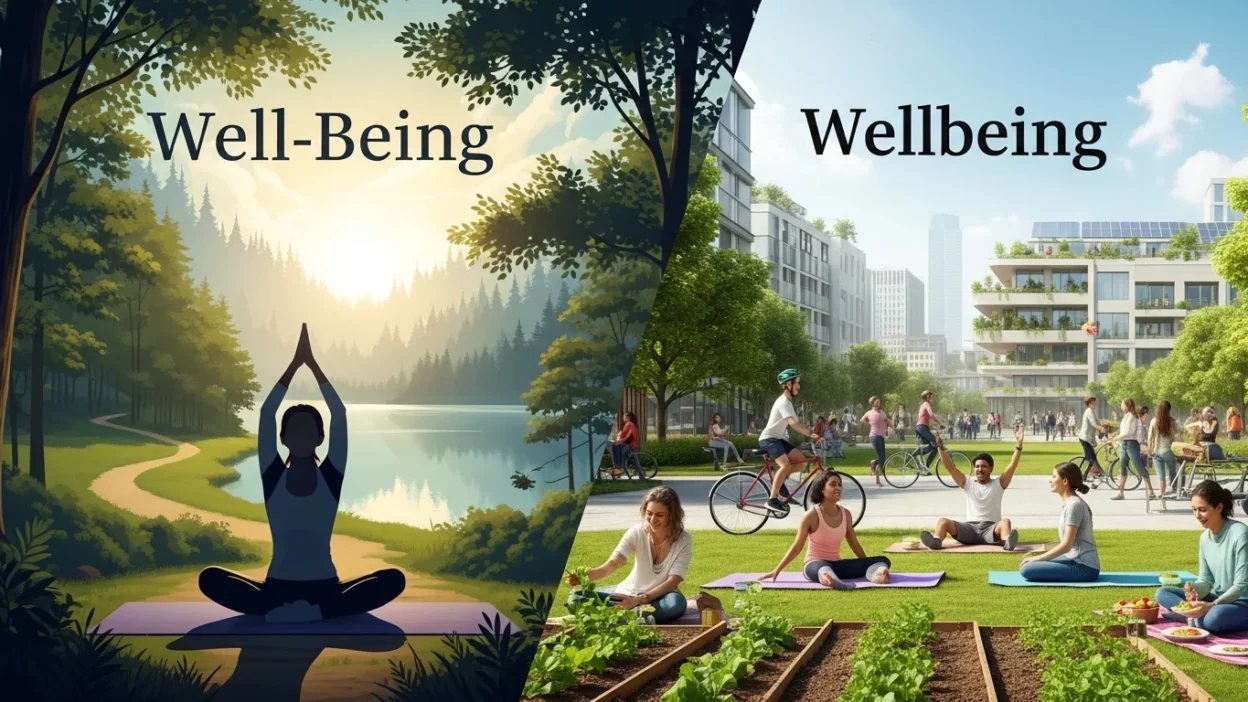
Many people feel unsure when they see “well-being” and “wellbeing.” Are they the same? Is one correct and the other wrong? Should you use a hyphen or not?
This confusion is very common, especially for students and English learners. The good news is that both forms are used in English today. The difference is small, and once you understand it, you will feel confident using the right one.
Quick Answer
- Well-being (with a hyphen)
- More traditional and widely accepted
- Common in formal writing
- Preferred in many dictionaries and style guides
- Wellbeing (no hyphen)
- Modern and increasingly popular
- Often used in informal or everyday writing
- Common in British English and modern contexts
👉 Simple rule:
If you are not sure, use well-being. It is always safe.
Simple Background: Where Do These Words Come From?
The word well-being is made from two simple parts:
- Well = good, healthy, or happy
- Being = existence or life
So, well-being means:
👉 a state of being healthy, happy, and comfortable
In older English, people often used hyphens to connect words like this. Over time, English has become more flexible. Many hyphenated words slowly lose their hyphen.
That is how wellbeing (without a hyphen) started to appear.
Clear Explanation of the Difference
There is no big difference in meaning between “well-being” and “wellbeing.” Both mean the same thing.
The only difference is in style and usage:
1. Well-being (hyphenated)
- Older and more traditional
- Still the most common form in formal writing
- Used in essays, reports, and academic work
2. Wellbeing (no hyphen)
- Newer style
- Growing in popularity
- Often used in modern writing, blogs, and casual contexts
👉 Think of it like this:
- Well-being = safe and formal
- Wellbeing = modern and relaxed
Comparison Table
| Feature | Well-being (with hyphen) | Wellbeing (no hyphen) |
| Meaning | Same | Same |
| Style | Traditional | Modern |
| Formal writing | Preferred | Less common |
| Informal writing | Okay | Very common |
| British English | Common | Very common |
| American English | Very common | Growing use |
| Safety (for exams) | Best choice | Not always preferred |
Which One Should You Use?
Here is a simple guide for choosing the right form:
Use well-being when:
- Writing essays or school assignments
- Taking exams
- Writing formal emails
- Creating reports or professional documents
👉 Example:
- “The program supports student well-being.”
Use wellbeing when:
- Writing casually (social media, chats)
- Writing modern or creative content
- Following a style that prefers simpler forms
👉 Example:
- “Take care of your wellbeing every day.”
👉 Easy tip:
If you want to avoid mistakes, always choose well-being.
Common Mistakes People Make
Let’s look at some mistakes learners often make:
❌ Mistake 1: Thinking one is wrong
- Some people believe “wellbeing” is incorrect
- This is not true
✔ Both forms are correct
❌ Mistake 2: Mixing both forms in one text
- Example:
- “Well-being is important for your wellbeing.”
✔ Choose one form and stay consistent
- “Well-being is important for your wellbeing.”
❌ Mistake 3: Forgetting the meaning
- Some learners think they have different meanings
✔ They mean the same thing: health, happiness, and comfort
❌ Mistake 4: Using “well being” (two separate words)
- Example:
- “Your well being matters.”
❌ Incorrect
✔ Correct forms: - “well-being” or “wellbeing”
- “Your well being matters.”
Everyday Real-Life Examples
Let’s see how these words are used in daily life.
1. In Emails
- “I hope you are doing well and taking care of your well-being.”
- “Your mental wellbeing is very important to us.”
2. In News or Articles
- “The government is focusing on public well-being.”
- “Experts are studying emotional wellbeing in teenagers.”
3. On Social Media
- “Self-care is key to your wellbeing 💙”
- “Don’t forget your well-being matters.”
4. In Daily Conversations
- “Exercise is good for your well-being.”
- “Sleep is important for your wellbeing.”
5. At School or Work
- “The school supports student well-being.”
- “Our company promotes employee wellbeing.”
Simple Learning Section for Students and Beginners
Here is a quick way to remember everything:
Step 1: Learn the meaning
👉 Both words mean:
- Health
- Happiness
- Comfort
Step 2: Learn the forms
- Well-being = formal
- Wellbeing = modern
Step 3: Use a simple rule
👉 When in doubt → use well-being
Step 4: Practice with sentences
Try these:
- “Reading improves your ______.”
- “We care about your mental ______.”
✔ Answers:
- well-being / wellbeing (both correct)
FAQ: Simple Questions and Answers
1. Is “wellbeing” correct in 2026?
Yes, it is correct and widely used today.
2. Which is better: well-being or wellbeing?
Neither is better. But well-being is safer for formal writing.
3. Do they have different meanings?
No. Both mean the same thing.
4. Which one should I use in exams?
Use well-being to be safe.
5. Is “well being” correct?
No. You should not write it as two separate words.
6. Why do some people prefer “wellbeing”?
Because modern English often removes hyphens to make words simpler.
7. Is one British and the other American?
Both are used in British and American English, but:
- British English uses wellbeing more often
- American English prefers well-being
8. Can I use both in the same article?
No. Choose one form and stay consistent.
Conclusion
The difference between well-being and wellbeing is small and easy to understand.
- Both words mean the same thing: health, happiness, and comfort
- Well-being is traditional and safer for formal use
- Wellbeing is modern and common in everyday writing
👉 Final tip:
If you feel unsure, choose well-being. You will never be wrong.

Brandon Samuel is a dedicated writer and language enthusiast, serving as the lead author at WordHuts.com. He specializes in explaining word differences, grammar rules, and common language mistakes in simple terms. Brandon’s clear, practical writing style helps readers improve vocabulary, writing confidence, and everyday communication skills.