
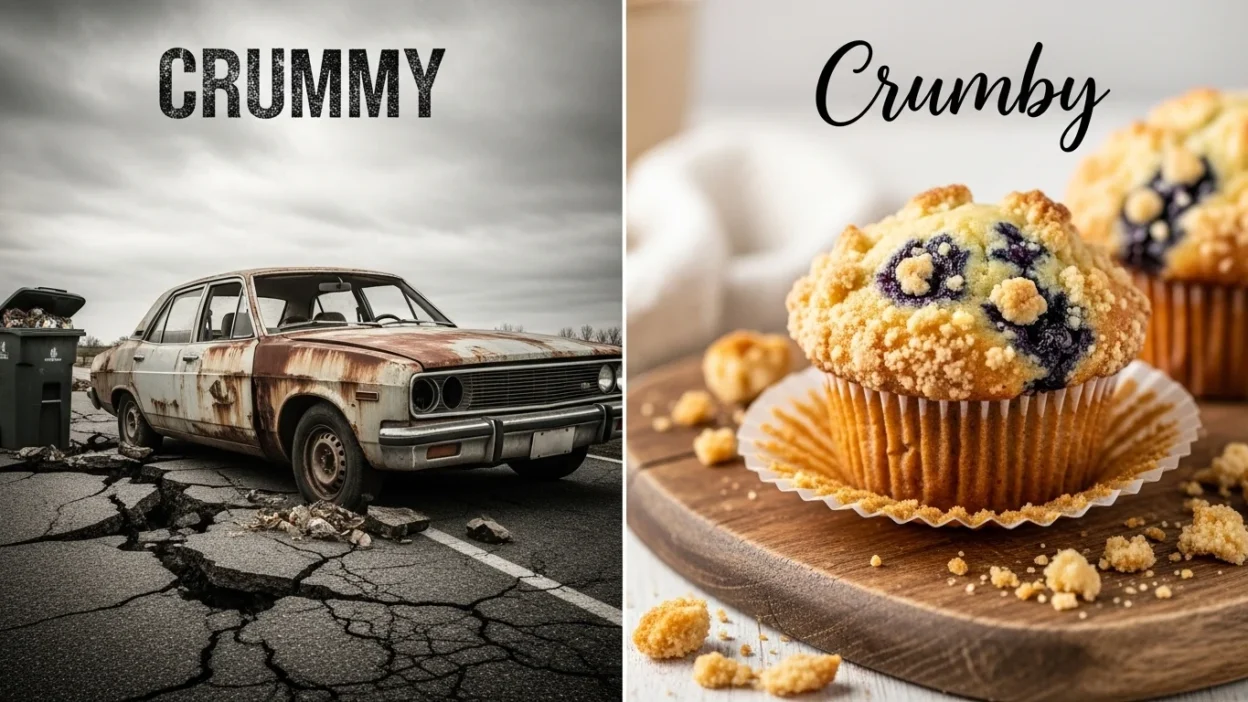
Many learners feel confused when they see the words “crummy” and “crumby.” They look almost the same. They sound the same too. So, are they different words? Do they mean different things?
The short answer is: they are very close in meaning, but one is much more common than the other. This article will explain everything in very simple English so you can understand it easily and never feel confused again.
Quick Answer
- Crummy = very common word
- Means: bad, poor quality, unpleasant
- Used in everyday English
- Crumby = less common spelling
- Same meaning as “crummy”
- Not used as often
👉 In most cases, use “crummy.”
Simple Background (Origin)
Both words come from the word “crumb.”
- A crumb is a small piece of bread or food.
- Long ago, something full of crumbs was seen as messy or not nice.
- Over time, people started using “crumb-like” words to describe things that feel bad, cheap, or unpleasant.
That’s how crummy/crumby started to mean something not good.
Clear Explanation of the Difference
1. Meaning
There is no real difference in meaning between “crummy” and “crumby.”
Both can mean:
- Bad quality
- Not enjoyable
- Disappointing
- Cheap or poorly made
Example:
- This is a crummy day.
- This is a crumby day.
Both sentences mean the same thing.
2. Usage (Very Important)
This is where the real difference is:
- Crummy → used much more often
- Crumby → rare, not common in modern writing
If you read books, emails, or social media, you will see “crummy” almost all the time.
3. Style and Feeling
- Crummy feels natural and modern
- Crumby may feel a bit unusual or old-fashioned to some readers
👉 That’s why most people prefer crummy.
Comparison Table
| Feature | Crummy | Crumby |
| Meaning | Bad, poor, unpleasant | Same meaning |
| Spelling | More common | Less common |
| Usage | Everyday English | Rare |
| Tone | Natural and modern | Slightly unusual |
| Recommended? | ✅ Yes | ⚠️ Not usually |
Which One Should You Use?
Use “crummy” when:
- You are writing emails
- You are speaking in daily life
- You are posting on social media
- You want to sound natural
Example:
- I had a crummy day at work.
- This phone has crummy battery life.
When can you use “crumby”?
You can use it, but:
- It is not necessary
- Some people may find it odd
Example:
- The service was crumby.
👉 Still correct, but “crummy” is better.
Common Mistakes People Make
1. Thinking they have different meanings
❌ Wrong idea:
- Crummy = bad
- Crumby = something with crumbs
✔ Truth:
Both words can mean “bad.”
2. Using “crumby” too often
Some learners think both are equal.
But in real English:
- “Crummy” is much more common
3. Confusing with “crumbly”
This is a different word.
- Crumbly = breaks into crumbs
Example: The cake is crumbly. - Crummy/Crumby = bad quality
Example: This is a crummy cake.
4. Overusing in formal writing
Both words are informal.
Avoid in formal writing like:
- Academic essays
- Official reports
Instead, use:
- poor
- low quality
- unsatisfactory
Everyday Real-Life Examples
1. In Emails
- Sorry for the crummy reply. I was busy.
- We had a crummy experience with the service.
2. On Social Media
- Today was crummy 😞
- This weather is so crummy!
3. In Daily Conversations
- I feel crummy today.
- That was a crummy movie.
4. In News (Informal Style)
- People complained about crummy road conditions.
5. At School
- I got a crummy grade on my test.
- This pen is crummy—it doesn’t work.
6. Using “Crumby” (Less Common)
- The hotel had crumby service.
- That was a crumby excuse.
👉 Still correct, just less natural.
Simple Learning Section (For Students & Beginners)
Easy Rule to Remember
👉 If you are not sure, always choose “crummy.”
Quick Practice
Fill in the blanks:
- This food tastes ______.
- I had a ______ day.
- The service was really ______.
✔ Best answers:
- crummy
- crummy
- crummy
Mini Tip
Think of it like this:
- “Crummy” = the standard choice
- “Crumby” = an alternative, but not popular
FAQs
1. Are “crummy” and “crumby” the same?
Yes. They have the same meaning, but “crummy” is more common.
2. Which spelling is correct?
Both are correct, but “crummy” is preferred.
3. Is “crumby” wrong?
No, it is not wrong. It is just less common.
4. Can I use these words in formal writing?
It is better not to. Use more formal words like “poor” or “bad.”
5. Do they always mean “bad”?
Yes, in most cases they describe something unpleasant or low quality.
6. Is “crummy” rude?
Not very rude, but it is informal. It can sound slightly negative.
7. What is the difference between “crummy” and “crumbly”?
- Crummy = bad quality
- Crumbly = breaks into small pieces
8. Which one do native speakers use more?
Native speakers mostly use “crummy.”
Conclusion
The confusion between “crummy” and “crumby” is very common because the words look and sound almost the same. But the truth is simple:
- Both words mean bad or poor quality
- Crummy is the word people use most
- Crumby is correct but rare
If you want to speak and write clearly, just remember one easy rule:
👉 Use “crummy” in almost all situations.
With this understanding, you can now use the word confidently in daily life, writing, and conversation without any confusion.

Brandon Samuel is a dedicated writer and language enthusiast, serving as the lead author at WordHuts.com. He specializes in explaining word differences, grammar rules, and common language mistakes in simple terms. Brandon’s clear, practical writing style helps readers improve vocabulary, writing confidence, and everyday communication skills.