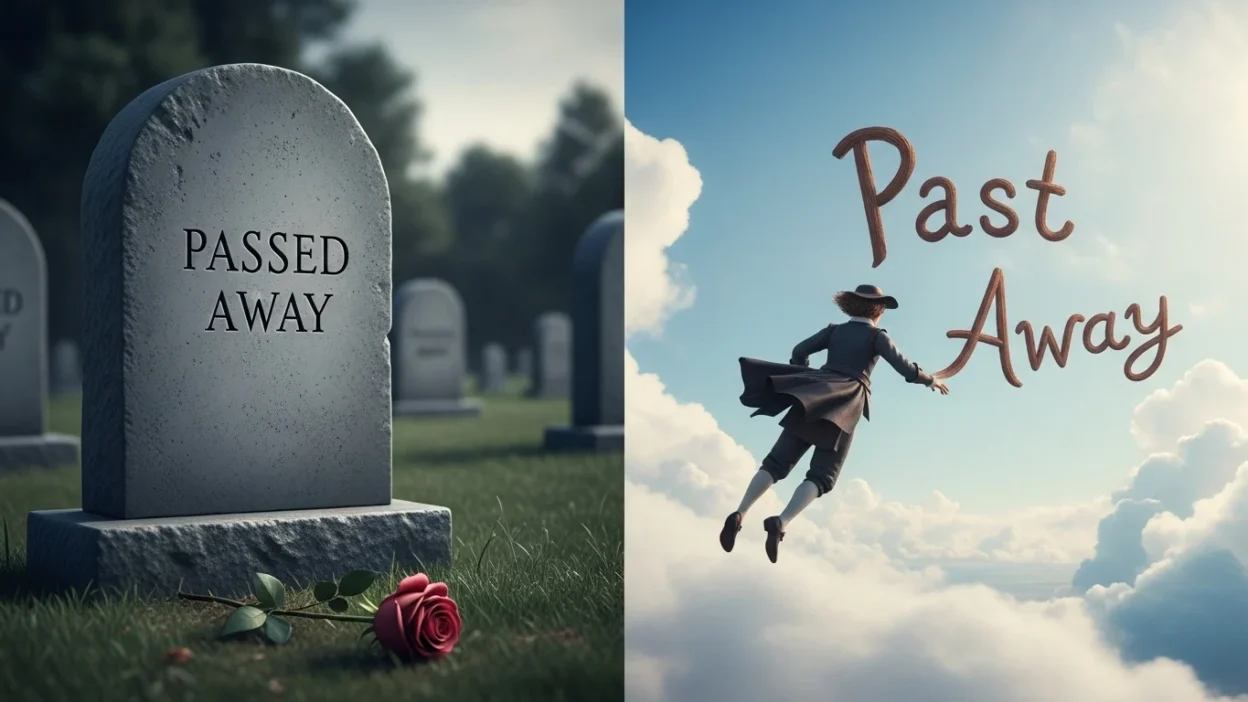
Many people get confused about passed away and past away because the two phrases sound almost the same. When spoken, they can be hard to tell apart. This is especially true for students, English learners, and anyone who is still building confidence with English.
The good news is that the difference is very simple. Only one phrase is correct when talking about someone’s death. Once you understand why, you will never mix them up again.
Quick Answer
- Passed away is the correct phrase.
- It is a polite and gentle way to say that someone died.
- Past away is incorrect in standard English.
- You should not use past away when talking about death.
Correct Example
- My grandfather passed away last year.
Incorrect Example
- My grandfather past away last year.
Where Does “Passed Away” Come From?
The phrase passed away has been used for a very long time. It comes from the idea of someone “passing” from one life to another, or leaving this world.
People often use gentle expressions for difficult topics. Death can be painful to talk about, so English has many softer ways to say it.
Some common gentle expressions include:
- passed away
- passed on
- departed
- is no longer with us
Among these, passed away is one of the most common and widely accepted.
Why “Past Away” Is Wrong
The word past is usually used as:
- a noun: the past
- an adjective: past events
- a preposition: walk past the door
- an adverb: drive past quickly
It is not the correct verb form in this expression.
The phrase needs the verb passed, which is the past tense of pass.
- pass → passed
So, when referring to death, the correct phrase is always passed away.
The Main Difference
The difference is all about grammar.
- Passed is a verb.
- Past is usually not a verb.
In the phrase passed away, you need a verb because the action happened in the past.
Think of it this way:
- She passed away. ✔
- She past away. ✘
Only the first sentence is grammatically correct.
Comparison Table
| Feature | Passed Away | Past Away |
| Correct English? | Yes | No |
| Meaning | Died | No correct meaning in this use |
| Part of speech | Verb phrase | Incorrect phrase |
| Used in writing? | Yes | No |
| Used in speech? | Yes | No |
Which One Should You Use?
Always use passed away when you want to say that someone died in a respectful and gentle way.
Use it in:
- conversations n- sympathy messages
- emails
- news reports
- obituaries
- social media posts
Examples
- Her mother passed away peacefully.
- We were saddened to hear that he passed away.
- Our beloved teacher passed away on Monday.
Never use past away in these situations.
Common Mistakes People Make
1. Writing “past” instead of “passed”
This is the most common mistake because both words sound alike.
- Incorrect: He past away.
- Correct: He passed away.
2. Confusing sound with spelling
English has many words that sound the same but have different meanings. These are called homophones.
- passed
- past
They sound alike, but they are not used the same way.
3. Using the wrong phrase in formal writing
In formal writing, spelling matters a lot. Writing past away can make your writing look careless.
Everyday Examples
In an Email
- I am sorry to hear that your uncle passed away.
- We were deeply saddened when we learned she had passed away.
In the News
- The famous actor passed away at the age of 82.
- The former president passed away after a long illness.
On Social Media
- Our sweet dog passed away today.
- I can’t believe she has passed away. She will be missed.
In Daily Conversation
- Did you hear that Mr. Ahmed passed away?
- His grandmother passed away last winter.
A Simple Trick to Remember
Think about the word pass.
If something already happened, you usually add -ed.
- walk → walked
- talk → talked
- pass → passed
So:
- He passed away.
The -ed ending helps you remember the correct spelling.
For Students and English Learners
Here is an easy rule:
If you mean someone died, always write passed away.
Ask yourself:
- Am I talking about death? → Use passed away.
- Am I talking about time or movement? → You might need past.
Examples with “past”
- We walked past the school.
- That happened in the past.
- It is half past three.
These uses are correct, but they have nothing to do with death.
Quick Practice
Choose the correct phrase:
- My neighbor ______ last month.
- Her father ______ peacefully.
- The singer ______ at home.
Answers
- passed away
- passed away
- passed away
Easy, right?
Frequently Asked Questions
1. Is “past away” ever correct?
No. It is not correct when talking about death.
2. Why do people write “past away”?
Because past and passed sound the same.
3. Is “passed away” formal or informal?
It works in both formal and informal situations.
4. Can I say “died” instead?
Yes. “Died” is direct, while “passed away” is softer and gentler.
5. Is “passed away” respectful?
Yes. It is one of the most respectful ways to talk about death.
6. What part of speech is “passed”?
It is a verb, the past tense of pass.
7. What does “past” usually mean?
It often refers to time, position, or movement.
8. Which phrase should students remember?
Always remember: passed away is correct.
Final Summary
The difference between passed away and past away is simple.
- Passed away is correct.
- Past away is incorrect.
Use passed away when speaking or writing about someone’s death in a kind and respectful way.
Remember this easy rule:
Passed away uses the verb passed.
If you can remember that passed comes from the verb pass, you will always choose the right phrase.
English can sometimes be tricky, but this is one mistake you can now avoid with confidence.

Justin Larry is a talented language writer and content creator at WordHuts.com. She specializes in explaining word differences, grammar tips, and common English mistakes in a clear, practical style. Her engaging content helps readers improve vocabulary, writing skills, and everyday communication, making language learning simple and effective.