Many English learners get confused by sew and sow because the two words look similar and are sometimes pronounced in a similar way. However, they have very different meanings.
One word is about making or repairing clothes with a needle and thread, while the other is about planting seeds in the ground.
If you have ever wondered whether you should write sew or sow, this guide will make the difference easy to understand.
Quick Answer
Use sew when talking about stitching fabric.
- I can sew a button onto my shirt.
- My grandmother likes to sew dresses.
- He learned how to sew by hand.
Use sow when talking about planting seeds.
- Farmers sow wheat in the spring.
- We will sow flower seeds in the garden.
- She plans to sow vegetables this year.
Easy Memory Trick
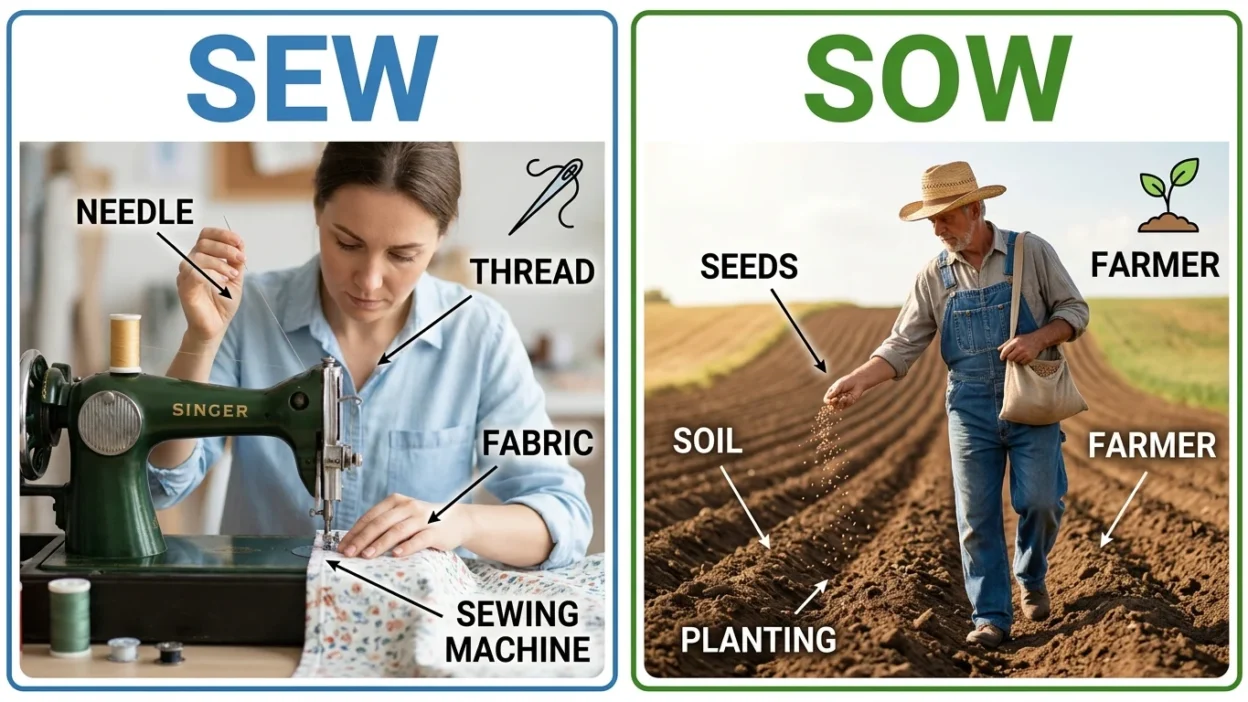
- Sew = needle and thread
- Sow = seeds and planting
Simple Origin and Background
Both words have been part of English for hundreds of years.
Sew comes from an old word that meant to stitch pieces together with thread. People have used sewing to make clothing, blankets, bags, and other items for a very long time.
Sow comes from an old word meaning to scatter or plant seeds. Farming communities used the word when putting seeds into the soil so crops could grow.
Although the spellings look similar, the words developed with different meanings and are not connected.
Understanding the Difference
What Does “Sew” Mean?
Sew means to join, repair, or create something using a needle and thread.
It is commonly used when talking about:
- Clothing
- Fabric
- Buttons
- Curtains
- Blankets
- Crafts
Examples
- She can sew her own clothes.
- I need to sew a patch onto my jacket.
- They sewed the torn pocket.
- My mother taught me how to sew.
What Does “Sow” Mean?
Sow means to plant seeds in soil so plants can grow.
It is often used when talking about:
- Farming
- Gardening
- Flowers
- Vegetables
- Crops
Examples
- Farmers sow rice every year.
- We should sow the seeds before the rain starts.
- They sowed corn across the field.
- She wants to sow herbs in her garden.
Another Meaning of “Sow”
Sometimes sow is used in a figurative way. This means it is not about actual seeds.
For example:
- He tried to sow doubt among the group.
- The speech sowed fear in many people.
Here, ideas or feelings are being “planted” like seeds.
Comparison Table
| Feature | Sew | Sow |
| Main meaning | Stitch fabric with thread | Plant seeds in soil |
| Related to | Clothing and fabric | Farming and gardening |
| Tools used | Needle, thread, sewing machine | Seeds, soil, farming tools |
| Example | Sew a shirt | Sow wheat |
| Past tense | Sewed | Sowed |
| Easy reminder | Sew = stitching | Sow = planting |
Which One Should You Use and When?
Use “Sew” When:
You are talking about:
- Making clothes
- Repairing fabric
- Using thread
- Using a needle
- Craft projects
Examples
- I need to sew this button back on.
- She likes to sew dresses.
- Can you sew this hole closed?
Use “Sow” When:
You are talking about:
- Planting seeds
- Farming
- Gardening
- Growing crops
- Growing flowers
Examples
- We will sow sunflower seeds tomorrow.
- Farmers sow crops in the spring.
- She plans to sow tomatoes this year.
Quick Question
Ask yourself:
Am I talking about thread or seeds?
- Thread → sew
- Seeds → sow
This simple question helps you choose the correct word almost every time.
Common Mistakes People Make
Mistake 1: Using “sow” for clothing
❌ I need to sow this button.
✅ I need to sew this button.
Buttons are attached with thread, so sew is correct.
Mistake 2: Using “sew” for planting
❌ Farmers sew corn every spring.
✅ Farmers sow corn every spring.
Corn is planted from seeds, so sow is correct.
Mistake 3: Confusing the Similar Pronunciation
Some learners hear the words and think they have the same meaning.
Remember:
- Sew relates to fabric.
- Sow relates to seeds.
The meanings are completely different.
Mistake 4: Forgetting the Context
Always look at the sentence.
❌ We will sew flowers in the garden.
✅ We will sow flowers in the garden.
Flowers grow from seeds, not thread.
Everyday Real-Life Examples
In Emails
Sew
- Please sew the company logo onto the uniform.
- Can you sew the tear before tomorrow?
Sow
- We plan to sow grass seed next week.
- The community group will sow flowers around the park.
In News Reports
Sew
- Local volunteers sewed blankets for families in need.
- Students learned how to sew during a workshop.
Sow
- Farmers began to sow crops after heavy rainfall.
- Experts advised gardeners to sow seeds early this season.
On Social Media
Sew
- Just finished learning how to sew my first pillow!
- I sewed a new bag today.
Sow
- Time to sow some vegetable seeds!
- We sowed flowers and can’t wait to see them bloom.
In Daily Conversations
- Can you sew this loose button?
- My grandmother taught me to sew.
- When should we sow the seeds?
- Farmers usually sow crops before the rainy season.
Learning Section for Students and Beginners
Here is a simple study guide.
Remember This Formula
Sew = Thread
Sow = Seeds
Fill in the Blanks
- My aunt can ______ a dress.
- We will ______ carrot seeds tomorrow.
- He learned to ______ by hand.
- Farmers ______ wheat every year.
Answers
- sew
- sow
- sew
- sow
Mini Practice
Choose the correct word:
- She wants to (sew/sow) a new skirt.
- We will (sew/sow) flowers in the garden.
- He can (sew/sow) a torn pocket.
- Farmers (sew/sow) rice every season.
Answers
- sew
- sow
- sew
- sow
Frequently Asked Questions
1. Are sew and sow the same word?
No. They are different words with different meanings.
- Sew = stitch fabric.
- Sow = plant seeds.
2. Which word is related to clothing?
Sew is related to clothing because clothes are made or repaired with thread.
3. Which word is related to farming?
Sow is related to farming because farmers plant seeds in the soil.
4. What is the past tense of sew?
The past tense is usually sewed.
Example:
- She sewed a new dress.
5. What is the past tense of sow?
The past tense is usually sowed.
Example:
- They sowed wheat last month.
6. Can sow be used without talking about seeds?
Yes.
Sometimes sow means to spread ideas or feelings.
Example:
- The rumor sowed confusion.
7. Is sew used for repairing clothes?
Yes.
Examples:
- Sew a button.
- Sew a tear.
- Sew a patch onto a jacket.
8. How can I easily remember the difference?
Think of this:
- Sew = thread
- Sow = seeds
That memory trick works in most situations.
Conclusion
The difference between sew and sow is actually very simple once you connect each word to its main idea.
- Sew means to stitch fabric using a needle and thread.
- Sow means to plant seeds in the ground.
If you are talking about clothing, fabric, repairs, or crafts, use sew.
If you are talking about farming, gardening, crops, or planting seeds, use sow.
A quick way to remember is:
Sew = thread.
Sow = seeds.
Keep this rule in mind, and you will be able to choose the correct word with confidence every time.

Brandon Samuel is a dedicated writer and language enthusiast, serving as the lead author at WordHuts.com. He specializes in explaining word differences, grammar rules, and common language mistakes in simple terms. Brandon’s clear, practical writing style helps readers improve vocabulary, writing confidence, and everyday communication skills.