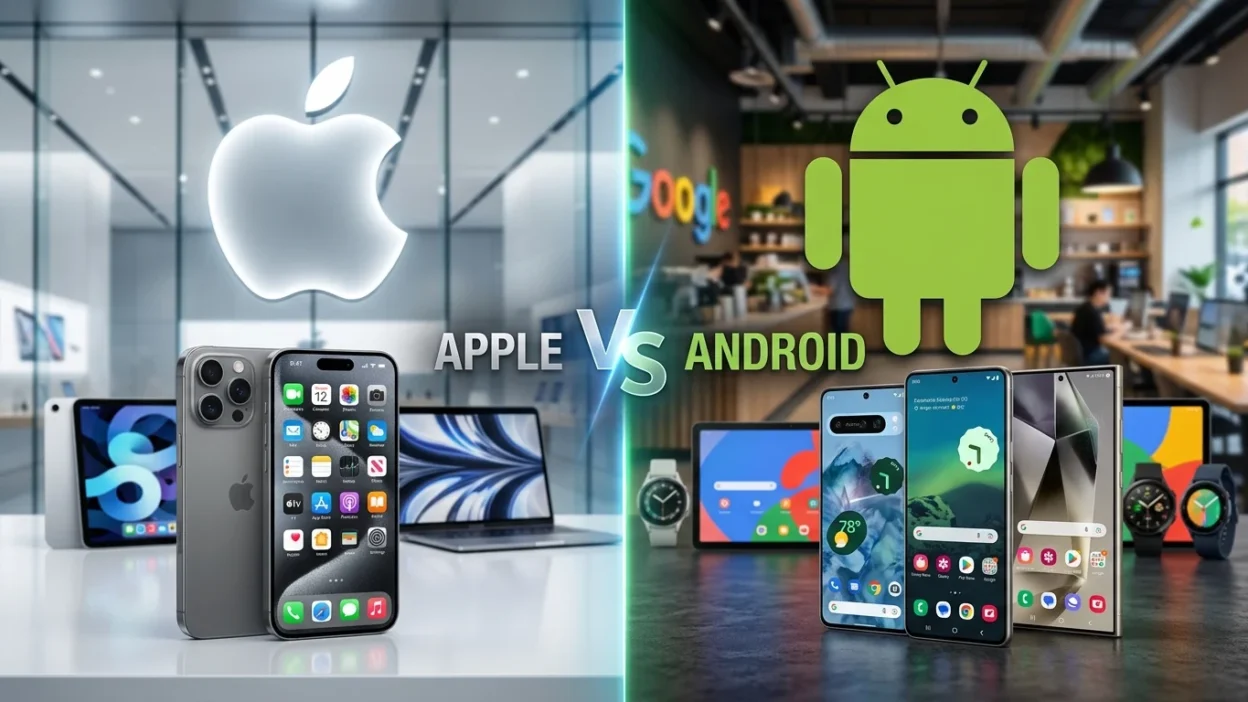
Many people get confused when comparing Apple and Android. Both are popular smartphone systems. Both let you call, text, take photos, use apps, browse the internet, and do everyday tasks.
Because they look similar from the outside, many beginners wonder:
- Is Apple better than Android?
- Are they the same thing?
- Which one is easier to use?
- Which one should I buy?
The truth is that Apple and Android are different systems with different strengths. Neither is perfect for everyone. The best choice depends on your needs, budget, and personal preferences.
This guide explains everything in simple English so you can clearly understand the difference between Apple and Android in 2026.
Quick Answer
Here is the short answer:
Choose Apple if you:
- Want a simple and consistent experience
- Prefer strong connection between devices
- Like long software support
- Want an easy-to-use phone with fewer settings to manage
Choose Android if you:
- Want more phone choices
- Need different price options
- Like customization
- Want more control over your device settings
In simple words:
- Apple = simplicity and consistency
- Android = flexibility and choice
Simple Background Explanation
To understand the difference, it helps to know what Apple and Android are.
What is Apple?
Apple is a technology company that makes the iPhone and its operating system.
The software that runs on an iPhone is called iOS.
Apple controls both:
- The hardware (the phone itself)
- The software (iOS)
Because Apple makes both parts, everything is designed to work together.
What is Android?
Android is a mobile operating system used by many phone makers.
Different companies create Android phones, including:
- Samsung
- Xiaomi
- OnePlus
- Motorola
Because many companies use Android, users have many more phone options.
Clear Explanation of the Difference
The biggest difference is how the systems are managed.
Apple’s Approach
Apple keeps tight control over everything.
This creates:
- A consistent experience
- Similar design across devices
- Easier setup for many users
- Strong integration between Apple products
Many people like Apple because it feels simple and predictable.
Android’s Approach
Android gives users and phone makers more freedom.
This allows:
- More customization
- More device choices
- Different designs
- Different price ranges
Many people choose Android because they enjoy flexibility and control.
Apple vs Android Comparison Table
| Feature | Apple | Android |
| Operating System | iOS | Android |
| Phone Choices | Only iPhone models | Many brands and models |
| Customization | Limited | Extensive |
| Ease of Use | Very simple | Simple but more options |
| Price Range | Usually higher | Budget to premium |
| App Availability | Large selection | Large selection |
| Software Updates | Controlled directly by Apple | Depends on manufacturer |
| Device Variety | Limited choices | Huge variety |
| Integration with Other Devices | Very strong | Varies by brand |
| User Control | More restricted | More flexible |
Which One to Use and When
Choose Apple When:
Apple may be better if you:
- Are buying your first smartphone
- Prefer simplicity
- Do not want to change many settings
- Already use other Apple devices
- Want a smooth and consistent experience
Example:
A student who mainly uses messaging, photos, email, and video calls may enjoy Apple’s simple setup.
Choose Android When:
Android may be better if you:
- Want more phone choices
- Have a limited budget
- Enjoy customization
- Want more control over settings
- Like trying different brands
Example:
A student looking for a good phone at a lower price may find many Android options.
Common Mistakes People Make
Mistake 1: Thinking Apple Is a Phone and Android Is a Phone
They are not the same type of thing.
Apple is a company that makes iPhones.
Android is an operating system used by many companies.
Mistake 2: Thinking One Is Always Better
There is no universal winner.
A phone that works perfectly for one person may not be the best choice for another.
Mistake 3: Thinking Android Phones Are All the Same
Android phones can be very different.
Some are basic and affordable.
Others are powerful premium devices.
Mistake 4: Thinking Apple Has More Apps
Today, both platforms offer a huge number of popular apps.
Most people can find the apps they need on either system.
Mistake 5: Thinking Android Is Difficult
Modern Android phones are much easier to use than many people think.
Most everyday tasks are straightforward.
Everyday Real-Life Examples
Example 1: Sending Emails
With both Apple and Android, you can:
- Read emails
- Send messages
- Attach files
- Organize your inbox
For most users, the experience is very similar.
Example 2: Reading News
Whether you use Apple or Android, you can:
- Read news articles
- Watch news videos
- Save stories
- Receive notifications
The main difference is the phone system, not the news itself.
Example 3: Social Media
Both systems support popular social media apps.
You can:
- Post photos
- Upload videos
- Send messages
- Watch content
Most social media activities work similarly on both platforms.
Example 4: School Work
Students can use either system to:
- Join online classes
- Take notes
- Read documents
- Watch educational videos
- Communicate with teachers
Both platforms are suitable for learning.
Example 5: Daily Communication
Both Apple and Android allow users to:
- Make phone calls
- Send text messages
- Use video calls
- Share photos
- Chat with friends and family
For basic communication, either choice works well.
Learning Section for Students and Beginners
A simple way to remember the difference is:
Apple
Think:
“One company, one system.”
Apple makes:
- The phone
- The software
Everything is closely connected.
Android
Think:
“One system, many companies.”
Android is used by many phone makers.
This creates:
- More choices
- More prices
- More customization
Memory Trick
Remember:
Apple = Simplicity
Android = Flexibility
This short rule helps many beginners understand the basic difference quickly.
Frequently Asked Questions
1. Is Apple the same as Android?
No.
Apple is a company that makes iPhones using iOS.
Android is an operating system used by many different phone brands.
2. Which is easier to use?
Many beginners find Apple slightly easier because the experience is very consistent.
However, modern Android phones are also user-friendly.
3. Is Android cheaper than Apple?
Often yes.
Android phones are available at many price levels, from budget models to premium devices.
Apple phones are usually in the higher price range.
4. Can Apple and Android users communicate with each other?
Yes.
They can call, text, email, and use many messaging apps.
5. Which has more phone choices?
Android.
Many companies produce Android phones, giving users a large variety of options.
6. Which system allows more customization?
Android generally offers more customization options.
Users can often change layouts, settings, and appearance more freely.
7. Are Apple phones safer?
Both Apple and Android include many security features.
Keeping your device updated and using safe online habits is important regardless of the platform.
8. Which is better for students?
Both can work well for students.
The best choice depends on budget, personal preference, and how the device will be used.
Conclusion
The Apple vs Android debate continues in 2026 because both systems offer excellent smartphone experiences.
Apple focuses on simplicity, consistency, and close integration between devices. Android focuses on flexibility, customization, and a wider range of choices.
If you want a straightforward experience with fewer decisions, Apple may be the better fit.
If you want more freedom, more phone options, and a wider range of prices, Android may be the better choice.
The most important thing to remember is that neither platform is automatically better for everyone. The right choice is the one that matches your needs, budget, and daily habits. Understanding this simple difference removes most of the confusion between Apple and Android.

Gregory Alexander is a skilled writer and language researcher at WordHuts.com. He focuses on clarifying confusing word pairs, grammar rules, and common usage mistakes. With a passion for precise communication, Gregory creates simple, easy-to-understand content that helps readers strengthen vocabulary, writing accuracy, and everyday English skills.