
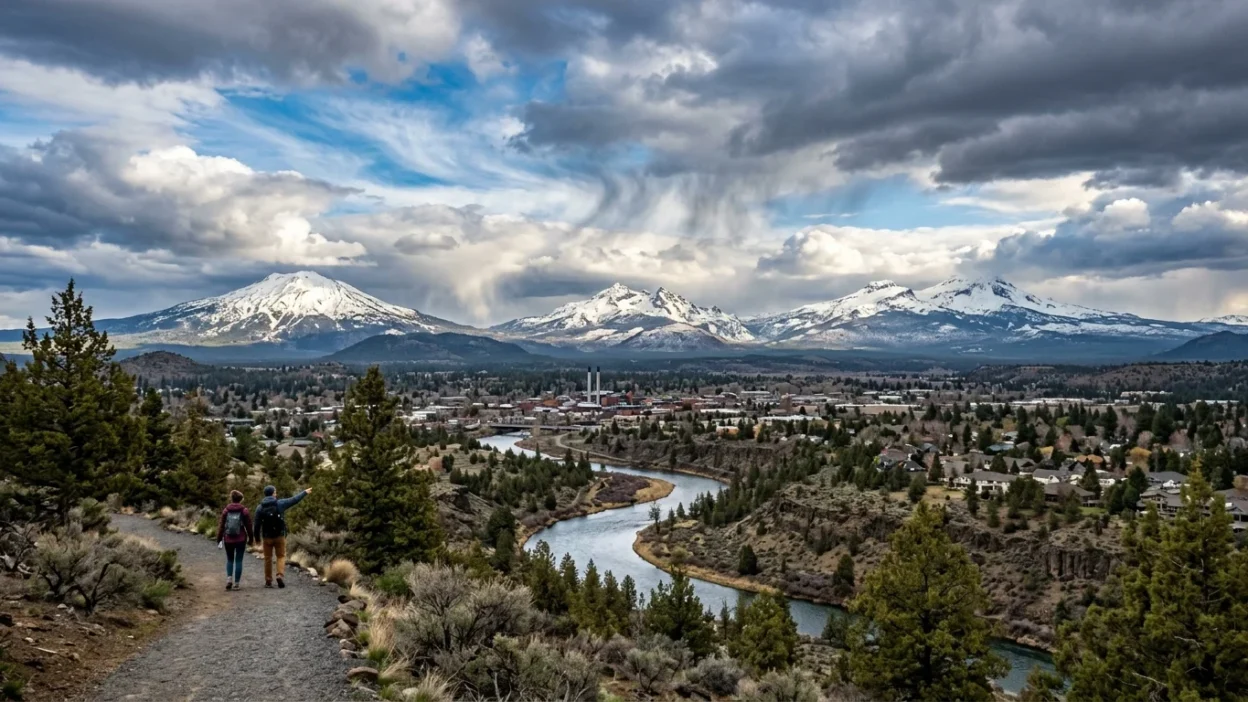
Many people search for Bend weather because they want to know what the climate is like in Bend, Oregon. Some are planning a trip, some are thinking about moving there, and others simply want to understand why the weather in Bend is often described as different from many other places in the Pacific Northwest.
The confusion usually happens because people hear that Oregon is rainy, but Bend often experiences much drier weather than cities in western Oregon. It also has warm summers, cold winters, and a large number of sunny days.
This guide explains Bend weather in very simple English so that students, beginners, and general readers can easily understand it.
Quick Answer
Here are the most important things to know about Bend weather:
- Bend is located in central Oregon.
- The area has a high-desert climate.
- Summers are usually warm, sunny, and dry.
- Winters are cold and often snowy.
- Rainfall is lower than in many other parts of Oregon.
- Spring and fall can change quickly from warm to cool.
- The city enjoys many sunny days during the year.
- Weather can vary between daytime and nighttime temperatures.
Background: Why Is Bend’s Weather Different?
Bend sits on the eastern side of the Cascade Mountains.
These mountains play a big role in the area’s climate. Moist air from the Pacific Ocean drops much of its rain and snow on the western side of the mountains. By the time the air reaches Bend, it is much drier.
Because of this location, Bend has a climate that is often called a high-desert climate.
This means:
- Less rain than many Oregon cities.
- Plenty of sunshine.
- Warm summers.
- Cool or cold nights.
- Snow during winter.
The city’s elevation also affects the weather. Since Bend is higher above sea level than many other cities, temperatures can drop quickly after sunset.
Understanding Bend Weather
Summer Weather
Summer is one of the most popular seasons in Bend.
During summer:
- Days are usually warm and sunny.
- Rain is uncommon.
- Humidity is often low.
- Evenings can feel cool.
Many visitors enjoy outdoor activities because of the comfortable conditions.
Common summer activities include:
- Hiking
- Biking
- Fishing
- Camping
- River activities
One thing that surprises visitors is how cool the nights can become after a warm day.
Winter Weather
Winter brings much colder conditions.
During winter:
- Snow is common.
- Temperatures can fall below freezing.
- Roads may become icy.
- Mountain areas often receive heavy snowfall.
Many people visit Bend during winter because nearby ski areas attract snow sports fans.
Winter weather can change quickly, so warm clothing is important.
Spring Weather
Spring is a season of change.
In spring, you may experience:
- Sunny afternoons
- Cool mornings
- Rain showers
- Occasional snow early in the season
The weather can feel different from one day to the next.
As spring continues, temperatures gradually become warmer.
Fall Weather
Fall is often considered one of the most comfortable times of year.
During fall:
- Days are usually mild.
- Nights become cooler.
- Trees change color.
- Weather is often calm and pleasant.
Many residents enjoy outdoor activities during this season because temperatures are not too hot or too cold.
Bend Weather Compared to Typical Oregon Weather
A common misunderstanding is that all of Oregon has the same weather.
That is not true.
Many western Oregon cities receive much more rainfall than Bend.
Key Differences
| Feature | Bend | Many Western Oregon Cities |
| Rainfall | Lower | Higher |
| Sunshine | More common | Less common |
| Summer | Warm and dry | Mild and sometimes humid |
| Winter | Colder with snow | Milder with more rain |
| Climate Type | High desert | Marine climate |
| Day-Night Temperature Difference | Often large | Usually smaller |
This difference explains why Bend often feels very different from other Oregon locations.
Comparison Table: Bend Weather by Season
| Season | Temperature Feel | Rain | Snow | Sunshine |
| Spring | Cool to mild | Moderate | Possible early | Good |
| Summer | Warm to hot | Low | None | Excellent |
| Fall | Mild to cool | Low to moderate | Rare early | Good |
| Winter | Cold | Some | Common | Variable |
This table gives a simple overview of what people can generally expect throughout the year.
Which Weather Conditions Should You Expect and When?
If You Visit in Summer
Expect:
- Sunny skies
- Warm afternoons
- Cool evenings
- Little rainfall
Bring:
- Sunglasses
- Sunscreen
- Light clothing
- A light jacket for nighttime
If You Visit in Winter
Expect:
- Cold temperatures
- Snowy periods
- Ice in some areas
Bring:
- Warm coats
- Gloves
- Winter boots
- Layers of clothing
If You Visit in Spring or Fall
Expect:
- Changing weather
- Cool mornings
- Mild afternoons
Bring:
- Layered clothing
- Light jacket
- Comfortable shoes
Common Mistakes People Make
Mistake 1: Assuming All of Oregon Is Rainy
Many people believe every part of Oregon receives heavy rainfall.
Bend is much drier than many western Oregon cities.
Mistake 2: Ignoring Cool Nights
A warm afternoon can make visitors think they do not need a jacket.
However, temperatures often drop after sunset.
Mistake 3: Underestimating Winter Snow
Some visitors are surprised by how much snow can occur during winter.
Winter travel may require extra preparation.
Mistake 4: Packing Only for Daytime Weather
Because temperatures can change significantly between day and night, packing layers is usually a smart choice.
Mistake 5: Expecting the Same Weather Every Day
Weather patterns can shift quickly, especially during spring and fall.
Everyday Real-Life Examples
Example in an Email
“We’re visiting Bend next month, so we’re packing light clothes for the day and warmer clothes for the evening.”
Example in a News Story
“Sunny weather is expected across Bend this weekend, making conditions ideal for outdoor activities.”
Example on Social Media
“The sunshine in Bend today is amazing, but it gets surprisingly chilly after sunset.”
Example in Daily Conversation
“I thought Oregon would be rainy, but Bend is much drier than I expected.”
Example for Travel Planning
“Check the forecast before your trip because Bend temperatures can change quickly between day and night.”
Learning Section for Students and Beginners
If you are learning English, here are some useful weather words connected to Bend weather.
Climate
The usual weather pattern of a place over many years.
Example:
“Bend has a high-desert climate.”
Temperature
A measure of how hot or cold the air is.
Example:
“The temperature dropped after sunset.”
Forecast
A prediction of future weather.
Example:
“I checked the weather forecast.”
Snowfall
Snow that falls from the sky.
Example:
“Winter snowfall can be heavy in some areas.”
Sunshine
Bright light from the sun.
Example:
“Bend receives a lot of sunshine.”
Learning these words can help you understand weather reports more easily.
Frequently Asked Questions
1. Does Bend get a lot of rain?
No. Bend generally receives less rainfall than many cities in western Oregon.
2. Does it snow in Bend?
Yes. Snow is common during winter.
3. Are summers hot in Bend?
Summers are usually warm, sunny, and dry.
4. Why are Bend nights cooler?
The city’s elevation and dry climate often allow temperatures to drop after sunset.
5. What is the best season to visit Bend?
Many people enjoy summer and fall because of the pleasant weather and outdoor opportunities.
6. Is Bend sunny?
Yes. Bend is known for having many sunny days throughout the year.
7. Can weather change quickly in Bend?
Yes. Spring and fall especially can bring changing weather conditions.
8. What should I pack for a trip to Bend?
Layered clothing is usually a good choice because temperatures can vary during the day.
Conclusion
Bend weather is different from what many people expect when they think about Oregon. Instead of constant rain, Bend experiences a high-desert climate with plenty of sunshine, warm summers, cool nights, and snowy winters. Its location near the Cascade Mountains helps create a drier environment than many other parts of the state.
Understanding these basic weather patterns makes it easier to plan a visit, prepare for seasonal changes, and know what to expect throughout the year. Whether you visit during a sunny summer afternoon or a snowy winter morning, Bend offers a climate that is unique, interesting, and easy to enjoy once you understand how it works.

Justin Larry is a talented language writer and content creator at WordHuts.com. She specializes in explaining word differences, grammar tips, and common English mistakes in a clear, practical style. Her engaging content helps readers improve vocabulary, writing skills, and everyday communication, making language learning simple and effective.