Many people come across the words Lynchian and Felliniesque when reading movie reviews, articles, social media posts, or discussions about art and storytelling. At first, these words can seem confusing because both are used to describe unusual, dreamlike, and imaginative styles.
Someone might say a film is “Lynchian,” while another person calls a different film “Felliniesque.” Since both words often relate to strange or surreal experiences, beginners may wonder if they mean the same thing.
The short answer is no. While there are some similarities, Lynchian and Felliniesque describe very different feelings, moods, and storytelling approaches.
This guide explains everything in simple English so you can easily understand the difference.
Quick Answer
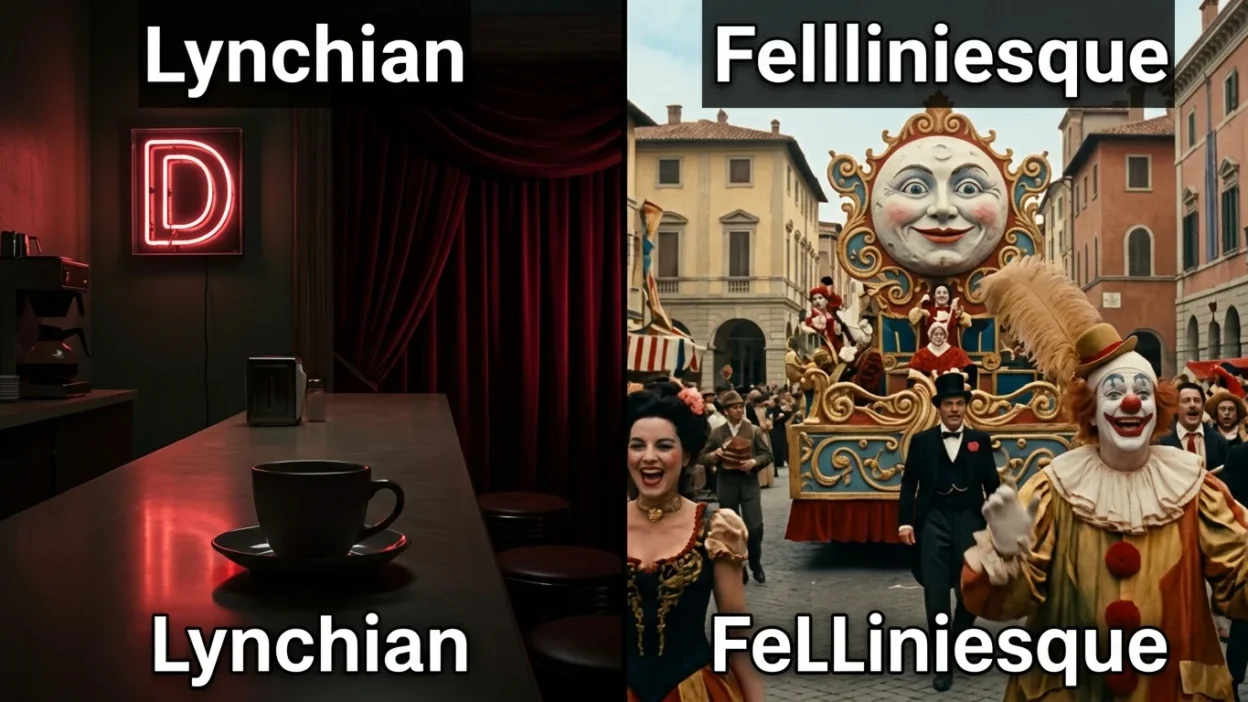
Lynchian
- Usually feels mysterious and unsettling
- Often includes strange events that are hard to explain
- Creates feelings of confusion, tension, or unease
- Reality and dreams may mix together
- Darker and more mysterious in tone
Felliniesque
- Usually feels colorful, playful, and imaginative
- Often celebrates fantasy, memory, and creativity
- Includes larger-than-life characters
- Dreams and reality may blend together
- More joyful, emotional, and theatrical in tone
Simple Rule
- If something feels like a strange mystery or a disturbing dream, it is often Lynchian.
- If something feels like a magical, colorful parade of imagination and memories, it is often Felliniesque.
Origin and Background
Both words are adjectives created from the names of famous film directors.
What Does Lynchian Mean?
The word Lynchian comes from filmmaker David Lynch.
His works became known for:
- Strange and unexpected events
- Dreamlike scenes
- Hidden meanings
- Ordinary places that suddenly feel frightening
- Stories that do not always provide clear answers
Because of this unique style, people began using the word “Lynchian” to describe anything that feels mysterious, surreal, or unsettling.
What Does Felliniesque Mean?
The word Felliniesque comes from filmmaker Federico Fellini.
His works became known for:
- Rich imagination
- Colorful characters
- Fantasy mixed with reality
- Personal memories
- Large and dramatic scenes
Over time, people started using “Felliniesque” to describe anything that feels imaginative, extravagant, dreamlike, and full of life.
The Main Difference Explained
The easiest way to understand the difference is to focus on the feeling each word creates.
Lynchian Creates Unease
Imagine walking through a quiet town at night.
Everything looks normal.
Then something feels wrong.
People behave strangely. Conversations make little sense. You feel like a mystery is hiding beneath the surface.
That feeling is often called Lynchian.
The world appears normal at first, but something disturbing or confusing is hiding underneath.
Felliniesque Creates Wonder
Now imagine attending a huge carnival.
You see unusual performers, colorful costumes, music, laughter, and dreamlike images.
The experience feels magical and larger than life.
That feeling is often called Felliniesque.
The world feels imaginative, emotional, and full of creative energy.
Lynchian vs Felliniesque Comparison Table
| Feature | Lynchian | Felliniesque |
| Overall mood | Mysterious and unsettling | Playful and imaginative |
| Emotional feeling | Unease, tension, confusion | Wonder, excitement, nostalgia |
| Visual style | Dark, strange, mysterious | Colorful, dramatic, theatrical |
| Storytelling | Often unclear or puzzling | Often imaginative and emotional |
| Dreams | Can feel disturbing | Can feel magical |
| Characters | Strange or mysterious | Eccentric and larger than life |
| Reality | Reality may break apart | Reality mixes with fantasy |
| Common reaction | “What is happening?” | “What a fascinating world!” |
| Tone | Darker | Brighter |
| Focus | Hidden mysteries | Creative imagination |
Which One to Use and When
Choosing the correct word depends on the feeling you want to describe.
Use Lynchian When:
- Something feels eerie
- Events are difficult to explain
- Reality seems distorted
- The mood is dark or unsettling
- A situation feels like a strange nightmare
Examples
- “The movie’s small town felt strangely Lynchian.”
- “The dream sequence was deeply Lynchian.”
- “The story became more Lynchian as it grew mysterious.”
Use Felliniesque When:
- Something feels imaginative and colorful
- Reality and fantasy blend together beautifully
- Characters are dramatic or unusual
- The atmosphere feels theatrical
- The focus is on creativity and wonder
Examples
- “The parade had a Felliniesque atmosphere.”
- “The artwork felt wonderfully Felliniesque.”
- “The festival looked like a Felliniesque dream.”
Common Mistakes People Make
Mistake 1: Thinking They Mean Exactly the Same Thing
They do not.
Both words may describe dreamlike experiences, but the emotions are different.
- Lynchian = mystery and unease
- Felliniesque = imagination and wonder
Mistake 2: Using Lynchian for Any Weird Situation
Not every strange thing is Lynchian.
A funny, colorful, imaginative event may be better described as Felliniesque.
Mistake 3: Using Felliniesque for Dark Mysteries
If the mood is frightening, disturbing, or deeply confusing, Felliniesque may not be the best choice.
Lynchian is often a better fit.
Mistake 4: Focusing Only on Visual Appearance
The emotional feeling matters as much as the visuals.
A colorful scene can still be Lynchian if it feels disturbing.
A dream scene can be Felliniesque if it feels joyful and imaginative.
Everyday Real-Life Examples
You do not need to discuss movies to use these words.
In an Email
Lynchian
The office was strangely quiet today. The whole experience felt almost Lynchian.
Felliniesque
The company celebration was so colorful and imaginative that it felt Felliniesque.
In News Discussions
Lynchian
The story became increasingly Lynchian as new mysteries appeared.
Felliniesque
The festival featured giant costumes and dreamlike performances in a Felliniesque style.
On Social Media
Lynchian
I had the most Lynchian dream last night. Nothing made sense.
Felliniesque
The street parade was absolutely Felliniesque. So much color and creativity.
In Daily Conversation
Lynchian
Walking through that empty mall felt strangely Lynchian.
Felliniesque
The wedding decorations created a Felliniesque atmosphere.
Learning Section for Students and Beginners
Here is a simple memory trick.
Remember Lynchian as “Dream + Mystery”
Think of:
- Strange clues
- Unanswered questions
- Uncomfortable feelings
- Hidden secrets
If those ideas fit, “Lynchian” is probably the correct choice.
Remember Felliniesque as “Dream + Celebration”
Think of:
- Color
- Imagination
- Creativity
- Spectacle
- Wonder
If those ideas fit, “Felliniesque” is probably the correct choice.
Quick Test
Which word fits better?
Situation: A colorful parade with giant puppets and fantasy costumes.
Answer: Felliniesque
Situation: A quiet town where people act strangely and nothing is explained.
Answer: Lynchian
Frequently Asked Questions (FAQ)
1. Are Lynchian and Felliniesque synonyms?
No. They share some dreamlike qualities, but they create very different moods and emotions.
2. Is Lynchian always scary?
Not always. However, it often feels mysterious, unsettling, or slightly disturbing.
3. Is Felliniesque always happy?
Not necessarily. It can include serious emotions, but it usually feels more imaginative and lively than Lynchian.
4. Can a movie be both Lynchian and Felliniesque?
Yes. Some works combine mystery, dreams, fantasy, and unusual characters. However, one style is usually stronger than the other.
5. Do these words only apply to movies?
No. People use them to describe art, photography, music videos, festivals, dreams, events, and even everyday experiences.
6. Which word is more connected to mystery?
Lynchian.
Mystery, uncertainty, and hidden meanings are key parts of the Lynchian style.
7. Which word is more connected to imagination?
Felliniesque.
It often describes colorful creativity and fantasy.
8. How can I remember the difference quickly?
Think:
- Lynchian = strange mystery
- Felliniesque = colorful fantasy
Conclusion
The confusion between Lynchian and Felliniesque comes from the fact that both words describe experiences that go beyond ordinary reality. Both may involve dreams, unusual events, and imaginative storytelling.
The key difference is the feeling they create.
Lynchian usually points to mystery, unease, hidden meanings, and dreamlike confusion. It often feels as if something is wrong beneath the surface.
Felliniesque usually points to imagination, spectacle, colorful characters, and creative fantasy. It often feels like stepping into a vivid dream full of wonder.

Justin Larry is a talented language writer and content creator at WordHuts.com. She specializes in explaining word differences, grammar tips, and common English mistakes in a clear, practical style. Her engaging content helps readers improve vocabulary, writing skills, and everyday communication, making language learning simple and effective.