Many English learners get confused by specs and specks because the words look and sound similar. They are only one letter apart, but they have very different meanings.
This confusion is common in writing, texting, emails, product descriptions, and social media posts. Sometimes people type the wrong word quickly and do not notice the mistake.
The good news is that the difference is very easy once you understand what each word means.
In this guide, you will learn:
- What “specs” means
- What “specks” means
- How to use each word correctly
- Common mistakes to avoid
- Simple examples from everyday life
By the end, you should feel completely clear about these two words.
Quick Answer
Specs
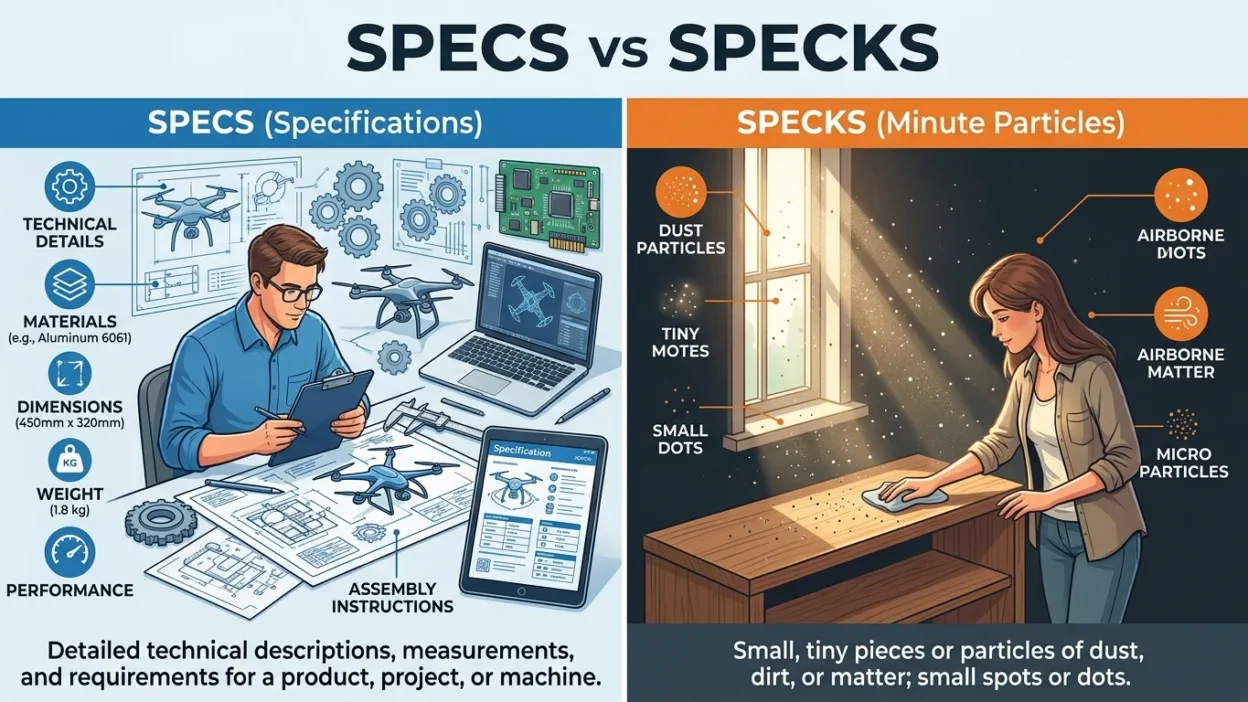
“Specs” usually means:
- Specifications or details about something
- Glasses (informal meaning)
Examples
- Check the phone specs before buying it.
- My specs are on the table.
Specks
“Specks” means:
- Very tiny spots
- Small particles or little pieces
Examples
- There were specks of dust on the screen.
- I saw black specks in the paint.
Simple Origin and Background
Where “Specs” Comes From
The word “specs” is a short form of:
- Specifications
- Spectacles
“Specifications” means details or technical information.
“Spectacles” is an older word for glasses.
That is why “specs” has two common meanings today.
Where “Specks” Comes From
“Specks” comes from the word “speck,” which means a tiny mark, spot, or particle.
People have used this word for a very long time to talk about very small things that can barely be seen.
The Main Difference Between Specs and Specks
The easiest way to remember the difference is this:
- Specs = details or glasses
- Specks = tiny spots or particles
One word is connected to information and vision.
The other word is connected to tiny pieces or marks.
Understanding “Specs”
“Specs” is often used in technology and shopping.
People use it when talking about:
- Computers
- Phones
- Cars
- Cameras
- Gaming devices
It means the technical details of something.
Example
- The laptop has strong specs for gaming.
This means the laptop has good technical features.
“Specs” as Glasses
In informal English, people also say “specs” instead of “glasses.”
Example
- I cannot read without my specs.
This usage is common in casual conversation.
Understanding “Specks”
“Specks” refers to tiny little spots or pieces.
These are usually very small things like:
- Dust
- Dirt
- Paint marks
- Sand
- Tiny food particles
Example
- Specks of dust covered the shelf.
This means tiny dust particles were on the shelf.
Comparison Table
| Word | Meaning | Used For | Example |
| Specs | Specifications or glasses | Technology, shopping, vision | The phone specs are impressive. |
| Specks | Tiny spots or particles | Dust, dirt, marks | There were specks of paint on the wall. |
Which One Should You Use?
Use “Specs” When Talking About Details
Choose “specs” when discussing:
- Product information
- Technical features
- Device performance
- Eyeglasses
Examples
- The camera specs look excellent.
- He cleaned his specs carefully.
Use “Specks” When Talking About Tiny Things
Choose “specks” when discussing:
- Small marks
- Dust particles
- Tiny spots
- Little pieces
Examples
- I noticed specks of dirt on the floor.
- Tiny specks floated in the sunlight.
Easy Memory Trick
Here is a simple trick:
Specs = Specifications
Both words begin with “spec.”
Think of:
- specs → specifications → details
Specks = Small Spots
“Specks” has an extra “k.”
You can think:
- specks → tiny specks of dust
The extra letter can remind you of extra tiny particles.
Common Mistakes People Make
Mistake 1: Using “Specks” for Technology Details
Incorrect
- The computer specks are amazing.
Correct
- The computer specs are amazing.
Why?
Because technical details are called specs, not specks.
Mistake 2: Using “Specs” for Dust
Incorrect
- There were specs of dirt on the table.
Correct
- There were specks of dirt on the table.
Why?
Because tiny dirt particles are specks.
Mistake 3: Confusing the Spelling
Some learners forget which word has the “k.”
A helpful reminder:
- Specks = small particles
- Specs = details or glasses
Everyday Real-Life Examples
In Shopping
Correct
- I compared the specs of two smartphones before buying one.
This means the person compared the technical features.
In Cleaning
Correct
- I saw specks of dust on the TV screen.
This means there were tiny dust particles.
In Social Media Posts
Specs Example
- These laptop specs are perfect for video editing.
Specks Example
- Why are there white specks on my jacket?
In Emails
Specs Example
- Please send me the product specs before the meeting.
Specks Example
- I noticed a few specks on the printed pages.
In Daily Conversation
Specs
- Dad cannot find his reading specs.
Specks
- Tiny specks of sand got into my shoes.
More Example Sentences
Examples with “Specs”
- The gaming PC has powerful specs.
- Her new glasses, or specs, look stylish.
- Always read the product specs carefully.
- The tablet specs include a fast processor.
- My specs were in my backpack.
Examples with “Specks”
- Black specks appeared on the bananas.
- The mirror had tiny specks of water.
- Specks of snow landed on my coat.
- I cleaned the specks from the window.
- There were golden specks in the stone.
Learning Section for Students and Beginners
Simple Rule
Ask yourself this question:
Are you talking about details or glasses?
Use:
- Specs
Are you talking about tiny spots or particles?
Use:
- Specks
Practice Exercise
Choose the correct word.
- The phone ______ are impressive.
- Tiny ______ of dust covered the desk.
- She lost her reading ______.
- I noticed white ______ on the black shirt.
Answers
- specs
- specks
- specs
- specks
Mini Writing Practice
Try writing your own sentences:
- One sentence with “specs”
- One sentence with “specks”
This helps your brain remember the difference faster.
FAQ Section
1. Are specs and specks pronounced the same?
No. They sound similar, but not exactly the same.
- “Specs” ends with an “s” sound.
- “Specks” has a stronger “k” sound before the “s.”
2. Does specs always mean glasses?
No.
“Specs” can mean:
- Technical details
- Glasses
The meaning depends on the sentence.
3. Is specks singular or plural?
“Specks” is plural.
The singular form is:
- speck
Example:
- One speck of dust
- Many specks of dust
4. Can I say “phone specks”?
Usually no.
For phones and technology, the correct word is:
- specs
Example:
- The phone specs include a large battery.
5. Is “specs” formal or informal?
It can be both.
- “Specs” for specifications is common in both formal and informal English.
- “Specs” for glasses is more informal.
6. What are specks of dust?
They are very tiny particles of dust.
Example:
- Sunlight revealed tiny specks of dust in the room.
7. Why do learners confuse these words?
Because:
- They look similar
- They sound similar
- They differ by only one letter
8. Which word is more common in technology?
“Specs” is much more common in technology.
People often talk about:
- Laptop specs
- Camera specs
- Phone specs
Final Tips to Remember
Remember This Simple Idea
Specs
= details or glasses
Specks
= tiny spots or particles
If you connect:
- specs → specifications
- specks → small particles
you will probably never confuse them again.
Conclusion
“Specs” and “specks” may look almost the same, but their meanings are completely different.
Use specs when talking about:
- Technical details
- Features
- Glasses
Use specks when talking about:
- Tiny spots
- Dust
- Small particles
Learning small word differences like this can make your English clearer and more natural. With a little practice, choosing the correct word becomes easy.

Gregory Alexander is a skilled writer and language researcher at WordHuts.com. He focuses on clarifying confusing word pairs, grammar rules, and common usage mistakes. With a passion for precise communication, Gregory creates simple, easy-to-understand content that helps readers strengthen vocabulary, writing accuracy, and everyday English skills.