
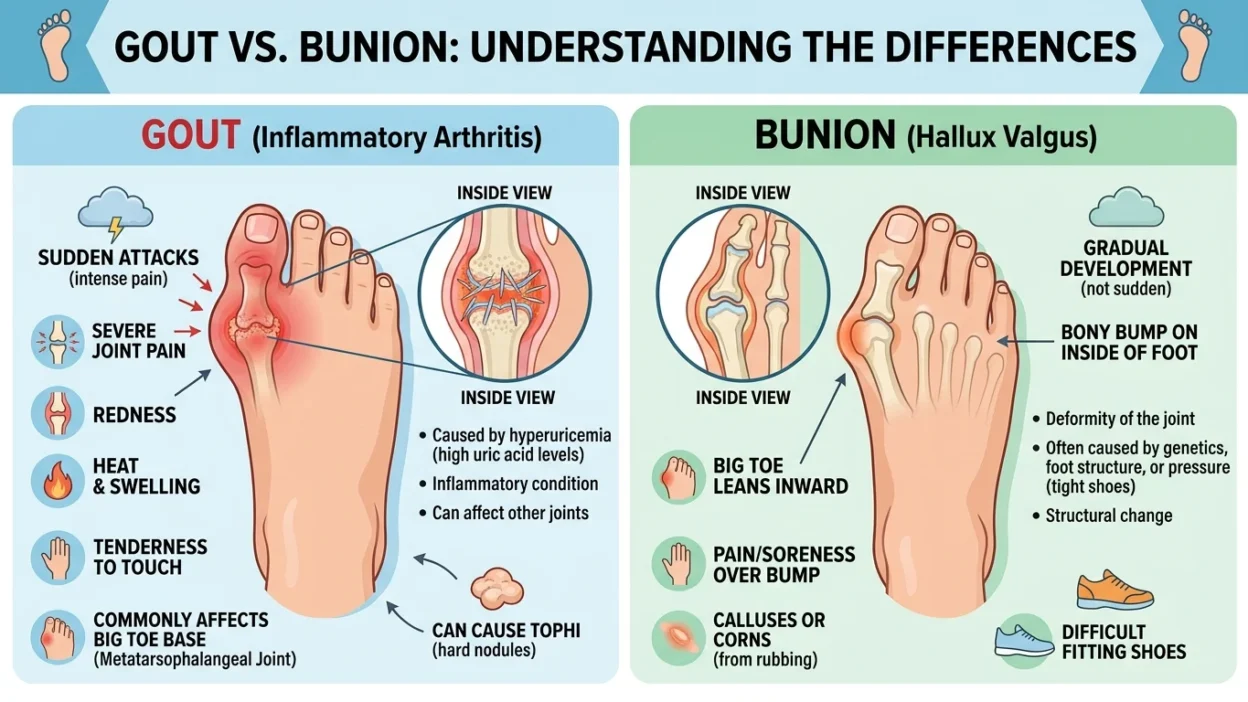
Many people confuse gout and bunion because both can cause pain in the big toe area. When someone sees a swollen, painful bump near the foot, they may not know whether it is gout or a bunion.
Even though they can affect a similar part of the foot, they are very different conditions. Gout is a type of arthritis caused by crystal buildup in the joints, while a bunion is a change in the shape and position of the bones in the foot.
Understanding the difference can help you recognize symptoms and know when to seek medical advice.
Quick Answer
Here is the simple answer:
- Gout is a painful joint condition caused by uric acid crystals.
- Bunion is a bony bump that forms at the base of the big toe.
- Gout often appears suddenly and causes intense pain.
- Bunions usually develop slowly over time.
- Gout is mainly a joint problem.
- Bunions are mainly a foot structure problem.
- Gout attacks can come and go.
- Bunions are usually permanent unless treated.
Simple Background Explanation
What Is Gout?
Gout is a form of arthritis. It happens when too much uric acid builds up in the body. Tiny crystals can form inside a joint and cause severe pain, swelling, redness, and warmth.
The big toe joint is one of the most common places where gout occurs.
A gout attack may start suddenly, even during the night.
What Is a Bunion?
A bunion is a bony bump that develops at the joint where the big toe meets the foot.
Over time, the big toe begins to lean toward the other toes. This movement changes the shape of the foot and creates a visible bump.
Bunions usually develop gradually over many years.
The Main Difference Between Gout and Bunion
The biggest difference is the cause.
Gout is caused by crystal buildup inside a joint.
Bunion is caused by changes in the position of bones and joints in the foot.
Think of it this way:
- Gout is an internal joint problem.
- Bunion is a structural foot problem.
Someone with gout may have a normal-looking foot between attacks.
Someone with a bunion often has a visible bump all the time.
Another important difference is how quickly symptoms appear.
Gout pain often starts suddenly and becomes severe within hours.
Bunion discomfort usually develops slowly and gets worse over months or years.
Gout vs Bunion Comparison Table
| Feature | Gout | Bunion |
| What is it? | A type of arthritis | A bony foot deformity |
| Main cause | Uric acid crystal buildup | Changes in foot structure |
| Common location | Big toe joint | Base of the big toe |
| Pain onset | Sudden | Gradual |
| Visible bump | Usually swelling during attacks | Permanent bony bump |
| Redness | Common | May happen if irritated |
| Swelling | Often severe | Usually mild to moderate |
| Duration | Attacks come and go | Usually long-term |
| Walking difficulty | Often during attacks | Can become constant |
| Treatment focus | Reducing inflammation and uric acid | Reducing pressure and correcting alignment |
Symptoms of Gout
Common signs of gout include:
- Sudden severe pain
- Redness around the joint
- Swelling
- Warm feeling in the affected area
- Tenderness when touched
- Difficulty walking during an attack
Many people describe gout pain as intense and unexpected.
An attack may last several days before improving.
Symptoms of a Bunion
Common signs of a bunion include:
- A visible bump beside the big toe
- Big toe leaning toward other toes
- Foot pain when wearing shoes
- Redness around the bump
- Swelling near the joint
- Thickened skin around the area
- Trouble finding comfortable shoes
The symptoms often become worse over time if pressure continues on the foot.
Which One Should You Use and When?
If you are talking about a painful condition caused by uric acid crystals in a joint, use gout.
Examples
- “My doctor diagnosed me with gout.”
- “The gout attack started last night.”
- “Gout can cause severe joint pain.”
If you are talking about a bony bump near the base of the big toe, use bunion.
Examples
- “She has a bunion on her right foot.”
- “The bunion makes it hard to wear tight shoes.”
- “His bunion developed over many years.”
Can a Person Have Both?
Yes.
A person can have both gout and a bunion at the same time.
For example:
- Someone may already have a bunion.
- Later, they may develop gout in the same big toe joint.
This can make diagnosis more difficult because both conditions can cause pain, swelling, and discomfort in a similar area.
A healthcare professional may use an examination, medical history, or tests to determine the exact cause.
Common Mistakes People Make
1. Thinking Every Big Toe Pain Is a Bunion
Not all big toe pain comes from a bunion.
A person may actually have gout, arthritis, an injury, or another foot condition.
2. Assuming Every Swollen Toe Means Gout
A swollen toe is not always caused by gout.
A bunion can also become swollen and irritated.
3. Ignoring Early Symptoms
Some people wait too long before getting help.
Early attention may prevent symptoms from becoming worse.
4. Looking Only at the Bump
A bump does not automatically mean a bunion.
Temporary swelling from gout can sometimes make the area look larger.
5. Wearing Tight Shoes with a Bunion
Tight footwear can increase pressure and discomfort.
Choosing properly fitting shoes may help reduce irritation.
Everyday Real-Life Examples
In an Email
Correct:
“I visited the clinic because my gout attack caused severe pain in my toe.”
Correct:
“My bunion has become more uncomfortable when I wear dress shoes.”
In a News Report
Correct:
“The athlete missed training due to a gout flare-up.”
Correct:
“The patient underwent treatment for a painful bunion.”
On Social Media
Correct:
“I woke up with a gout attack and could barely walk.”
Correct:
“Finally found shoes that fit comfortably despite my bunion.”
In Daily Conversation
Correct:
“My grandfather has gout.”
Correct:
“My aunt needs wider shoes because of her bunion.”
Learning Section for Students and Beginners
An easy way to remember the difference is:
Gout = Joint Problem
Think:
- Crystals
- Arthritis
- Sudden pain
- Swelling
Bunion = Bone Position Problem
Think:
- Bump
- Foot shape
- Slow development
- Shoe discomfort
Memory Trick
Gout = Great pain that comes suddenly.
Bunion = Bump beside the big toe.
This simple trick helps many beginners remember the difference.
Frequently Asked Questions (FAQ)
1. Is gout the same as a bunion?
No. Gout is a type of arthritis, while a bunion is a structural change in the foot.
2. Can gout cause a bunion?
Gout does not directly cause a bunion. They are different conditions with different causes.
3. Which condition is more painful?
A gout attack is often extremely painful and may start suddenly. Bunion pain is usually more gradual.
4. Can bunions disappear on their own?
Bunions generally do not disappear by themselves. They may become less painful with proper care, but the bump usually remains.
5. Does gout always affect the big toe?
No. Although the big toe is a common location, gout can affect other joints as well.
6. Are bunions always painful?
Not always. Some people have bunions with little or no pain.
7. Can young people get gout or bunions?
Yes. While both conditions are more common in adults, younger people can develop them too.
8. Should I see a doctor for either condition?
If you have ongoing pain, swelling, redness, difficulty walking, or concerns about your foot health, seeking medical advice is a good idea.
Conclusion
Gout and bunions may both affect the area around the big toe, but they are not the same condition. Gout is a type of arthritis caused by uric acid crystals in a joint, while a bunion is a bony bump that develops when the big toe gradually shifts out of position.
The easiest way to remember the difference is this:
- Gout = sudden joint pain and inflammation
- Bunion = long-term foot shape change and bony bump
By understanding these key differences, students, beginners, and everyday readers can recognize the symptoms more clearly and avoid confusing one condition with the other.

Justin Larry is a talented language writer and content creator at WordHuts.com. She specializes in explaining word differences, grammar tips, and common English mistakes in a clear, practical style. Her engaging content helps readers improve vocabulary, writing skills, and everyday communication, making language learning simple and effective.