
Many people feel confused about “laying” and “lying.” They look very similar, and even native speakers sometimes mix them up. The problem is that both words come from different verbs, but their forms can look almost the same.
The good news is that you can understand this clearly with a few simple rules. This guide will explain everything in very easy English, so you can feel confident using both words in daily life.
Quick Answer
Here is the simple difference:
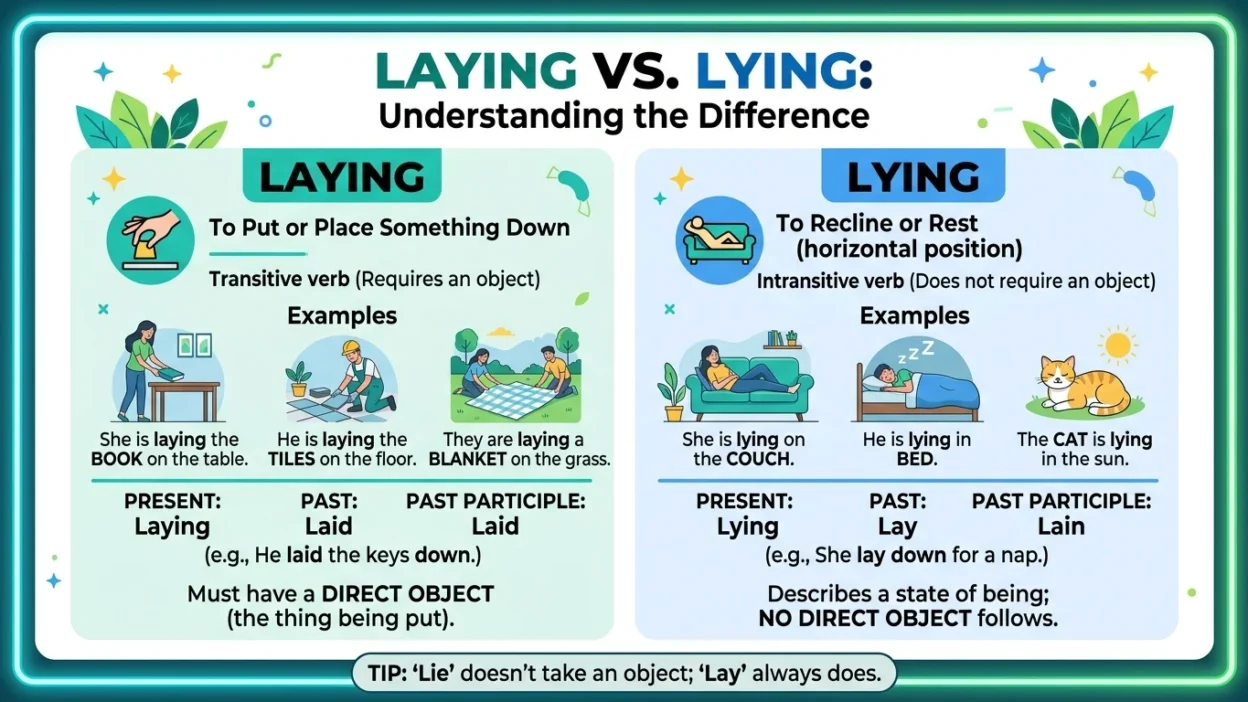
- Laying = putting something down
→ It needs an object (something you place) - Lying = resting or being in a flat position
→ It does NOT need an object
Easy way to remember:
- If you are placing something, use laying
- If you are resting yourself, use lying
Simple Background
The confusion comes from two verbs:
- Lay (to put something down)
- Lie (to rest or recline)
The tricky part is that their past forms are similar:
- Lay → past: laid
- Lie → past: lay
Yes, this is where people get confused! The past form of “lie” is “lay,” which looks like the present form of “lay.”
But don’t worry—we will keep things simple and focus on how to use them correctly in everyday situations.
Clear Explanation of the Difference
1. “Laying” (from “lay”)
Use laying when someone is putting something somewhere.
- It always needs an object (something you can touch or move)
Examples:
- She is laying the book on the table.
- He is laying the baby in the crib.
- They are laying the plates for dinner.
👉 Ask yourself: What is being placed?
If there is an answer, use laying.
2. “Lying” (from “lie”)
Use lying when someone or something is resting or staying in a flat position.
- It does NOT need an object
Examples:
- He is lying on the bed.
- The dog is lying on the floor.
- She is lying under the tree.
👉 Ask yourself: Is the subject resting by itself?
If yes, use lying.
Comparison Table
| Feature | Laying | Lying |
| Meaning | Putting something down | Resting or reclining |
| Needs an object? | Yes | No |
| Verb form | From “lay” | From “lie” |
| Example | She is laying the keys down | She is lying on the sofa |
| Action type | Doing something to an object | Position of the subject |
Which One to Use and When
Use “laying” when:
- You are placing something
- There is an object in the sentence
Examples:
- I am laying my phone on the desk.
- She is laying the clothes on the bed.
Use “lying” when:
- You are talking about resting
- No object is involved
Examples:
- I am lying down because I am tired.
- He is lying on the grass.
Quick Test
Ask this question:
👉 “Am I putting something somewhere?”
- Yes → laying
- No → lying
Common Mistakes People Make
Mistake 1: Using “laying” without an object
❌ I am laying on the couch.
✔ I am lying on the couch.
👉 There is no object, so “lying” is correct.
Mistake 2: Using “lying” when placing something
❌ She is lying the book on the table.
✔ She is laying the book on the table.
👉 “Book” is the object, so use “laying.”
Mistake 3: Confusing past forms
❌ Yesterday, I laid on the bed all day.
✔ Yesterday, I lay on the bed all day.
👉 This is advanced, but beginners should focus on present forms first.
Mistake 4: Mixing both in one sentence
❌ He is laying on the bed and laying his phone down.
✔ He is lying on the bed and laying his phone down.
Everyday Real-Life Examples
1. In Emails
- I am laying the documents on your desk.
- I was lying in bed when you called.
2. In Daily Conversations
- She is lying on the sofa watching TV.
- He is laying the baby in the crib.
3. On Social Media
- Just lying in the sun and relaxing ☀️
- I am laying my outfit out for tomorrow.
4. In News or Stories
- The patient was lying in the hospital bed.
- Workers are laying bricks for the new building.
5. At Home
- The cat is lying near the door.
- I am laying the table for dinner.
Short Learning Section for Students
Here is a simple way to learn and remember:
Step 1: Learn the meaning
- Lay = put something
- Lie = rest
Step 2: Practice with questions
Ask:
- “What am I putting?” → laying
- “Am I just resting?” → lying
Step 3: Use small sentences
- I am lying down.
- I am laying my bag here.
Step 4: Repeat daily
Practice with real-life actions:
- When you rest → say “I am lying”
- When you place something → say “I am laying”
FAQ Section
1. What is the main difference between laying and lying?
“Laying” means putting something down. “Lying” means resting or being in a flat position.
2. Does “laying” always need an object?
Yes. You must be placing something, like a book, phone, or bag.
3. Does “lying” need an object?
No. It is about the subject resting, so no object is needed.
4. Is it correct to say “I am laying on the bed”?
No. The correct sentence is: “I am lying on the bed.”
5. Is “laying” ever correct?
Yes, when you are placing something:
- I am laying the keys on the table.
6. Why is this topic confusing?
Because the verbs “lay” and “lie” have similar forms, especially in the past tense.
7. Can native speakers make this mistake?
Yes. Even native speakers sometimes mix them up in casual speech.
8. What is the easiest way to remember?
Remember:
- Lay = place
- Lie = rest
Conclusion
The difference between laying and lying becomes simple once you understand one key idea:
- Laying involves putting something somewhere
- Lying means resting or being in a position
Always check if there is an object in your sentence. If there is, use laying. If not, use lying.
With a little practice, you will start using these words naturally and correctly in everyday life. Keep practicing with simple sentences, and soon the confusion will disappear.

Brandon Samuel is a dedicated writer and language enthusiast, serving as the lead author at WordHuts.com. He specializes in explaining word differences, grammar rules, and common language mistakes in simple terms. Brandon’s clear, practical writing style helps readers improve vocabulary, writing confidence, and everyday communication skills.