
Many people feel confused about “segway” and “segue.” They sound the same when we speak, but they are not the same word. This is why learners, students, and even native speakers sometimes mix them up.
The confusion usually happens in writing. People often write “segway” when they actually mean “segue.” But these words have very different meanings.
Quick Answer
Here is the short and easy answer:
- Segue = a smooth change from one idea to another
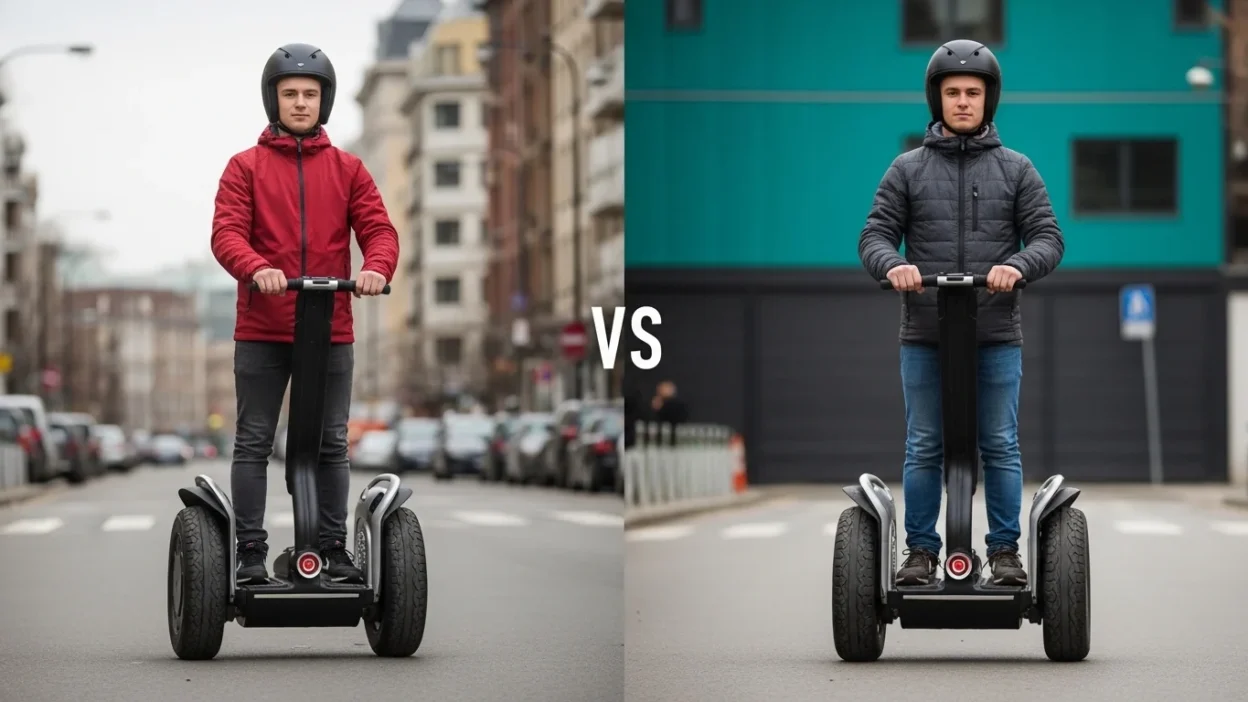
- Segway = a two-wheeled electric vehicle
👉 If you are talking about speaking, writing, or moving between ideas, use segue
👉 If you are talking about a machine you ride, use Segway
Simple Background (Origin)
Segue
- Comes from Italian
- It means “to follow” or “continue”
- Used in English to describe a smooth transition
Example idea:
Moving from one topic to another without stopping suddenly
Segway
- A brand name
- It is a personal electric vehicle
- You stand on it and ride it
Example idea:
A person riding a two-wheel scooter-like machine
Clear Explanation of the Difference
Even though they sound the same (seg-way), their meanings are completely different.
1. What “Segue” Means
“Segue” is a verb (action word).
It means:
👉 To move smoothly from one idea, topic, or activity to another
Example:
- The teacher segueed from math to science.
- She segueed into a new topic during her speech.
Think of it like a soft bridge between ideas.
2. What “Segway” Means
“Segway” is a noun (a thing).
It means:
👉 A two-wheeled electric vehicle that you ride while standing
Example:
- He rented a Segway during his trip.
- Tourists explored the city on Segways.
Comparison Table
| Feature | Segue | Segway |
| Type | Verb (action word) | Noun (thing) |
| Meaning | Smooth change between ideas | Electric two-wheel vehicle |
| Use | Speaking, writing | Travel, transport |
| Origin | Italian word | Brand name |
| Example | “Let’s segue to the next topic.” | “She rode a Segway in the park.” |
Which One to Use and When
Use “Segue” when:
- You are speaking or writing
- You are changing topics smoothly
- You are connecting ideas
Examples:
- “Now let’s segue into the next lesson.”
- “The speaker smoothly segueed into a new point.”
Use “Segway” when:
- You are talking about a machine
- You mean a vehicle
- You are describing travel or movement
Examples:
- “We saw people riding Segways.”
- “He bought a new Segway.”
Common Mistakes People Make
Here are mistakes that many learners make:
❌ Mistake 1: Using “segway” instead of “segue”
Wrong:
- “Let me segway into the next topic.”
Correct:
- “Let me segue into the next topic.”
❌ Mistake 2: Thinking both words mean the same
They do NOT mean the same.
- “Segue” = idea change
- “Segway” = vehicle
❌ Mistake 3: Wrong spelling in formal writing
In essays, emails, or exams:
- Always use “segue” for transitions
❌ Mistake 4: Not knowing pronunciation is the same
Both words sound like:
👉 “seg-way”
This is why people get confused.
Everyday Real-Life Examples
Let’s look at how these words are used in daily life.
In Emails
Correct:
- “I would like to segue into the next point.”
Wrong:
- “I would like to segway into the next point.”
In School or Class
- “The teacher segueed into a new lesson.”
- “Students learned how to segue between ideas in essays.”
In News or Speaking
- “The host smoothly segueed to the next topic.”
- “The discussion segueed into politics.”
In Travel or Daily Life
- “Tourists rode Segways around the city.”
- “The guide gave us a Segway tour.”
On Social Media
Correct:
- “Funny how this video just segues into another trend 😂”
Incorrect:
- “Funny how this video just segways into another trend 😂”
Simple Learning Section for Students
Here is an easy way to remember:
Memory Trick
- Segue = Speech (both start with ‘S’ sound idea)
- Segway = Scooter (vehicle idea)
Practice Exercise
Choose the correct word:
- Let’s ______ into the next topic.
- He rented a ______ for the tour.
- The speaker smoothly ______ into a new idea.
- She rode a ______ in the park.
Answers:
- segue
- Segway
- segueed
- Segway
Tip for Writing
When you write:
- If it’s about ideas → use “segue”
- If it’s about a machine → use “Segway”
FAQ Section
1. Are “segue” and “segway” pronounced the same?
Yes. Both are pronounced “seg-way.”
2. Why do people confuse these words?
Because they sound the same, but have different meanings and spellings.
3. Is “segway” ever correct in writing?
Yes, but only when talking about the vehicle.
4. Is “segue” formal or informal?
It can be used in both formal and informal situations.
5. Can I use “segue” in essays?
Yes. It is very useful in essays to show smooth transitions.
6. What is the past tense of “segue”?
The past tense is “segueed.”
Example:
- “She segueed into a new topic.”
7. Is “Segway” always capitalized?
Yes. It is a brand name, so it starts with a capital letter.
8. Can “segue” be used as a noun?
It is mostly used as a verb, but sometimes people use it informally as a noun.
Conclusion
“Segue” and “Segway” may sound the same, but they are very different.
- Segue helps you move smoothly between ideas
- Segway is a machine you ride
The easiest way to remember:
👉 Ideas = segue
👉 Vehicle = Segway
Once you understand this simple difference, you will never confuse them again. Keep practicing with real examples, and soon it will feel natural.

Justin Larry is a talented language writer and content creator at WordHuts.com. She specializes in explaining word differences, grammar tips, and common English mistakes in a clear, practical style. Her engaging content helps readers improve vocabulary, writing skills, and everyday communication, making language learning simple and effective.