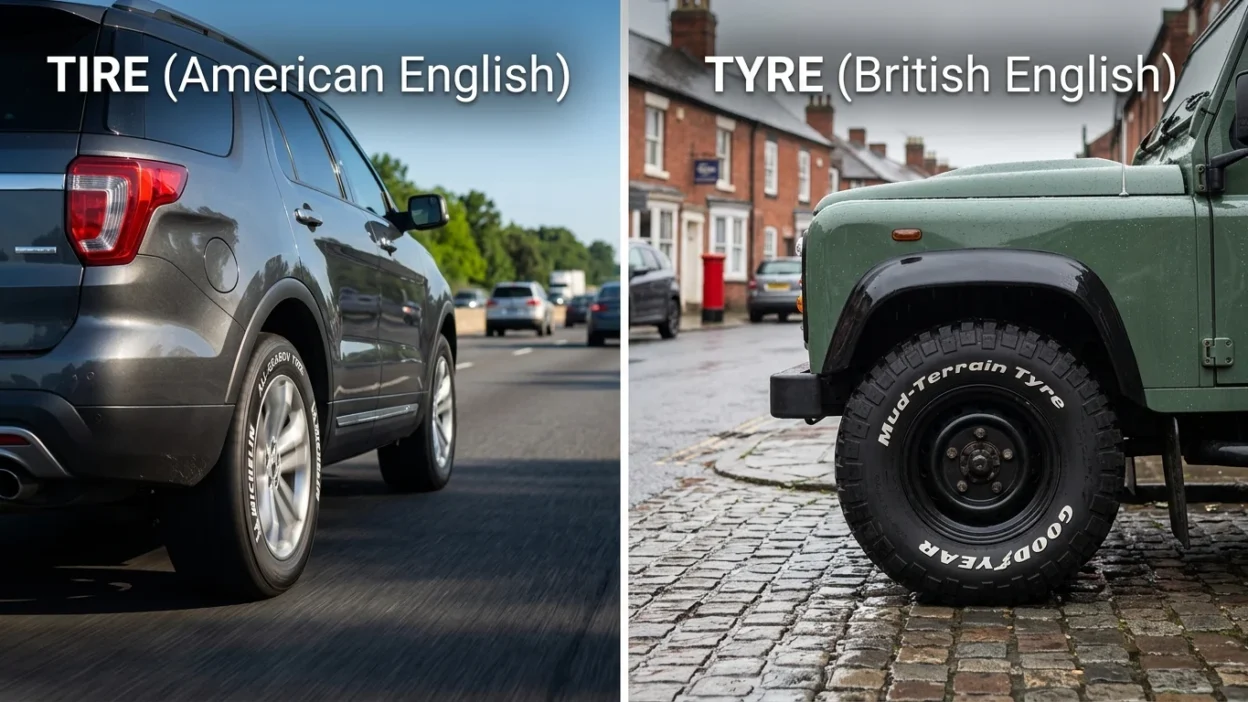
Many English learners get confused by the words tire and tyre because both words look different but mean the same thing in many situations. You may see tire in American books and websites, while tyre appears in British writing. This can make students wonder which spelling is correct.
The good news is simple: both spellings are correct. The difference mostly depends on the type of English being used.
This guide explains everything in very easy English so you can understand the difference clearly and use the right spelling with confidence.
Quick Answer
- Tire = American English spelling
- Tyre = British English spelling
- Both words mean the rubber wheel covering on a car, bike, bus, or truck
- In American English, tire also means “to become tired”
- In British English, people still use tire as a verb meaning “to become tired”
Simple Example
- American English: “The car needs a new tire.”
- British English: “The car needs a new tyre.”
Both sentences have the same meaning.
Simple Origin and Background
The word came from older forms of English many years ago. Over time, different countries started using different spellings.
American English became simpler in many cases, so Americans started using tire for the wheel part of a vehicle.
British English kept the spelling tyre for the wheel covering.
That is why both spellings exist today.
What Does “Tire” Mean?
The word tire has two meanings in English.
1. Tire as a Vehicle Part
This is the rubber covering around a wheel.
Example
- “My bicycle tire is flat.”
- “We bought new tires for the car.”
This spelling is common in the United States.
2. Tire as a Verb
“Tire” can also mean becoming tired or making someone tired.
Examples
- “Running can tire you.”
- “I tire easily after long walks.”
This meaning is used in both American and British English.
What Does “Tyre” Mean?
The word tyre only refers to the rubber covering around a wheel.
It is mainly used in:
- British English
- Australian English
- Some other countries that follow British spelling
Examples
- “The front tyre needs air.”
- “He changed the car tyre.”
The Main Difference Between Tire and Tyre
The biggest difference is spelling style.
American English
Americans use:
- tire
Example:
- “The truck has large tires.”
British English
British writers usually use:
- tyre
Example:
- “The truck has large tyres.”
Important Point
When talking about being tired, both American and British English use:
- tire
- tired
- tiring
People do not use “tyre” for tiredness.
Correct:
- “The long trip tired me.”
Incorrect:
- “The long trip tyred me.”
Tire vs Tyre Comparison Table
| Feature | Tire | Tyre |
| Used in American English | Yes | No |
| Used in British English | Sometimes | Yes |
| Means wheel covering | Yes | Yes |
| Means becoming tired | Yes | No |
| Common in the USA | Yes | Rare |
| Common in the UK | Less common for wheels | Yes |
| Example | “Flat tire” | “Flat tyre” |
Which One Should You Use?
Use “Tire” When:
- Writing in American English
- Speaking with Americans
- Writing for US schools or companies
- Talking about becoming tired
Examples
- “I got a flat tire.”
- “Long meetings tire me.”
Use “Tyre” When:
- Writing in British English
- Writing for UK readers
- Following British spelling rules
Examples
- “The tyre pressure is low.”
- “She bought winter tyres.”
Easy Trick to Remember
Here is a simple memory trick:
Tire = America
The spelling is shorter and simpler, which matches many American spellings.
Tyre = Britain
The spelling keeps the extra “y,” which is common in British English words.
Common Mistakes People Make
1. Using “Tyre” for Tiredness
Incorrect:
- “Homework tyres me.”
Correct:
- “Homework tires me.”
Remember: only tire works as a verb.
2. Mixing Spellings in One Piece of Writing
Incorrect:
- “The car tire and rear tyre are damaged.”
It is better to choose one style and stay consistent.
Correct American style:
- “The car tire and rear tire are damaged.”
Correct British style:
- “The car tyre and rear tyre are damaged.”
3. Thinking One Spelling Is Wrong
Some learners believe only one spelling is correct. That is not true.
Both spellings are correct in different forms of English.
Everyday Real-Life Examples
In Daily Conversation
American English
- “I need to change my tire.”
British English
- “I need to change my tyre.”
In Emails
American Style
- “My car tire was damaged on the road.”
British Style
- “My car tyre was damaged on the road.”
In News Reports
American News
- “Winter tires help drivers stay safe.”
British News
- “Winter tyres improve road safety.”
On Social Media
People often write based on where they live.
Examples
- “Flat tire ruined my morning.”
- “Got a punctured tyre today.”
Both are normal.
In Car Shops
In the United States, signs usually say:
- Tire Shop
- Tire Service
In Britain, signs often say:
- Tyre Centre
- Tyre Service
Tire and Tyre in Other Countries
Different countries follow different spelling systems.
Countries That Commonly Use “Tire”
- United States
- Sometimes Canada
Countries That Commonly Use “Tyre”
- United Kingdom
- Australia
- New Zealand
- India
- Pakistan
- South Africa
However, because American English is very popular online, many people around the world also see and use “tire.”
Learning Section for Students and Beginners
What Students Should Remember
Step 1: Understand the Meaning
Both words usually mean the rubber part around a wheel.
Step 2: Know the English Style
- American English → tire
- British English → tyre
Step 3: Remember the Verb Rule
Only tire can mean becoming tired.
Examples:
- “The game tired us.”
- “Do not tire yourself.”
Simple Practice Sentences
Fill in the blank:
- The bicycle _____ is flat.
- Long walks _____ me out.
- British drivers often say _____.
- Americans usually write _____.
Answers
- tire/tyre
- tire
- tyre
- tire
FAQ About Tire vs Tyre
1. Are tire and tyre the same thing?
Yes. Both words usually mean the rubber covering around a wheel.
2. Which spelling is correct?
Both are correct. The spelling depends on the type of English you use.
3. Is “tyre” used in America?
Not commonly. Americans almost always write “tire.”
4. Is “tire” wrong in British English?
Not always. British English uses “tire” as a verb meaning becoming tired. But for wheels, British English usually prefers “tyre.”
5. Can “tyre” mean becoming tired?
No. Only “tire” works as a verb.
Correct:
- “The work tires me.”
Incorrect:
- “The work tyres me.”
6. Which spelling should students learn first?
It depends on the English style you study.
- Learn tire for American English
- Learn tyre for British English
7. Why do English words have different spellings?
English developed differently in different countries over many years. That is why some spellings changed.
8. Do dictionaries accept both spellings?
Yes. Most dictionaries list both spellings and explain the regional difference.
Final Conclusion
The difference between tire and tyre is mostly about American and British spelling styles.
- Tire is the American spelling.
- Tyre is the British spelling.
Both words usually mean the same thing: the rubber covering around a wheel.
However, only tire can also mean becoming tired.
If you remember this one simple rule, you will avoid most mistakes:
- Wheel in American English → tire
- Wheel in British English → tyre
- Becoming tired → always tire
Once you know the spelling style you are using, choosing the correct word becomes very easy.

Brandon Samuel is a dedicated writer and language enthusiast, serving as the lead author at WordHuts.com. He specializes in explaining word differences, grammar rules, and common language mistakes in simple terms. Brandon’s clear, practical writing style helps readers improve vocabulary, writing confidence, and everyday communication skills.